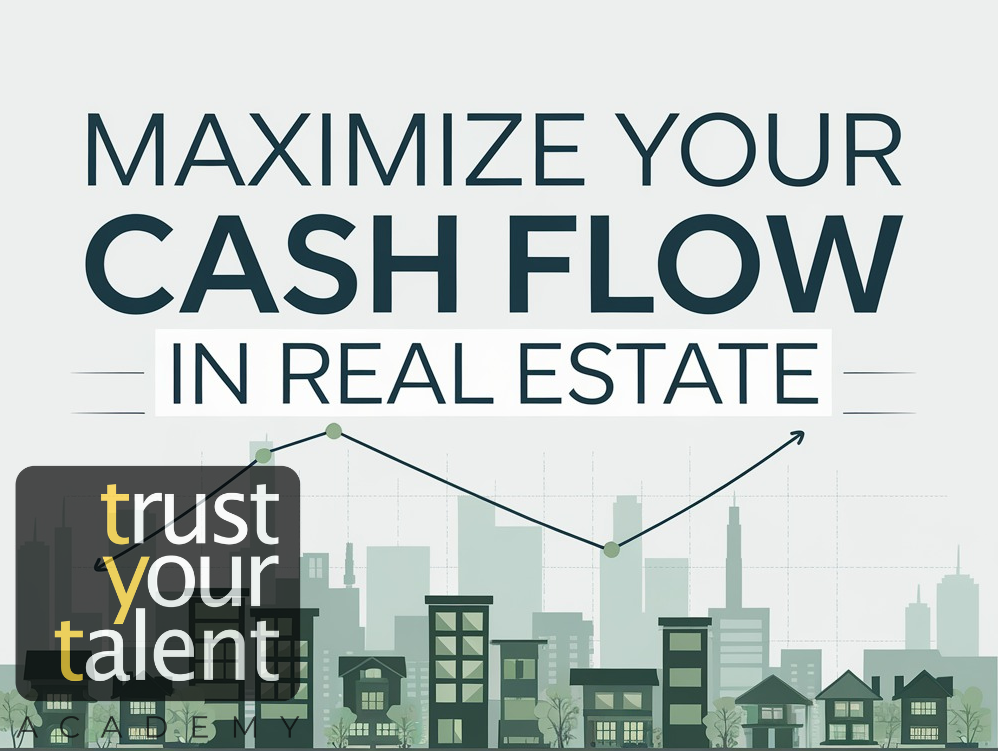
Cash Flow in Real Estate: Your Ultimate Guide to Property Profits
Cash flow in real estate is the net income remaining after all expenses, such as mortgage, taxes, and maintenance, are paid. It’s a crucial metric for assessing a property’s profitability and ensuring a steady return on investment. At Trust Your Talent, we’re committed to helping real estate investors in Canada achieve success by understanding key concepts such as cash flow in real estate.
Cash flow is one of the most important metrics when it comes to evaluating the profitability of an investment property. Whether you’re new to real estate investing or looking to optimize your portfolio, understanding cash flow is essential to making informed decisions and maximizing returns.
What is Cash Flow in Real Estate?
Cash flow in real estate refers to the amount of money left after all operating expenses are paid. It’s the net income generated by a property after accounting for expenses such as mortgage payments, property taxes, insurance, and maintenance fees.
For instance, if a property generates $2,500 in monthly rental income and incurs $1,800 in total monthly expenses, your cash flow would be $700 per month. The goal of every investor is to achieve positive cash flow, where the rental income exceeds all associated costs, ensuring a steady return on investment. At Trust Your Talent, we educate our clients on how to effectively calculate and manage cash flow to grow their wealth through real estate.
What is a Good Cash Flow Ratio in Real Estate?
A good cash flow ratio depends on the market, property type, and personal investment goals. Generally, a cash flow ratio between 8% and 12% is considered ideal. This ratio represents the amount of cash flow generated relative to the total investment.
The formula for calculating cash flow ratio is:
Cash Flow Ratio = ( Annual Net Cash Flow / Total Investment ) × 100
For example, if you invest $200,000 in a property and generate $16,000 in annual net cash flow, your cash flow ratio is 8%. Properties with higher cash flow ratios tend to require more hands-on management. Learn more about real estate careers in Canada that can provide you with opportunities to grow your investments at Real Estate Careers: Unlocking Opportunities in Canada.
What Type of Real Estate Has the Most Cash Flow?
Different types of real estate offer varying cash flow potential. Some of the most profitable types of real estate for generating high cash flow include:
- Multi-family properties: These properties, such as duplexes and apartment buildings, allow you to earn rental income from multiple units, boosting your overall cash flow.
- Commercial properties: Office spaces, retail stores, and warehouses typically yield high cash flow, especially in prime locations. However, they often require larger upfront investments.
- Vacation rentals: These properties can generate high returns, particularly in tourist hotspots, though they require active management.
To learn how to earn money from various real estate investments, explore our Comprehensive Guide for Beginners.
What is Real Estate Cash Flow Yield?
Real estate cash flow yield is another key metric that investors use to assess the return on investment from cash flow alone. The cash flow yield formula is:
Cash Flow Yield = ( Annual Net Cash Flow / Total Investment ) × 100
For instance, if you invest $300,000 in a property and it generates $12,000 in annual net cash flow, your cash flow yield would be 4%. Investors looking for a solid return often aim for a higher yield, though this varies depending on market conditions and investment goals.
Optimizing Cash Flow in Canadian Real Estate
Maximizing cash flow in real estate investments requires careful planning and strategic decisions. Here are some ways to improve cash flow:
- Invest in growth markets: Certain Canadian cities, such as Calgary and Edmonton, are emerging markets where property prices are lower, but cash flow potential remains high.
- Reduce operating costs: Minimizing expenses such as maintenance and management fees can lead to greater net cash flow.
- Utilize tax deductions: Canadian real estate investors can take advantage of tax benefits, such as deductions for mortgage interest, depreciation, and operating expenses. These savings can significantly improve your cash flow.
For those considering a career in real estate to enhance their investment knowledge, explore How to Become a Real Estate Agent in Canada: A Complete Guide.
Conclusion
At Trust Your Talent, we believe that understanding cash flow in real estate is essential for Canadian investors aiming to build long-term wealth. Whether you’re investing in multi-family properties, commercial real estate, or vacation rentals, managing and maximizing your cash flow is crucial to achieving financial success.
For more information on becoming a real estate professional or optimizing your real estate portfolio, explore our guides, including How to Become a Real Estate Broker in Canada and How Long Does It Take to Get a Realtor License in Canada?.
Related Questions
1. What is cash flow in real estate?
Cash flow is the net income generated from a property after all expenses, including mortgage, taxes, and maintenance, are deducted. Positive cash flow is the key to a successful real estate investment.
2. What is a good cash flow ratio in real estate?
A good cash flow ratio is generally between 8% and 12%, depending on the property and market conditions.
3. What type of real estate has the most cash flow?
Multi-family properties and commercial properties often provide the highest cash flow due to their multiple income streams.
4. What is real estate cash flow yield?
Real estate cash flow yield is the percentage return on investment based solely on cash flow. It’s calculated by dividing the annual net cash flow by the total investment.

How to Earn Money in Real Estate: A Comprehensive Guide for Beginners
Real estate investing offers numerous opportunities for financial growth and stability. Whether you’re looking to supplement your income or build long-term wealth, the real estate market provides various avenues to achieve your financial goals. In this guide, we’ll explore proven strategies to help you start earning money in real estate, even as a beginner.
Understanding the Basics of Real Estate Investing
Before diving into specific strategies, it’s essential to grasp the fundamentals of real estate investing. For a comprehensive overview of real estate investment, check out our Real Estate Investment Guide.
Key concepts to understand include:
- Property types (residential, commercial, industrial)
- Market analysis and trends
- Financing options
- Risk assessment and management
Top Strategies to Make Money in Real Estate
Let’s explore some of the most effective ways to earn money in the real estate market:
1. Rental Properties
Investing in rental properties is a popular method to generate passive income. Here’s how to get started:
- Research local rental markets
- Purchase properties in desirable locations
- Set competitive rental rates
- Manage tenants effectively
Pro tip: Consider “house hacking” by living in one unit of a multi-unit property and renting out the others to offset your mortgage costs.
2. Fix and Flip
The fix and flip strategy involves purchasing undervalued properties, renovating them, and selling for a profit. Key steps include:
- Identifying undervalued properties
- Accurately estimating renovation costs
- Managing renovations efficiently
- Selling at the right time and price
3. Real Estate Wholesaling
Wholesaling is a strategy that doesn’t require significant capital investment:
- Find discounted properties
- Secure them under contract
- Assign the contract to another buyer for a fee
This method can be an excellent way for beginners to enter the market and build their network.
4. Real Estate Investment Trusts (REITs)
REITs offer a way to invest in real estate without directly owning property:
- Purchase shares in a REIT
- Earn dividends from the REIT’s income
- Benefit from professional management and diversification
5. Short-Term Rentals
With the rise of platforms like Airbnb, short-term rentals have become a lucrative option:
- Purchase properties in tourist-friendly locations
- Furnish and prepare the property for guests
- Manage bookings and guest experiences
6. Real Estate Crowdfunding
For those with limited capital, real estate crowdfunding platforms offer an accessible entry point:
- Invest smaller amounts in larger real estate projects
- Diversify across multiple properties
- Choose from debt or equity investments
Interested in pursuing a career in real estate? Explore Real Estate Careers: Unlocking Opportunities in Canada.
Essential Skills for Real Estate Investing Success
To maximize your earning potential in real estate, develop these crucial skills:
- Market Analysis: Learn to identify promising investment opportunities.
- Financial Management: Understand cash flow, ROI, and other key metrics.
- Networking: Build relationships with other investors, agents, and professionals.
- Negotiation: Hone your ability to secure favorable deals.
- Property Management: Learn to effectively manage properties and tenants.
Financing Your Real Estate Investments
Understanding your financing options is crucial for successful real estate investing:
- Conventional Mortgages
- FHA Loans
- Hard Money Loans
- Private Money Lenders
- Home Equity Lines of Credit (HELOCs)
Each option has its pros and cons, so it’s essential to choose the right financing method for your specific investment strategy.
Mitigating Risks in Real Estate Investing
While real estate can be lucrative, it’s important to be aware of potential risks:
- Market Fluctuations: Research market trends and economic indicators.
- Property Damage: Maintain adequate insurance coverage.
- Tenant Issues: Implement thorough screening processes.
- Unexpected Costs: Build a reserve fund for unforeseen expenses.
- Legal Compliance: Stay informed about local laws and regulations.
Considering becoming a real estate agent? Learn How to Become a Real Estate Agent in Canada.
Building Your Real Estate Investment Portfolio
As you gain experience and capital, consider diversifying your real estate portfolio:
- Invest in different property types
- Explore various geographic locations
- Balance short-term and long-term investments
- Regularly review and adjust your strategy
H2: Frequently Asked Questions
How much money do I need to start investing in real estate?
The amount needed varies depending on your chosen strategy. You can start with as little as a few thousand dollars through crowdfunding or wholesaling, while direct property purchases may require more substantial capital.
How quickly can I start making money in real estate?
Some strategies, like wholesaling or short-term rentals, can generate income relatively quickly. However, building significant wealth through real estate typically requires a long-term perspective and patience.
Is real estate investing risky?
Like any investment, real estate carries risks. However, with proper education, due diligence, and risk management strategies, you can mitigate many of these risks and build a successful investment portfolio.
Do I need a license to invest in real estate?
Generally, you don’t need a license to invest in real estate. However, certain activities, like acting as a real estate agent, do require proper licensing.
Curious about the time commitment for becoming a realtor? Read How Long Does It Take to Get a Realtor License in Canada?
Conclusion
Earning money in real estate offers exciting opportunities for financial growth and independence. By understanding various investment strategies, developing essential skills, and managing risks effectively, you can build a successful real estate investment portfolio. Remember, education and continuous learning are key to long-term success in this dynamic field.
Ready to start your real estate investment journey? Trust Your Talent offers comprehensive courses and resources to help you succeed. Explore our Real Estate Investment Courses and take the first step towards financial freedom through real estate investing.
Real Estate Investment: Your Path to Financial Freedom
Real estate investment involves purchasing, owning, and managing properties for profit. At Trust Your Talent, we empower beginners and experienced investors alike with the knowledge and strategies needed to succeed in the dynamic world of real estate.
Real estate investment offers a proven path to financial growth and stability. Whether you’re a novice looking to make your first property purchase or an experienced investor seeking to expand your portfolio, Trust Your Talent provides the expertise and resources you need to thrive in the real estate market.
Understanding Real Estate Investment
Real estate investment encompasses various strategies for generating profit through property ownership and management. Key aspects include:
Property Types:
- Residential: Single-family homes, multi-family units, apartments
- Commercial: Office buildings, retail spaces, shopping centers
- Industrial: Warehouses, manufacturing facilities, distribution centers
Investment Vehicles:
- Direct property ownership
- Real Estate Investment Trusts (REITs)
- Real estate crowdfunding platforms
Profit Mechanisms:
- Rental income
- Property appreciation
- Value-add improvements
Interested in becoming a real estate professional? Learn How to Become a Real Estate Agent in Canada.
Getting Started in Real Estate Investing
Embarking on your real estate investment journey requires careful planning and education. Follow these steps to set yourself up for success:
Educate Yourself:
- Take advantage of Trust Your Talent’s comprehensive courses
- Study market trends and investment strategies
- Attend webinars and workshops
Assess Your Financial Situation:
- Review your credit score and history
- Calculate your available capital for investment
- Determine your risk tolerance
Set Clear Investment Goals:
- Define short-term and long-term objectives
- Establish target returns on investment
Develop a Solid Investment Plan:
- Choose strategies aligned with your goals
- Create a timeline for property acquisition
- Plan for property management and maintenance
Build a Professional Network:
- Connect with real estate agents, brokers, and property managers
- Engage with fellow investors through Trust Your Talent’s community forums
Considering a career in real estate? Explore Real Estate Careers: Unlocking Opportunities in Canada.
Real Estate Investment Strategies for Success
Trust Your Talent equips you with a range of proven strategies to maximize your real estate investment potential:
Buy and Hold:
- Purchase properties for long-term appreciation
- Generate steady rental income
- Benefit from potential tax advantages
Fix and Flip:
- Identify undervalued properties
- Renovate to increase property value
- Sell for profit within a short timeframe
Real Estate Wholesaling:
- Find discounted properties
- Contract with sellers
- Assign contracts to buyers for a fee
House Hacking:
- Live in one unit of a multi-unit property
- Rent out other units to offset mortgage costs
- Gain valuable landlord experience
For more ways to make money, explore our guide on How to Earn Money in Real Estate.
Real Estate Investment Trusts (REITs):
- Invest in professionally managed real estate portfolios
- Enjoy passive income and potential appreciation
- Benefit from diversification across property types and locations
Curious about becoming a broker? Check out our guide on How to Become a Real Estate Broker in Canada.
Analyzing Real Estate Markets
Successful real estate investing requires a deep understanding of local markets. Trust Your Talent teaches you to consider these crucial factors:
Population Growth:
- Analyze demographic trends
- Assess migration patterns
Employment Rates:
- Evaluate job market stability
- Identify major employers in the area
Local Economy:
- Research economic indicators
- Understand industry diversity
Property Values and Trends:
- Study historical price data
- Identify neighborhoods with growth potential
Rental Demand:
- Assess vacancy rates
- Analyze average rental prices
Our expert-led courses provide you with the tools and knowledge to conduct thorough market analysis and identify promising investment opportunities.
Financing Your Real Estate Investments
Trust Your Talent guides you through various financing options to fund your real estate investments:
- Conventional Mortgages
- FHA Loans
- VA Loans
- Hard Money Loans
- Private Money Lenders
- Real Estate Crowdfunding
Managing Your Real Estate Investments
Effective property management is crucial for maximizing returns. Trust Your Talent equips you with essential skills in:
- Tenant Screening and Selection
- Property Maintenance and Repairs
- Rent Collection and Financial Management
- Compliance with Local Laws and Regulations
Our courses cover both hands-on management techniques and strategies for working with professional property management companies.
Navigating Risks and Challenges
Trust Your Talent prepares you to face potential risks in real estate investing, including:
- Market Fluctuations
- Property Damage or Depreciation
- Vacancies and Tenant Issues
- Unexpected Maintenance Costs
- Changes in Local Regulations
Building a Successful Real Estate Investment Portfolio
Trust Your Talent teaches you to diversify your investments to minimize risk and maximize returns:
- Invest in Different Property Types
- Explore Various Geographic Locations
- Balance Short-term and Long-term Investments
- Regularly Review and Adjust Your Portfolio
Why Choose Trust Your Talent for Your Real Estate Investment Journey?
At Trust Your Talent, we believe that everyone has the potential to succeed in real estate investing. Our mission is to unlock that potential through:
- Comprehensive Education: Our real estate investment courses cover everything from basics to advanced strategies.
- Expert Guidance: Learn from seasoned professionals with years of experience in the real estate market.
- Practical Tools: Access cutting-edge analysis tools and resources to make informed investment decisions.
- Supportive Community: Connect with fellow investors and industry experts to share insights and opportunities.
Conclusion
Real estate investing offers tremendous potential for financial growth and stability. With Trust Your Talent’s expert guidance, comprehensive resources, and supportive community, you have everything you need to build a successful real estate investment portfolio. Whether you’re looking to invest or pursue a career in real estate, we’re here to help you every step of the way. Start your journey today and unlock the power of real estate investing.
Frequently Asked Questions
How much money do I need to start investing in real estate?
The initial investment can vary widely, but with Trust Your Talent’s guidance, you can start with as little as $5,000 through strategies like real estate crowdfunding or partnering with other investors.
What is the best real estate investment strategy for beginners?
For beginners, we often recommend house hacking or starting with a single rental property. These strategies allow you to gain experience while generating income.
How long does it take to make money in real estate investing?
The timeline varies, but with TrustYourTalent’s strategies, many investors start seeing returns within 6-12 months for short-term strategies and 5-10 years for long-term appreciation.
Is real estate investing risky?
Like any investment, real estate carries risks. However, TrustYourTalent equips you with the knowledge and tools to mitigate these risks through proper research, due diligence, and diversification.
Wondering about the time commitment for becoming a realtor? Read How Long Does It Take to Get a Realtor License in Canada?
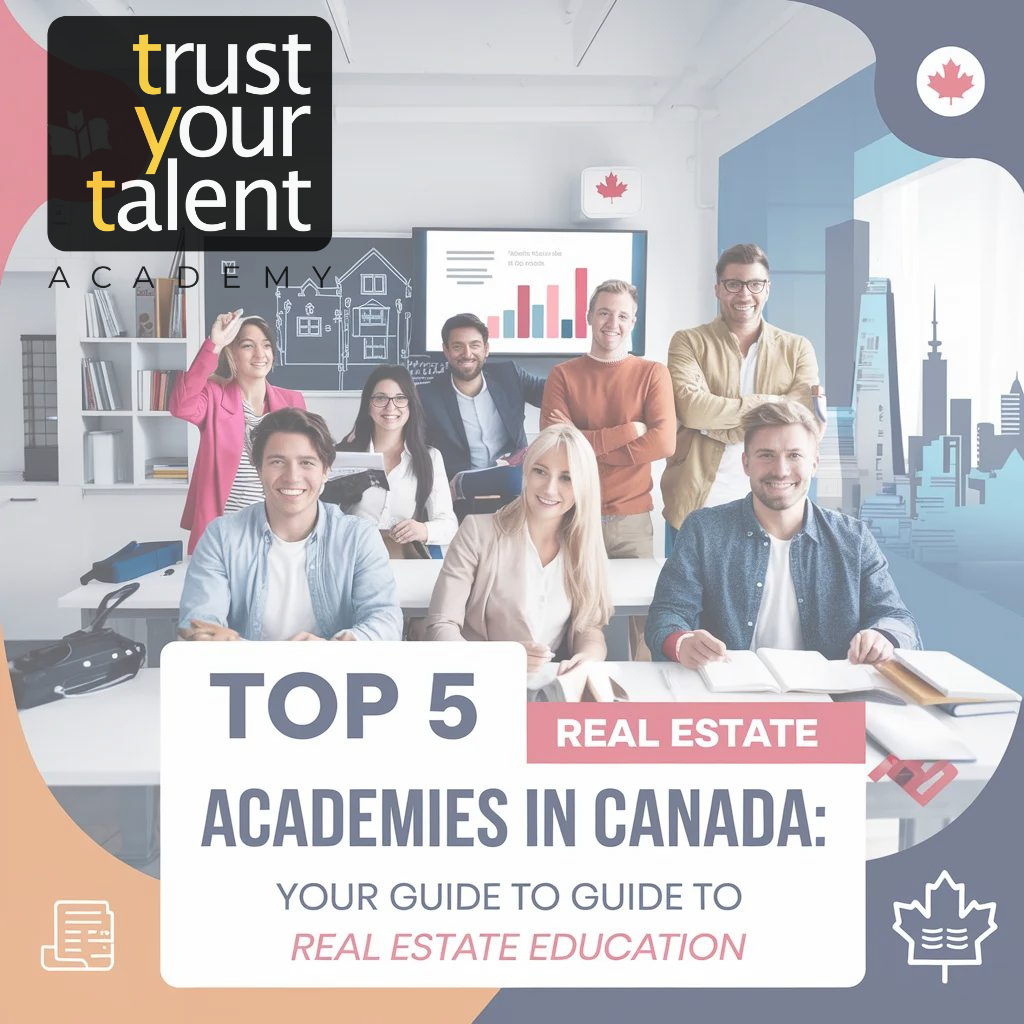
Top 5 Real Estate Academies in Canada: Your Guide to Real Estate Education
If you’re looking to build a successful career in real estate, the right education is essential. With so many options out there, finding a reputable academy can feel overwhelming. In this guide, we’ll highlight the top five real estate academies in Canada that stand out for their quality education and supportive environments. One of these, Trust Your Talent Academy, is particularly known for its community-driven approach, helping students connect and grow together. Whether you want to become a licensed agent or deepen your investment knowledge, these academies can provide the resources and mentorship you need to succeed in the ever-evolving real estate landscape.
Importance of Choosing the Right Academy
Selecting the right real estate academy is vital for several reasons:
- Quality of Education: A well-structured curriculum ensures students gain relevant knowledge and skills. The best academies cover essential topics like property law, finance, market analysis, and ethical practices.
- Accreditation: Accredited institutions are recognized by industry professionals, enhancing your credibility as a graduate. Accreditation guarantees that the education meets specific regulatory standards.
- Networking Opportunities: Many academies have strong ties to the industry, offering students valuable connections that can lead to internships, job placements, and mentorship opportunities essential for career growth.
- Support and Mentorship: Programs that offer mentorship provide guidance through the complexities of real estate, helping you navigate challenges effectively. Access to experienced professionals can offer insights beyond textbooks.
Overview of the Top 5 Real Estate Academies
1. Trust Your Talent Academy (TYT)
Trust Your Talent Academy is one of Canada’s leading institutions for real estate education, dedicated to fostering financial literacy through real estate investing.
Unique Features:
- Community Support: TYT emphasizes building a network of like-minded investors who share experiences and knowledge.
- Mentorship Programs: Students receive tailored guidance from experienced mentors, helping them achieve their financial goals.
- Diverse Course Offerings: With over 28 courses available, TYT caters to various learning styles and objectives, from beginner to advanced levels.
Career Outcomes: Graduates often become successful investors or start their own businesses, with a practical skills focus that ensures job readiness upon graduation.
2. University of British Columbia (UBC)
Located in Vancouver, UBC’s Sauder School of Business is renowned for its comprehensive real estate program. Students gain insights into various aspects of real estate finance, development, and investment strategies.
Unique Features: UBC connects students with industry experts through networking events and emphasizes hands-on learning with case studies that reflect real-world scenarios.
Career Outcomes: Graduates from UBC often find employment with leading real estate firms across Canada and internationally, benefiting from a strong alumni network.
3. University of Toronto (U of T)
The Rotman School of Management at U of T offers a robust real estate program that combines academic rigor with practical learning experiences. Students build financial literacy and entrepreneurial skills.
Unique Features: U of T’s extensive alumni network provides valuable connections within the real estate sector, along with workshops featuring industry leaders sharing insights on current trends.
Career Outcomes: Graduates are well-prepared for careers in residential sales, commercial leasing, property management, and real estate investment analysis.
4. Laval University
Based in Quebec City, Laval University specializes in real estate management and urban planning. The curriculum equips students with the skills necessary for various industry roles.
Unique Features: Laval focuses on sustainability and urban development, preparing students for modern real estate challenges with courses on environmental impact and sustainable practices.
Career Outcomes: Graduates often pursue careers in urban planning agencies, real estate development firms, or government organizations focused on land use policies.
5. Simon Fraser University (SFU)
SFU offers a variety of courses in real estate finance and development, emphasizing sustainable practices and community engagement.
Unique Features: SFU’s commitment to sustainability attracts students interested in eco-friendly development practices, integrating community-based projects into the curriculum.
Career Outcomes: Alumni frequently work in community planning, property development, or as consultants for sustainable practices in real estate.
Online Real Estate Courses in Canada
For those seeking flexibility, many Canadian institutions offer online real estate courses. These programs allow students to learn at their own pace while still receiving quality education. Notable options include:
- Trust Your Talent Academy (TYT): TYT also offers online courses that enable students to engage with content from anywhere, along with community support and mentorship opportunities.
- Humber College: Offers an online Real Estate Salesperson Program that prepares students for licensing exams with foundational industry knowledge.
- NAIT (Northern Alberta Institute of Technology): Provides online courses covering essential topics like property management and commercial real estate financing.
Conclusion
Choosing the right academy is crucial for anyone looking to thrive in the real estate industry. Institutions like Trust Your Talent Academy not only offer quality education but also foster a collaborative community for aspiring professionals. By investing in your education at one of these top academies—especially one that aligns with your personal goals—you’re taking significant steps toward achieving your professional aspirations in this exciting field.
Frequently Asked Questions (FAQs)
What are the best real estate academies in Canada?
The top academies include UBC, U of T, Laval University, SFU, and Trust Your Talent Academy.
How do I become a licensed real estate agent in Canada?
To become licensed real estate agent, complete an accredited program, pass your province’s specific exam, and fulfill any additional local requirements.
What courses do I need to take for real estate licensing?
Courses typically cover property law, finance principles, ethics in business, marketing strategies, and market analysis techniques.
Are there online real estate courses available in Canada?
Yes! Many institutions offer online courses for flexibility, catering to students with various commitments.
What is the duration of real estate programs in Canada?
Program lengths vary; most can be completed within several months to two years, depending on the course structure.
Do I need a degree to pursue a career in real estate?
While a degree isn’t always necessary, having formal education can enhance your job prospects by providing essential industry knowledge.
What is the cost of real estate courses in Canada?
Costs vary widely; research specific schools for accurate pricing, as tuition can range from a few hundred dollars for short courses to several thousand for comprehensive programs.
What are the requirements to enroll in a real estate academy?
Typically, a high school diploma or equivalent is required; some programs may have additional prerequisites.

How to Become a Real Estate Broker in Canada
Becoming a real estate broker in Canada is a significant step forward in your real estate career. As a broker, you’ll have the ability to open your own brokerage, supervise other real estate agents, and take on additional responsibilities. This guide will cover the steps to becoming a real estate broker, the qualifications required, and why it might be the perfect next step for you.
What Does a Real Estate Broker Do?
A real estate broker is an advanced real estate professional who has additional education, training, and experience. Unlike real estate agents, brokers can manage their own real estate firms, hire agents, and ensure that all transactions are completed according to the law.
Key Responsibilities of a Real Estate Broker:
- Managing a Brokerage: Supervise and manage real estate agents.
- Compliance: Ensure all transactions comply with legal and ethical standards.
- Training Agents: Provide guidance and mentorship to less experienced agents.
- Handling Complex Transactions: Oversee complicated real estate deals and disputes.
Learn more about career paths in real estate in our Real Estate Careers guide.
Steps to Becoming a Real Estate Broker in Canada
To become a real estate broker in Canada, you’ll need to follow several steps. These include gaining experience as a real estate agent, completing additional education, and passing a broker licensing exam.
Step 1: Gain Experience as a Real Estate Agent
Before becoming a broker, you must first work as a licensed real estate agent. This experience is crucial because it allows you to gain a deep understanding of the real estate industry.
Requirements:
- Work for a minimum of 2 years as a licensed real estate agent (varies by province).
- Build a strong track record of successful transactions.
- Demonstrate ethical and professional conduct in all transactions.
For more details on the timeline for getting licensed, check out our guide on how long it takes to get a realtor license.
Step 2: Complete Broker-Specific Education
Once you’ve gained enough experience, the next step is completing a real estate broker course. These courses are designed to provide the in-depth knowledge you’ll need to manage a brokerage.
Courses Typically Cover:
- Real estate law.
- Advanced negotiation tactics.
- Brokerage management.
- Ethics and compliance.
For example, in Ontario, you would complete the real estate broker course Ontario through an accredited institution.
Step 3: Pass the Broker Licensing Exam
After completing your broker-specific education, you’ll need to pass the broker licensing exam in your province. This exam tests your knowledge of advanced real estate topics and ensures that you’re ready to take on the responsibilities of being a broker.
Exam Preparation Tips:
- Review your course materials thoroughly.
- Take advantage of practice exams.
- Join study groups to enhance understanding.
Once you pass, you’ll officially be licensed as a real estate broker.
Benefits of Becoming a Real Estate Broker
Becoming a broker offers several advantages, both in terms of career growth and financial opportunities.
Top Benefits Include:
- Higher Earning Potential: Brokers can earn more through commissions, managing agents, and owning their own brokerage.
- Autonomy: You have more control over your career, including the ability to open and run your own firm.
- Career Growth: You can take on more complex deals and work with higher-value clients.
- Mentorship: As a broker, you’ll have the opportunity to train and mentor other agents, passing on your knowledge and skills.
Realtor Broker License Requirements in Canada
The realtor broker license requirements vary by province, but generally, you’ll need the following:
- Experience: At least 2 years of experience as a licensed real estate agent.
- Education: Completion of a real estate broker course approved by your provincial regulatory body.
- Exam: Passing the broker licensing exam.
- Continuing Education: Some provinces may require ongoing education to maintain your license.
Make sure to check with your local real estate association for specific requirements.
Choosing the Right Broker Course in Ontario
If you’re in Ontario, you’ll need to complete the real estate broker course Ontario. This course is offered by accredited institutions and covers everything you need to know to become a successful broker.
Key Course Topics Include:
- Brokerage law and regulations.
- Advanced marketing and business strategies.
- Managing real estate transactions.
- Ethical decision-making.
Completing this course is a crucial step toward obtaining your broker license in Ontario.
How to Become a House Broker: A Step-by-Step Guide
A house broker, often used interchangeably with real estate broker, requires dedication and hard work to achieve. The process is straightforward, but it demands thorough preparation.
Steps Include:
- Start as a licensed real estate agent.
- Gain substantial experience in property transactions.
- Complete advanced broker training programs.
- Pass your province’s broker licensing exam.
By following these steps, you can progress from real estate agent to a licensed house broker with increased earning potential and career opportunities.
Conclusion
Becoming a real estate broker in Canada offers an excellent opportunity for career growth, higher earnings, and greater autonomy in the real estate industry. By completing the necessary education, passing the licensing exam, and gaining experience, you can achieve this next level in your career.
For a comprehensive guide, check out our complete guide on becoming a real estate agent in Canada

Real Estate Careers: Unlocking Opportunities in Canada
A career in real estate offers diverse opportunities, whether you’re just starting out as a realtor or looking to advance to more specialized roles like a real estate broker. With the Canadian property market booming, the demand for skilled real estate professionals continues to grow. This guide will explore various real estate careers paths, from becoming a real estate agent to eventually advancing your career through mentorship and additional certifications.
Introduction to Real Estate Careers
Choosing a real estate career provides a unique opportunity for growth, autonomy, and financial success. With real estate, you can work as an agent, broker, property manager, or even specialize in commercial properties. Each path offers different challenges and rewards, but all require dedication, education, and continuous professional development.
At Trust Your Talent, we provide comprehensive mentorship programs to help you excel in whichever real estate career path you choose. Whether you want to become a licensed agent or transition into a broker role, our programs offer the guidance and resources you need to thrive.
Types of Real Estate Careers in Canada
1. Real Estate Agent Career
Becoming a real estate agent is one of the most common entry points into the industry. Agents work directly with buyers and sellers to facilitate property transactions. They are responsible for marketing properties, arranging viewings, and negotiating sales agreements.
Key Responsibilities:
- Assisting clients in buying and selling properties.
- Preparing property listings and conducting property showings.
- Negotiating offers and finalizing transactions.
To learn more about starting as a real estate agent, visit our complete guide on becoming a real estate agent in Canada.
2. Realtor Career
A realtor career involves more than just being a licensed real estate agent. Realtors are members of the Canadian Real Estate Association (CREA), which means they adhere to strict ethical standards and have access to additional resources and networking opportunities.
Steps to Becoming a Realtor:
- Complete your real estate agent license requirements.
- Join the Canadian Real Estate Association (CREA) to become a certified realtor.
- Continue your education to stay updated with real estate market trends and practices.
Being a realtor not only enhances your credibility but also opens doors to exclusive listings and real estate markets.
Explore the full process of earning your license in our guide on how long it takes to get a realtor license in Canada.
3. Real Estate Broker Career
For those looking to advance beyond being an agent, becoming a real estate broker is an excellent career path. As a broker, you can manage other real estate agents, start your own brokerage, and take on more complex transactions.
Requirements to Become a Broker:
- Gain experience as a licensed real estate agent.
- Complete additional broker-specific education.
- Pass the broker licensing exam.
Learn more about the path to becoming a broker in our guide on how to become a real estate broker in Canada.
Skills Needed for a Successful Real Estate Career
Regardless of which real estate career path you choose, certain skills are essential for success:
- Communication: The ability to clearly explain options and processes to clients.
- Negotiation: Successfully handling offers, counteroffers, and client expectations.
- Market Knowledge: Staying updated on local real estate trends and market conditions.
- Networking: Building strong relationships with clients, other agents, and industry professionals.
- Problem-Solving: Addressing challenges that arise during the buying and selling process.
At Trust Your Talent, our mentorship programs focus on developing these core skills to ensure you’re well-prepared for a thriving real estate career.
Long-Term Career Growth in Real Estate
Real estate is an industry where long-term career growth is achievable with continuous learning and professional development. Starting as an agent, you can eventually progress to specialized roles or leadership positions.
Career Progression Path:
- Real Estate Agent → Entry-level position working with buyers and sellers.
- Realtor → Obtain additional certifications and join the Canadian Real Estate Association.
- Real Estate Broker → Manage your own brokerage and oversee agents.
Ready to advance? Learn how to become a broker in our guide to becoming a real estate broker in Canada.
With each progression, you gain more autonomy, increase your earning potential, and take on more significant responsibilities within the industry.
Conclusion: Take Your Real Estate Career to the Next Level
No matter where you are in your real estate career, continuous learning and professional development are key to success. At Trust Your Talent, we offer real estate mentorship programs designed to help you succeed at every stage of your career—whether you’re an agent, realtor, or broker.
For a comprehensive guide on becoming a real estate agent, check out our detailed guide on how to become a real estate agent in Canada.)
FAQs About Real Estate Careers
Is real estate a good career in Canada?
Yes, real estate offers excellent career opportunities, especially in high-demand markets across Canada. With the right education and mentorship, a real estate career can be highly rewarding.
What is the difference between a realtor and a real estate agent?
A real estate agent is a licensed professional who facilitates property transactions, while a realtor is a member of the Canadian Real Estate Association and adheres to its code of ethics.
Can I switch from being a real estate agent to a broker?
Yes, after gaining sufficient experience as an agent, you can become a broker by completing additional education and passing the broker licensing exam.

How Long Does It Take to Get a Realtor License in Canada?
Understanding how long it takes to get a realtor license in Canada is a crucial step for anyone considering a career in real estate. The timeframe can vary depending on several factors, such as your location, the education path you choose, and how quickly you’re able to meet the requirements. In this guide, we’ll break down the steps and estimated timeline for earning your realtor license so you can plan your path to success.
Factors That Affect How Long It Takes to Get a Realtor License
The total time required to become a licensed real estate agent in Canada depends on several factors:
1. Pre-Licensing Education:
- How long is the real estate course? Most real estate license training programs can be completed within 4-6 months if pursued full-time. Part-time options may take longer, depending on how flexible your schedule is.
2. Provincial Requirements:
- Each province in Canada has different requirements, and some may require additional coursework or certifications. For instance, becoming a licensed agent in Ontario may differ from British Columbia or Alberta.
3. Licensing Exam Scheduling:
- After completing your pre-licensing education, you’ll need to pass the licensing exam. The time it takes to schedule and prepare for this exam varies by location and personal readiness.
4. Application Process:
- Submitting the necessary paperwork, background checks, and registering with a brokerage can also add to the timeline.
If you’re considering taking your career further after becoming an agent, explore our guide on how to become a real estate broker in Canada.
Steps to Getting Your Realtor License in Canada
Let’s break down the essential steps involved in obtaining your realtor license and how long each phase typically takes:
Step 1: Complete Your Real Estate Pre-Licensing Education
The first step in becoming a licensed realtor is completing a real estate agent course. The length of this course depends on your province and whether you opt for full-time or part-time study.
Typical Duration:
- Full-time study: 4-6 months.
- Part-time study: 8-12 months (depending on schedule flexibility).
For a full overview of what it takes to start your journey in real estate, visit our guide on becoming a real estate agent in Canada.
Step 2: Prepare for and Take the Licensing Exam
After completing your education, you will need to pass a real estate licensing exam. Scheduling your exam and preparing can take additional time depending on your availability and readiness.
Estimated Timeline:
- Preparation Time: 1-2 months (study guides, practice exams).
- Exam Scheduling: Depending on the province, exam dates may be offered weekly or monthly.
Step 3: Apply for Your Realtor License
Once you’ve passed the licensing exam, the next step is to apply for your license through your provincial real estate regulatory body.
Application Process Includes:
- Submitting your exam results and proof of completed education.
- Completing a background check (if required by your province).
- Registering with a brokerage, which is required to legally operate as a realtor.
Estimated Time for Processing: 1-3 months, depending on your province and how quickly your paperwork is processed.
How Long Does It Take to Become a Realtor in Different Provinces?
The length of time it takes to become a realtor can vary by province in Canada. Here’s a quick overview of the estimated timelines for key provinces:
Ontario
- Pre-Licensing Education: 4-6 months.
- Licensing Exam and Application: 2-3 months.
- Total: 6-9 months.
British Columbia
- Pre-Licensing Education: 5-7 months.
- Licensing Exam and Application: 2-4 months.
- Total: 7-11 months.
Alberta
- Pre-Licensing Education: 3-5 months.
- Licensing Exam and Application: 1-2 months.
- Total: 4-7 months.
Once you’ve obtained your license, explore long-term career opportunities in our guide on real estate careers.
Tips for Speeding Up the Licensing Process
While becoming a licensed realtor in Canada requires time and effort, there are a few strategies you can use to accelerate the process:
- Full-Time Study: Opt for full-time coursework if you want to get your license faster.
- Prepare Early for the Exam: Begin studying for the licensing exam while completing your real estate courses.
- Organize Your Application: Ensure that all paperwork and documentation are ready for submission as soon as you pass the licensing exam.
About Trust Your Talent
At Trust Your Talent, we are dedicated to empowering individuals with the knowledge, skills, and mentorship required to build a successful career in real estate. We offer comprehensive real estate mentorship programs that cater to all stages of your journey—whether you’re just starting out as an agent or looking to advance as a real estate broker. Our expert-led courses, hands-on training, and strong community support ensure that you are well-prepared to navigate the complexities of the real estate industry.
Why Choose Trust Your Talent:
- Expert Mentorship: Learn from industry leaders who have excelled in the real estate market.
- Flexible Learning: We offer online and in-person courses designed to fit your schedule.
- Career Support: From exam prep to career growth opportunities, we’re with you every step of the way.
Conclusion
The process of getting a realtor license in Canada typically takes anywhere from 6 to 12 months, depending on how quickly you complete your education, pass the licensing exam, and submit your application. While the journey requires effort, the rewards of a successful real estate career are well worth it.
For a comprehensive guide on the steps to become a realtor, visit our guideon how to become a real estate agent in Canada.
FAQs
How long does it take to get a realtor license in Canada?
It typically takes 6-9 months to get a realtor license, depending on your province, how quickly you complete your pre-licensing education, and how long it takes to schedule and pass the exam.
Can I become a realtor faster by studying full-time?
Yes, opting for full-time study can help you complete your pre-licensing education faster, typically within 4-6 months.
What if I fail the licensing exam?
If you don’t pass the exam on your first attempt, most provinces allow you to retake the exam. However, this can add a few extra months to your timeline.

How to Become a Real Estate Agent in Canada: A Complete Guide
Are you considering a career change or eager to enter a dynamic profession? Learning how to start being a realtor in Canada can open doors to a fulfilling and lucrative career. The Canadian real estate market is booming, and there’s no better time to join this exciting field. At Trust Your Talent, we’re dedicated to guiding you through the process of becoming a real estate agent. This comprehensive guide will walk you through every step, from understanding the realtor requirements to obtaining your real estate license Canada.
Embarking on this journey not only offers financial rewards but also the satisfaction of helping people find their dream homes. With the right education and support, you can turn your passion for property into a successful career. Let’s explore what it takes to get into the real estate industry and how Trust Your Talent can help you every step of the way.
Understanding the Real Estate Profession
The real estate profession in Canada is vibrant and offers numerous opportunities for growth. As a real estate agent, you’ll play a pivotal role in the property market, connecting buyers with sellers and facilitating transactions.
What Does a Real Estate Agent Do?
A real estate agent assists clients in buying, selling, and renting properties. They act as intermediaries, providing valuable market insights and negotiating deals to ensure client satisfaction.
Key Responsibilities:
- Market Analysis: Staying updated on property trends and pricing to advise clients effectively
- Client Consultation: Understanding client needs and preferences to find suitable properties
- Property Showings: Arranging and conducting viewings to showcase properties
- Negotiation: Facilitating offers and counteroffers between buyers and sellers
- Transaction Management: Handling paperwork and legal documentation to ensure smooth transactions.
Being a real estate agent requires excellent communication skills, a keen eye for detail, and a passion for helping others. It’s a career that offers diversity in daily tasks and the opportunity to build lasting relationships.
Real Estate Agent vs. Realtor vs. Broker
Understanding the different roles in the real estate industry is crucial for your career path.
Real Estate Agent:
- A licensed professional facilitating property transactions
- Must complete pre-licensing education and pass an exam.
- Works under the supervision of a licensed brokerage.
Realtor:
- A real estate agent who is a member of the Canadian Real Estate Association (CREA)
- Adheres to a strict code of ethics and professional standards.
- Gains access to additional resources and networking opportunities.
Real Estate Broker:
- An agent with additional education and licensing
- Can manage their own brokerage and supervise other agents.
- Takes on more responsibility and potential for higher earnings.
Advance Your Career: Learn more in our guide on How to Become a Real Estate Broker in Canada.
Choosing between these paths depends on your career goals, willingness to invest in further education, and desire for additional responsibilities.
Benefits of a Career in Real Estate
A career in real estate offers numerous advantages that make it an attractive option for many professionals.
Benefits Include:
- Flexible Schedule: Set your own hours and achieve a work-life balance
- Unlimited Earning Potential: Income based on commissions, offering financial growth.
- Career Growth: Opportunities to specialize and advance, such as becoming a broker
- Networking: Connect with diverse clients and professionals in the industry
- Personal Fulfillment: Play a key role in helping clients find their dream homes.
These benefits, combined with the dynamic nature of the real estate market, provide a rewarding and exciting career path.
Licensing Requirements in Canada
Before you can work as a realtor, it’s essential to understand the licensing requirements in Canada. These requirements ensure that all real estate professionals are qualified and adhere to industry standards.
General Realtor Requirements and Real Estate Agent Prerequisites
To become a licensed real estate agent in Canada, you must meet certain prerequisites.
General Requirements:
- Age: Must be at least 18 or 19 years old, depending on the province
- Education: High school diploma or equivalent.
- Legal Status: Authorized to work in Canada.
- Language Proficiency: Fluency in English or French for effective communication.
Meeting these basic criteria is the first step toward your real estate career.
Realtor License Requirements by Province
Licensing requirements vary across provinces, so it’s crucial to understand the specifics for your region.
Ontario
- Education: Complete the Real Estate Salesperson Program
- Exam: Pass the provincial licensing exam.
- Registration: Register with the Real Estate Council of Ontario (RECO).
British Columbia
- Education: Finish the Real Estate Trading Services Licensing Course through UBC.
- Exam: Pass the Real Estate Council of British Columbia (RECBC) licensing exam.
- Licensing: Apply for your license with the regulatory body.
Other provinces have similar steps but may involve different educational institutions or regulatory bodies. Always check with your provincial real estate association for detailed requirements.
Steps to Earn Your Real Estate License
To earn your real estate license, follow these steps:
Complete Pre-Licensing Education:
- Enroll in a recognized realtor course Canada program.
- Choose between online or in-person classes based on your learning preference.
Pass the Licensing Exam:
- Prepare thoroughly with study materials and practice exams.
- Schedule your exam through the appropriate provincial authority.
Apply for Your License:
- Submit your application to the provincial regulatory body
- Include all necessary documentation and pay the required fees.
Join a Brokerage:
- Required to legally work as a realtor
- Provides mentorship, resources, and support as you start your career.
Become a CREA Member:
- Join the Canadian Real Estate Association to become a recognized realtor
- Access exclusive tools, resources, and networking opportunities.
Understanding and completing these steps will set the foundation for your success in the real estate industry.
How Long Does It Take to Become a Real Estate Agent?
Typically, it takes 4 to 6 months to become a licensed agent, but this can vary based on several factors.
Factors Influencing Timeline:
- Course Format: Full-time courses may expedite completion, while part-time allows for flexibility
- Provincial Requirements: Additional steps or courses may be required in certain provinces
- Exam Scheduling: Availability of exam dates can affect the overall timeline.
Learn More: Read our article on How Long Does It Take to Get a Realtor License.
Planning your education path with these factors in mind will help you set realistic expectations and goals.
Obtaining Your Real Estate License Canada
After completing your education, the next step is to obtain your real estate license. This involves passing the licensing exam and fulfilling all application requirements.
Prepare for and Pass the Licensing Exam
Success in the licensing exam requires dedication and thorough preparation.
Tips for Success:
- Study Regularly: Establish a consistent study schedule to cover all topics
- Utilize Resources: Leverage study guides, practice tests, and online resources
- Join Study Groups: Collaborate with peers to enhance understanding
- Seek Guidance: Consult instructors for clarification on challenging subjects.
Approaching the exam with confidence and preparation increases your chances of success.
Apply for Your License
After passing the exam, you’ll need to apply for your license through the provincial regulatory body.
Application Steps:
- Gather Necessary Documents: Proof of education, exam results, identification
- Complete Background Checks: Some provinces require criminal record checks
- Fill Out Application Forms: Ensure accuracy and completeness
- Pay Licensing Fees: Fees vary by province; check the specific amounts.
Timely submission of your application will expedite the licensing process.
Join a Brokerage to Get into Real Estate
Joining a brokerage is a mandatory step to legally practice as a real estate agent.
Benefits of Joining a Brokerage:
- Mentorship: Receive guidance from experienced professionals.
- Resources: Access marketing tools, client databases, and administrative support.
- Brand Recognition: Leverage the brokerage’s reputation to build credibility.
- Networking Opportunities: Connect with other agents and industry contacts.
Selecting the right brokerage aligns your career with your professional goals and values.
Starting Your Real Estate Career
With your license in hand and a brokerage to support you, it’s time to launch your career.
Building Your Professional Network
Networking is crucial in the real estate industry to grow your client base and professional connections.
Effective Networking Strategies:
- Attend Industry Events: Conferences, seminars, and workshops.
- Leverage Social Media: Use platforms like LinkedIn and Instagram to showcase your expertise.
- Join Professional Associations: Membership in organizations like CREA enhances credibility.
- Engage in Community Activities: Participate in local events to increase visibility.
Building relationships fosters trust and opens doors to new opportunities.
Utilizing Real Estate Mentorship Programs
Enhance your career prospects by joining our Real Estate Mentorship Programs.
Program Highlights:
- Personalized Coaching: Receive tailored advice to achieve your goals.
- Skill Development: Improve negotiation, marketing, and client management skills.
- Networking Opportunities: Connect with industry leaders and peers.
- Ongoing Support: Access resources and guidance as you navigate your career.
Ready to explore more real estate career paths? Learn about your options, from becoming a real estate agent to a broker, in our Real Estate Careers guide.
Continuing Education and Professional Development
The real estate industry is dynamic, and continuous learning is essential.
Importance of Ongoing Education:
- Stay Current: Keep up with market trends and regulatory changes.
- Expand Expertise: Specialize in areas like commercial real estate or property management.
- Enhance Credibility: Advanced certifications distinguish you from competitors.
- Meet Licensing Requirements: Some provinces require continuing education for license renewal.
Investing in your professional development ensures long-term success.
Overcoming Common Challenges
Every career has its challenges, and real estate is no exception. Understanding potential obstacles helps you prepare and overcome them.
Is It Hard to Become a Real Estate Agent?
While becoming a real estate agent requires effort, it’s attainable with the right support.
Common Challenges:
- Time Management: Balancing studies, work, and personal life.
- Financial Investment: Covering education, licensing, and startup costs.
- Building Clientele: Establishing a client base takes time and persistence.
- Market Competition: Standing out in a competitive industry.
Overcoming Challenges:
- Plan Ahead: Create a schedule and budget to manage time and finances.
- Seek Support: Utilize mentorship programs and networking opportunities.
- Stay Persistent: Consistency and determination lead to success.
With dedication and resources like Trust Your Talent, these challenges can be navigated effectively.
Managing Real Estate Agent Job Requirements
Meeting the demands of the job requires commitment and adaptability.
Key Responsibilities:
- Ethical Practices: Adhere to industry standards and regulations.
- Continuous Learning: Stay informed about market trends and legal updates.
- Customer Service: Provide exceptional service to build client trust.
- Marketing: Promote your services effectively to attract clients.
Balancing these responsibilities enhances your reputation and success in the industry.
Financial and Time Commitments
Understanding the investments required helps in planning your career path.
Financial Considerations:
- Education Costs: Tuition for real estate agent course Canada programs
- Licensing Fees: Vary by province, typically ranging from $500 to $1,500.
- Startup Expenses: Marketing materials, technology, association memberships.
Time Investment:
- Education Duration: 4 to 6 months, depending on course format.
- Building Your Business: Initial stages may require extra hours.
Planning and budgeting for these commitments ensure a smoother transition into your new career.
Conclusion
Embarking on the process of becoming a real estate agent in Canada is an exciting journey filled with opportunities. Whether you’re curious about how to get into the real estate industry or aiming to advance your career, Trust Your Talent provides the tools and support you need.
What do you need to be a real estate agent? Determination, the right education, and a commitment to excellence. With these, you can build a successful and fulfilling career in real estate.
FAQs
What do you need to become a realtor in Canada?
To become a realtor in Canada, you need to:
- Meet Age and Education Requirements: Typically 18 or 19 years old with a high school diploma.
- Complete Pre-Licensing Education: Enroll in a recognized realtor course Canada.
- Pass the Licensing Exam: Achieve a passing score on the provincial exam.
- Register with the Regulatory Body: Submit your application and fees.
- Join a Brokerage: Required to practice legally.
- Become a CREA Member: To be officially recognized as a realtor.
How long does it take to get a real estate license in Canada?
- Typical Duration: 4 to 6 months.
- Factors Affecting Timeframe:
- Course format (full-time or part-time).
- Provincial processing times.
- Exam availability.
How to get into the real estate industry?
- Step 1: Complete required education.
- Step 2: Pass the licensing exam.
- Step 3: Join a brokerage.
- Step 4: Build your network.
- Step 5: Market your services effectively.
Is it hard to become a real estate agent in Canada?
While it requires dedication, with resources like Trust Your Talent, the process is attainable and rewarding.
What is the cost of becoming a real estate agent in Canada?
- Education Fees: Vary by institution.
- Licensing Fees: Range from $500 to $1,500 depending on the province.
- Additional Costs: Marketing expenses, association memberships, and ongoing education.