
Tag: Money

Financial Education: Know the Difference — Cash on Cash Return vs Return on Investment
May 3, 2022
Imust confess. To this day, I still have a hard time walking into a Walmart , any Walmart— for a few different reasons. One of them is knowing that most of these greeters don’t ‘choose’ to work. They still have to work and most of them are seniors. In the rare times that I do, for some weird reason, I have Warren Buffett talking in my ear: “if you don’t find a way to make money while you sleep, you will work until the day you die.” Truthfully, I don’t have any qualms about the latter part as long as I love doing what I love every single day. Even if it’s considered work.
Learning how to invest and financial education has been an incredibly fun and rewarding journey so far. And I’m still learning everyday. It’s almost as if the more I learn, the less I know. And for a while now, that’s ok. I’m no longer worried about not getting 100% at a test and getting scolded. Or, worse yet, getting questioned on how much effort I’ve put into my work. I know that , if I’ve given what I want to do 100% of everything I got right now, I’m ok with the outcome — whatever it may be. If the outcome is not ideal, it simply means that I need an adjustment or improvement somewhere. In mindset, in knowledge level or in my skill level.
What does that have anything to do with this topic, you ask? Simple. And here’s the thought process:
- Most of us have the tendency to work harder when we want ‘more’. More money to be specifically.
- Investing is learning how money works for itself.
- Many people and ‘investors’ (I will use that term loosely here), once they acquire a property, it’s like set and forget. It’s likely one of the worse things to do as an educated investor.
- The calculations of ‘returns’ on investment deals is an important process. And the numbers represents how hard our money is working for us.
If we are willing to work hard, why wouldn’t we make sure our money works harder than us?
The answer to this question, as I’ve witnessed over the years, has separated people who just added long-term wealth (through inflation mostly) and people who achieve sustainable financial freedom.
Many ‘investors’ and sales people in the financial planning industries seem to use these terms incorrectly and interchangeably. Understanding the difference between the two terms have helped me in making buying and selling decisions of real estate investment deals more effectively and efficiently. After all, it’s all about making sure our money is working hard(er) for us so we can free up more time and energy (and money) to pursue the things we really want to do.
What is Cash on Cash Return (CoC)
Dictionary.com defines cash-on-cash return as…wait, wait, wait! Don’t go yet. I’m just kidding! Like a Best Man’s speech that nobody wants to listen to, I’m not about to take that approach…yet. However, acknowledging that I’t know everything, I may have borrow some definitions from time to time to prove a point.
I will say this though: my favourite ‘dictionary’ these days is www.Investopedia.com when I learn a new term related to investing or money. So, guess what, Investopedia defines “A cash-on-cash return [as] a rate of return often used in real estate transactions that calculates the cash income earned on the cash invested in a property.” It would be good to note that this refers to pre-tax income.
However, the way I learned it is simply this: the CoC is basically like the interest rate you earn. For example: if the bank is promising you 2% a year (year right 😅…) on your money in a savings account. Your CoC is 2%. Of course, if we were to get a bit more technical, then this typically would refer to simple interest.
As a result, CoC is commonly used in any sort of income properties — single family, multi-unit residential, commercial, serviced accommodations, etc. In addition, many private lending deals are dealt in simple interest so the interest rate offered by the lender (or borrower) is a directly CoC return — not counting any additional fees the lenders may impose.
CoC is a straightforward and simple measuring stick for us to know how hard our money is working for us on an annual basis. This really should serve as an indicator for investors who understands fundamentally how to leverage real estate as an investment tool. When the CoC goes down (and it typically does) to a certain point, it may be time to ‘trade up’. At this point, there’s usually some equity built up as well.
What is Return on Investment (ROI)
On the other hand, ROI is a way to measure the overall investment performance when there’s a clear start and a clear end. To compare apples to apples and borrowing Investopedia’s definition: Return on investment (ROI) is a performance measure used to evaluate the efficiency or profitability of an investment or compare the efficiency of a number of different investments.
As a result, ROI is typically tied directly with strategies like Flips and Lease Options. These strategies are known to have clear start and end dates.
Just like not all deals and not all strategies are created equally, these two terms also aren’t. They exist for a reason. To me, the reason is to support us in making better and faster decisions when searching for and comparing deals at hand.
The lesson here remains: real estate is just our vehicle in investing. The goal is to create better financial resources and blueprints for ourselves, and hopefully generations to come. Making sure our money is working hard for us at all time is, in my opinion, the highest level of the art of investing.
If you’re intrigued by this article, I would also suggest a topic for you to dig deeper into also: the velocity of money. You can read up on it or watch videos.
Tomy dedicated readers, I thank you for your support and feedback. If this is the first time you’re reading one of my publications, I hope you’ve enjoyed it and learned a thing or two.
For those of you who prefer watching videos, here is the YouTube channel where some of my work (very raw) has been shared.

(Written at home in Edmonton, AB)
Financial Education: Understanding your Credit Score — the 5 Factors (Part 2/2)
June 21, 2022
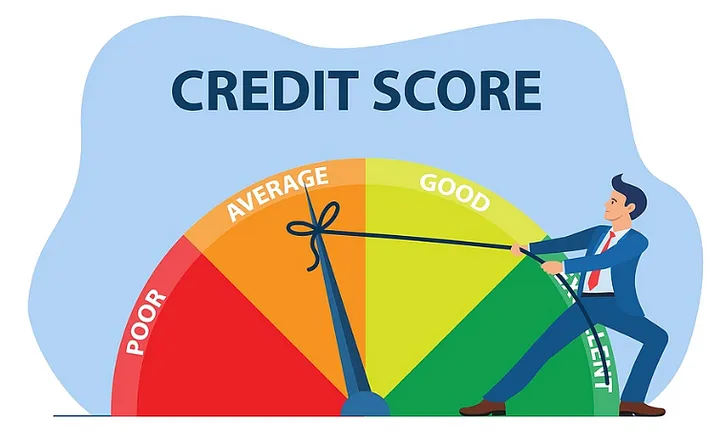
Following Part 1, here are the 5 factors that determine our credit score.
Before I get started on this list, I also want to share that this is only ONE PART of credit — meaning: this is only one of the “5 C’s of Credit” you would see loan officers and brokers use to determine whether you would be extended credit when applying. Naturally, that’s coming up in the next article!
Everyday there are people with high credit scores that tend to get very shocked when they are turned down by a mortgage broker, a credit card application or a financial institution. I will continue to put the magnifying glass on credit score here and put the focus on the bigger picture (so to speak) next.
The 5 Factors
- Payment History
First of all, I hope that everyone understands that when you borrow money, it’s your obligation to pay it back to whoever lent it to you unless they specified that it’s a gift that you do not need to pay back. Clearly, even if it’s a small loan between friends and family, chances are they are not going to go to the credit bureau and submit your payment history on you.
So, this largely applies to institutional lending — meaning that licensed lenders who you borrow money from. Even if you’re repaying your debt but are late — either a few times during the time you’re supposed to pay it back, or consistently, this is going to bring your credit score down.
The easiest way to look at this is to turn the table around. How would you rate a friend who borrows money from you and pays it back regularly and in full as agreed VS another friend who you keep on having to chase down to get your money back? Also, are you more likely to lend to someone with a history of bankruptcy or without? Unlike golf, we want high scores here — the higher the better.
2. Amounts Owed
This only matters if you carry an outstanding balance. If you are the type that pays off all your bills on time — especially credit cards, then you’re likely pretty safe here.
This particular factor is also known as ‘utilization rate’. To be honest, you can ask a credit counsellor, a representative from one of the credit bureaus, your banker, a mortgage broker, or even the person who’s sharing all this information with you right now, none of us can provide you with a clear answer on what percentage you should stay under.
Let me take that one step further and this requires some illustration here: some people say to stay below 50% of your credit limit and some say 75% for your credit score to not be impacted negatively. This really only applies to revolving credit accounts — I’ll get to what that means later (in Types of Credit). For now, let’s use a credit card as an example. Also, for demonstration sake, let’s just use 75% as our number here. I would suggest that grab a piece of paper and a pen and write along as you read on.
Say, if your visa account has a credit limit of $10,000 and you’re carrying a balance of $8,000. That is 80% in utilization rate on that account. This will then impact your score negatively and thus bring your score down. 😔 That’s a frown face. I know what some of you want to ask: what if I have a total of $50,000 in credit limit between my 5 credit cards — assuming each card has a credit limit of $10,000, and I only have an outstanding balance of $30,000, which works out to be 60% utilization rate — sounds great, right? Not necessarily! It depends on the breakdown of each card balance. You can very well have 3 cards that are maxed out and 2 cards you pay down regularly (so no outstanding balance), it can and likely will impact your score negatively. So…work with someone (a credit counsellor, a mortgage broker, or a financial wellness Coach — depending on how much help you need) to get this fixed or starting paying some of these down.
3. Length of Credit History
This is probably the most straightforward one of the 5 factors — the longer you’ve had your credit products for (provided that you’ve been a good girl or good boy at paying it back), it can only help your credit score to rise. The logic is that, if you’re delinquent to the point that your lenders refuse you the product, you would not have that account as an active/open account at the time of pulling your credit score and report. Also, if that’s the case, it’ll definitely stay on your credit report not just as an inactive account, but also one that’s involuntarily closed. It’s like a cautionary tale that one lender is sending to your other lenders and, worse yet, all your potential future lenders.
4. New Credit
Some people know this as a ‘pull’ or a ‘hit’ on your credit. The proper term is an ‘inquiry’ — in case you’re wondering. It’s good to know that there are hard inquiries and soft inquiries. One decreases your credit score and one does, well, nothing to it.
If you’ve just ‘inquired about your credit report or credit score’ via one of the websites I suggested, that was a soft inquiry and does NOT impact your credit score negatively. Actually, it doesn’t even matter which site you got it from. The focus is on ‘who’ originated the inquiry. If you’re just checking up on yourself — it’s no different than checking your bank balance or even blood sugar level to make sure you’re on track.
On the other hand, a hard inquiry is like an ex (or soon-to-be ex) looking into your finances, there’s usually an ulterior motive and that’s usually bad.
When do hard inquiries happen, you ask? They happen every time you apply for a credit product —
- a new credit card,
- a line of credit,
- a personal loan,
- a mortgage,
- a car loan,
- a phone plan,
- get your place hooked up with electricity and gas, or
- a retail card to get some furniture or home theatre.
Doing too many of these in a single year can definitely impact your credit score for the worse. How many? Like ‘utilization rate’, I wish I got a solid answer from all industry professionals and even the credit bureaus directly, but no one is making a giant poster with a number on it to show us! However, collectively, our best and deductive conclusion — that’s right, this is more Sherlock Holmes than relying our Spidey sense — is between 4–6 per year. If your score is on the low side to begin with, max it out at 4. If you feel like you have room to stretch, add 2 more times in a year.
Why do hard inquiries decrease your score? The concept is actually quite simple, by definition, hard pulls (just changing it up to get some street cred here…) indicate that you’re actively shopping for a loan of some sort, and you’re making it known. Think of it this way, you ask your Dad for some money, he says yes, then you ask your Mom, she says yes, then you ask your friend, he/she says yes, then you ask your coworker, he/she also says yes. Now you have all this money in your pocket, what’s stopping you from fleeing to sunny Mexico and live like a king or queen, and never return to pay them their money back?
On the other hand, if you’re in need of money and ask your Dad for it, he says no, then you try your Mom, and she says no, you do this for a few more times, by the time you get to person number 7, they are going to wonder why the previous people didn’t lend you any.
Lastly, as a light bulb moment, when it comes to credit, it’s always better to have it and not need it, than to need it and not have it. (This is VERY important.) Repeat this line to yourself LOUDLY (or loudly in your head): WHEN IT COMES TO CREDIT, IT’S ALWAYS BETTER TO HAVE IT AND NOT NEED, THAN TO NEED IT AND NOT HAVE IT.
So, plan your 4–6 hard pulls a year wisely! Just a side note, most credit limit increase requests now require hard pulls as well and now you know what that means!
5. Types of Credit
Finally, we’re talking about the different types of credit. They were briefly mentioned earlier when we were discussing the ‘new credit’ factor.
What exactly are they?
This is probably not the part you need to remember as much as the 5 factors as there are 5 main types that most of us at some point in our lives will inevitably all have — open, revolving, instalments, lines of credit and mortgages.
An open credit type is where the account holder (or the card holder) can draw credit as needed up to a certain amount with the total balance due and payable IN FULL within a specific time frame. Examples would be an American Express charge card, your utilities and cable bills. Basically, an account that you’re not allowed to hold an active balance in it unlike a typical credit card.
Speaking of credit cards, that brings us to the next type that is a “revolving credit”. Think of a revolving door (or maybe even a hamster wheel), a revolving credit is open ended where the cardholder can ‘draw’ credit from the card up to a certain limit, then make regular/required minimum payments. A line of credit often falls under this category as well. A line of credit is usually different from a personal loan in that a line of credit typically requires interest-only payments as long as you continue to pay down your balance. A personal loan often times requires you to make principle-and-interest payments.
That brings us to instalment credit — a personal loan or a car loan usually falls into this category as these loans come with a fixed number of equal payments. If you are still carrying a student loan, chances are, this is where that belongs as well. An instalment loan typically starts with the maximum amount you’re approved to borrow, and, unlike a revolving credit account, that amount can only go down from there.
Lastly, a mortgage. It’s structured similarly to an instalment credit and typically applies only to real estate. Note that a HELOC (home equity line of credit) usually functions more like a regular LOC, thus, more of a revolving credit account.
Conclusion
There you have it! Understanding your credit from an investor’s perspective.
Like everything else, once you understand how it works, it appears simple and you can leverage it to your advantage. When you start learning about the different creative financing strategies and instruments later, you will see how a high credit score is not even a necessity (most of the times).
My Real Conclusion
The credit you carry will be built a lot based on your integrity in the business world. That’s the REAL currency of CREDIT you will also need to pay attention to maintaining.
Tomy dedicated readers, I thank you for your support and feedback. If this is the first time you’re reading one of my publications, I hope you’ve enjoyed it and learned a thing or two.
If you’re wanting to be a part of a community of real estate investors from around the globe, here is the T.A.L.E.N.T.ed Investors Facebook Group. It’s a place where people come together to share experiences, knowledge, successes and challenges, and money making opportunities!
For those of you who prefer watching videos, here is the YouTube channel where some of my work (very raw) has been shared.

Lastly and definitely not least, Bootcamp! If you prefer the live interaction and delivery to help you build some foundation, our next Bootcamp is on July 23 and July 24. Go ahead and register for a session for either day to help you further your financial education.
(Written at home in Edmonton, AB)
Financial Education: Understanding the 5 C’s of Credit
June 28, 2022
Great…first “the 5 factors” that determine my credit score. Now another 5 C’s…how many five-somethings are there?!
Don’t you worry. There aren’t many. Perhaps, I’ll share the “5 Rules of Investing” next. Joking…NOT joking!
First of all, I will say that a seasoned and experienced Mortgage Broker can explain this much better. So, once again, my disclaimer is this: I will review these 5 C’s from an investor/entrepreneur’s perspective.
What are the 5 C’s of Credit?
Many of us have never even heard of this and yet, arguably, this is probably more important than our credit scores.
The 5 C’s are:
- Character
- Capacity
- Capital
- Collateral
- Conditions
These are universally applicable measuring sticks with (especially) institutional lenders worldwide.
As I’ve mentioned previously: when it comes to credit, it’s better to have it and not need it, than to need it and not have it. (And I will keep mentioning this again and again…and again…)
Whenever we are applying for a credit product — personal loan, line of credit, mortgage, business loan or just a new credit card — the lender will want to know you can pay back the money as agreed. Pretty simple in theory, right? Well, on paper, they don’t know you as a person and they cannot tell you apart from me based on an application. They only way to really assess your credit worthiness is through the 5 C’s.
Let’s jump in.
Character
While it’s called “character”, this is referring directly to your credit history — how you’ve managed your debt in the past.
This can be easily achieved usually by pulling your credit score as a quick glance (refer to the previous articles to learn more). We all start developing our track record (aka credit history) the moment we start taking our credit products. Yes, that includes getting a cell phone bill in your name, a cable service and making sure your apartment gets heat and water.
The extenders of these products (aka lenders) may choose to report their observed behaviour on you as a borrower to a (or multiple) credit bureaus.
In essence, character in this case can be tied directly back to your credit report and the 5 factors that determine your credit score. However, let’s not forget that a credit report will contain more information on your track record other than you’re managing your credit card bills, mortgages, car payments and lines of credit. It may also contain information on any foreclosure or bankruptcies that have happened.
A tangent here — as far as I know, if you’re ever thinking about getting a mortgage again, it’s easier if you’ve had a bankruptcy on your file than a foreclosure. Why? Think about it this way: a foreclosure means you did not (or could not) make your mortgage payments (and usually for an extended amount of time) as promised. This is largely seen as a ‘voluntary’ act. As a result, why would another lender give you the same type of loan? Feelings or no feelings, we can all understand the idea of “once bitten twice shy”.
Other the other hand, a bankruptcy could’ve been caused by many other factors that are considered as ‘involuntary’ — a divorce, a failed business, an injury that has negatively impacted your ability to debt service, etc. However, this is not to say it’s better to declare a bankruptcy when you’re in financial hardship than going into foreclosure. Ideally, you want neither on your file (duh!).
Lastly, to develop a strong credit history, always make payments on time and keep your credit utilization at a generally reasonable/acceptable rate (again, see previous articles for clarification).
Capacity
Your capacity refers to your ability to repay loans/debt.
This is determined by evaluating your debt to income ratio. Depending on where you live, you may have heard of terms such as ‘total debt servicing ratio (TDSR)’ or ‘gross debt servicing ratio (GDSR)’.
Generally, a low DSR (debt servicing ratio) signifies less risk for a lender because it’s tell the lender that you:
- have a reasonable amount of debt, and
- are managing your debt well, and
- have the capacity to take on more (on a monthly or annual basis).
Every lender is going to have a DSR. I’ve learned that the DSR can change quite drastically especially when the lender has an appetite to grow their marketshare in certain loan products.
Regardless, here a quick calculations on how DSR is done: add up all your monthly debt payments and dividing that number by your monthly pre-tax (gross) PROVABLE income. Then multiply it by 100(%). And, if you are watching My Daily Dose with Tim, you’ll see how important one of the key performance indicators (KPIs) called the Coverage Ratio (or DSCR — debt service coverage ratio) is when it comes to the lender’s evaluation of a larger building.
Lastly, “when it comes to credit, it’s better to have it and not need it than to need it and not have it”. This doesn’t mean that you get to use your available credit to shop for anything you want. A smart investor leverage credit and debt to build income and wealth.
Capital
Capital tend to include the cash and liquid (or liquidable) assets that you are willing to put towards the loan product you’re applying for. One biggest example is getting a mortgage.
Typically speaking, the larger the downpayment, the better your interest rate and terms will be. That’s because the amount of your downpayment is a direct message to your lender how much ‘skin in the game’ you have. You are serious! Of course, as an investor, one of the main reasons why we love real estate is because we have the ability to leverage up to 80% on investment properties. This means that we can come up with 20% in downpayment against the purchase price of a property. This also means we often will be kickin’ and screamin’ when it needs to be more than 20%.
Lastly, I do not endorse the concept of saving money by any stretch of the means. Tucking money away in savings accounts of any type is possibly the worst way to ‘accumulate’ capital for any investment deals. While you may start to understand/feel this due to the recent inflation numbers, many people in your immediate circles (parents, siblings, best friends, close colleagues, etc.) may be feeling that, too. Everyone wants to work less themselves and their money to work harder for them. This is why I keep repeating what I was taught: when the deal is good, the money will follow. Raising funds to grow and stabilize your portfolio is way smarter and more sustainable (when done properly) than constantly trading hours for dollars to save.
Collateral
Collateral in this case goes beyond the liquid cash (or downpayment) that you may have from your savings and stock portfolio. It includes those plus investments and assets that you are willing to put toward your home. Essentially, a lender will consider the value of your personal (business if applicable) assets of a secondary source — while not ideal — of repayment.
Collateral often times is a significant part of the consideration to a lender. However, the significance of each type of collateral can change depending on the type of loan you are getting. I often think of a lender like an investor. They are giving you the loan largely based on the ‘deal’ you have on the table. They are essentially your partner. As educated investors, we know that “when the deal is good, the money will follow”. This is why, typically speaking, the asset or the deal itself is the first and most significant collateral. Because if the lender does not deem it as a good ‘investment/deal’, you wouldn’t even be considered in the first place.
Lastly, this is why active investors have all heard about ‘qualification based on net worth’ over time. Because the lenders tend to feel a lot safer when they know their money is safe and that there is a lot to ‘go after’ if a high net worth borrower defaults. In the beginning of my career as an investor, the collaterals largely relied on the asset itself (which is great because I chose real estate as my main investment vehicle), my ability to repay on the monthly basis. Later on, it’s become the asset itself and what’s in my overall portfolio. This also sparks the conversation about asset protection. Many make the mistake to put everything in their personal name to boost their net worth right away and choose to continue it that way. Any financially educated person will tell you that is simply…well, stupid. That will be a whole other subject altogether at a later time.
Conditions
These usually refer to the lender’s micro- and macro-research (‘due diligence’) on the condition of the investment, the business, the industry, the economy and (in my opinion), most importantly, the borrower’s intention and plan with the funds borrowed. Most lenders are more inclined to lend money for a specific purpose as opposed to a general loan that can be used for anything by the borrower.
The other external factors like how the economy is, where it’s going, the federal interest rates and budget, etc. are out of any of our control (largely speaking unless you’re the wealthiest person or the most politically influential person on the planet). Every lender has a different perspective and appetite for taking on risks. What we tend to see is then the requirement for a larger ‘skin in the game’ for the borrower.
Lastly, from my personal experience, this is why I remain fond of single family home investing. I understand the path of trading ‘four green houses for one red hotel’. I also understand that everyone needs (and more importantly — WANTS) a roof over their head at the end of the every day regardless of the economic conditions. It’s never about investing for fame or for bigger profit for me. It’s about investing for freedom, for security, for happiness, for choices in life and for the opportunity to make a difference in other people’s lives also. While external conditions may change quickly and drastically (remember: change is the only constant), when we are smart and financially educated enough to think for ourselves, helping others get what they want is ultimately how we create what we want. Or better yet, I’ll end with this Zig Ziglar quote:

Tomy dedicated readers, I thank you for your support and feedback. If this is the first time you’re reading one of my publications, I hope you’ve enjoyed it and learned a thing or two.
If you’re wanting to be a part of a community of real estate investors from around the globe, here is the T.A.L.E.N.T.ed Investors Facebook Group. It’s a place where people come together to share experiences, knowledge, successes and challenges, and money making opportunities!
For those of you who prefer watching videos, here is the YouTube channel where some of my work (very raw) has been shared.

Lastly and definitely not least, Bootcamp! If you prefer the live interaction and delivery to help you build some foundation, our next Bootcamp is on July 23 and July 24. Go ahead and register for a session for either day to help you further your financial education.
(Written at the Anaheim Marriott in Anaheim, CA)