
Tag: Personal Finance

Financial Education: Know the Difference — Financial Freedom vs Financial Independence
April 26, 2022
Before we go any further, my goal this week is to clarify a few things here and leverage it as the foundation for what’s to come.
Way too many misconceptions and misinterpretations exist out there in the world today — particularly implemented by ignorant marketers who are not financially free, worse yet — financially educated, themselves.
Admittedly, from the very beginning, I could’ve click baited everyone with buzz-word driven titles and I chose not to (and will continue to choose not to). Helping others create a new blueprint for a better financial future is a higher calling, a serious undertaking and I take it seriously.
I often say: when it comes to someone’s finances and financial future, I don’t f**k around. It’s like what Uncle Ben said to Peter Parker (Spiderman): With great power comes great responsibilities. As much as I value ‘freedom’ in almost all aspects of life, this is the one area where I personally believe that definitions matter. They matter in the sense that it can help us set clear goals and paths initially. It also helps us weed out unnecessary and wasted efforts while devoting ourselves to building a healthier and stronger financial future.
As a continuation to the Wheel of Wealth articles, financial freedom comes ONLY from the passive income bucket. With that said, there are 3 levels of financial freedom usually:
- Financial Freedom #1 — when there’s enough passive income to cover all of our basic expenses.
Remember the expenses that you recorded during Personal Budgeting? If you haven’t done so, now’s a good time to go back and review your list of expenses. While doing that, you also want to trim down all the unnecessary expenses (this exercise is extremely personal because we all have different definitions and personal circumstances that dictate what’s necessary and unnecessary). For example, I live with 5 autoimmune disorders daily. In addition to managing my symptoms, mobility and pain levels through diet and exercise, I am using a biologic prescription drug. It’s an injection that happens once per month on average (and yes, I have to jab myself with a needle every month). This drug runs ~$1,700/month. Living in Canada and Alberta in particular, I’ve purchased 2 health insurance policies that would add up to $245 per month and it would cover 100% of this prescription. As a result, $245 is part of my current basic expenses. (I say ‘current’ because I’m hopeful that I can ween myself off it one day.)
If you’re currently looking at your personal budgeting worksheet as provided, really examine your expenses. Some fixed expenses may be difficult to change or cut. This is where you’ll need to really differentiate ‘needs vs wants’ for yourself. I remember having to move out of our 2,600 sq. ft. house and into a 1,350 sq. ft. one. That was an easy decision based on numbers — I was cutting down on my expenses maintaining a liability. In reality, it was a hard one on my ego and personal sanity. I hated the smaller space, the lower ceiling and how crammed everything felt. I also hated being judged by my friends and family who didn’t understand why we’d downsize. The natural assumption was that “I’m not doing well financially” and my very basic human reaction is to my myself feel either angry, misunderstood or lesser-than. Thankfully, I had several role models and mentors supporting my decision.
In reality, I never compromised too much on my living standards in the first 5 years of my investing career — never lived in a shack nor drove a beater car, or ate sub-standard foods. However, I did make sacrifices elsewhere — particularly in the beginning. Less traveling and made budget-driven travel decisions. Clipping coupons, collecting loyalty points from necessary expenses as much as I could, and measuring all expense-prone activities (such as usage on internet, cellphone, landline, home securities, home utilities and other subscription-based services).
The point is, Financial Freedom #1 is when you have enough income coming from the passive income bucket ONLY to cover all your basic expenses. This means that you do not have to go get a job for the pay checks just to pay bills. Most people HAVE TO work to survive. When you’ve achieved Financial Freedom #1, you effectively have freed yourself from having to: get up (at least Monday to Friday), go to work for 8 hours (or more including commute time), collect a pay check once every so often to pay for your bills. You have now freed up at least 40+ hours a week to do what you’d like to do with your time (and life!). Imagine what you can do with that time.
This number varies from person to person, family to family as you can probably tell. The goal is to truly understand what this number is for you before you can move forward with the S-M-P process.
So, what’s your Financial Freedom #1 right now? Are you able to make that number easier to achieve?
2. Financial Freedom #2 — when there’s enough passive income to cover your active job income.
This is really where most people want to be when they first embark on the journey to financial freedom. Our jobs — and for argument sake, I’m just going to use it as a dirty word right now — usually stand in the way of what we really want to do with our time.
Time on vacation to enjoy the beautiful scenery and food around the world. Time spent with our loved ones. Time to build healthier habits — body, mind and soul.
However, we are often trapped (or feeling trapped) because these jobs tend to pay us just enough to pay our bills and afford ourselves a bit of a lifestyle. As a result, the time we want to spend doing what actually want to do get shrunk and, for some, become non-existent over time. This is why we also call a job “just over broke” or the classic “golden handcuffs”. We have been trained to think that this is the norm and it’s just part of life. The truth couldn’t be further from this soul-sucking ideology passed down to us from the Industrial Age!
So, what’s your Financial Freedom #2 right now?
3. Financial Freedom #3 — the do whatever you want, whenever you want, however you want, with whomever you want and for as long as you want.
Mouthful? I know! However, I just wasn’t sure how most people would react to the term “F U Money” here.
In all honesty, I have never met anybody personally that has said “Oh, I’ve achieved financial freedom #3”. Yet, I see it in their way of living. More importantly, in their way of being.
The logic and reality, in essence, is that you know how to reach Financial Freedom #2 and #3 if you’ve learned and applied to achieved #1. Most of the heavy leaning and lifting is in the beginning stage. Creating more income and wealth through real estate is a process of duplication. Yes, we can always do bigger deals (and there’s hardly an end to the size of a deal), but does it serve you and contribute to your goals directly in the most efficient way possible?
As I’m writing this article, I’m sitting in the den in our Four Seasons Whistler Residence where we are for a week on this leg of the trip. I’m sharing not to brag nor to impress you. From the Four Points to the Four Seasons, the journey seemed long but it really isn’t. These days, I travel approximately 4–6 months every year. They are partly for work and mostly for fun. The line’s really blurred now and I LOVE IT. It’s something that I’ve spent the last 12 dedicating my resources to create for myself. I’m ‘working’ and I’m not. I’m also on vacation and I’m not. The fact that this is the 3rd Four Seasons Resort stay in the last 10 weeks (1st in Belevery Hills to check off a bucket list, 2nd in Ko Olina, Hawaii simply because Disney Aulani next door was booked full) is also an ah-ha moment for me. I once heard this from my mentor: if you can’t buy it twice, you couldn’t really afford it in the first place. That lesson really stuck with me. The lesson here is discipline. The discipline to delay gratification. Here is one of my all-time favourite quotes on discipline:

To conclude the definition of financial freedom, it basically means that all the income sources need to come from the passive income bucket. It’s then a matter of how much passive income you want to create over what amount of time. Or rather, which Financial Freedom # you want to achieve.
Know the difference
Incontrast, Financial Independence is easily defined based on the Wheel of Wealth: you have enough income streams coming in from BOTH the active and passive income buckets without relying on any single source of income to survive and thrive.
Here, I’ll use ‘job’ as a positive word. This is actually my true belief these days now as “nothing inherently has meanings; all meanings are assigned”. I don’t quite recall where I heard that brilliant line from and yet it’s so applicable in almost everything. In this case, for many of us, we actually don’t hate our ‘jobs’. We only hate them WHEN we feel restricted: want to go on a longer vacation and get denied our full access to our allotted vacation time; need to go to a wedding or a funeral and only can get a limited amount of time off; want to buy a nice place, vacation, car, cellphone or computer (or just something nice or nicer in general) only to realize that there’s not enough. For so many people that I’ve witnessed over the years — especially the ones that have built a career (meaning that they’ve spent the time, money and resources going to school to trained for a certain skills based on their identified interest and maybe even passion) — we actually don’t hate our jobs. We just hate them when we are not feeling enough. This is one of the main reasons why I’m perpetually excited to teach and share and help people create better financial resources in life. Again, money isn’t everything. It just affects everything we do everyday. It’s just an effective tool for measurement and transactions for all mankind.
It’s been said that the average millionaire has 7 sources of income. When leveraging real estate as an investment vehicle, anyone can easily create more than 7 sources of income. However, the point and my personal belief that I want to share is this: true financial security, freedom, happiness and sustainability is built on multiple streams of income. Period. Having been in negative net worth twice — both before and after financial education (sounds funny to say after but the cutoff is 2010 here for me), this is probably the BEST advice and share I have today.
For my dedicated readers, I thank you for your support and feedback. If this is the first time you’re reading one of my publications, I hope you’ve enjoyed it and learned a thing or two.
For those of you who prefer watching videos, here is the YouTube channel where some of my work (very raw) has been shared.
(Written partly at the Four Seasons Whistler Residences, and partly at home in Edmonton, AB)

Financial Education through Real Estate: How to Choose a REI Mentor (Part 1/2 — Top 3 Qualities)
May 10, 2022
Truly, the best part about what I get to do these days is share my education and experiences with others who have the same goal of achieving financial freedom (and didn’t think it was possible or attainable) as when I first started going down the path less traveled.
When this journey officially began in 2010, I remember sitting in a hotel ballroom during my initial Bootcamp weekend. While learning the foundation of how to leverage real estate investing strategies to create a high performing portfolio that would contribute to my personal goal of financial freedom, I was also inspired by the trainer that weekend. At one point, I turned to my husband, pointing at the trainer on stage, and said: “one day, I want to be just like him.” His level of energy, positivity and the idea that we live in a world of abundance — more specifically, financial abundance — was not only inspiring, but refreshing. I felt like my soul was cleansed and any negative views and unkind ideas about money that I grew up with started to vanish that weekend.
In 2014, my dream came true. This was a dream because I actually didn’t set a deadline for it so it wasn’t a goal (definitions matter sometimes, remember?!).
Since declaring our own financial freedom on July 25, 2012 (and I hope to hear your date at some point), I continue to build our portfolio. However, admittedly, I started getting ‘bored’. Yes, as a 30-year-old, it was my egotistic way of wanting more challenges in life. Yet, the idea of doing anything else (ie. working for someone else) seemed unappealing and, quite frankly, a little idiotic. After all, didn’t I just bust my ass off for the last 2 years — learning and applying and building my portfolio — so I wouldn’t have to do that again?
My “better half” had the foresight. He continued to stay employed. And if you asked, he would tell you that he was simply following the trainer’s suggestion: when you are financially free, it can simply mean that you work because you want to, not because you have to. You work because the work you choose to do can now serve a purpose — whatever that is to you. He wanted to stay employed to further his skills and because he loves the social environment. It certainly didn’t hurt that he always learned fast, excelled at what he did and most of his pay checks reflected his effort.
I, on the other hand, had to really battle through that idea. This is also one of the reasons why I continue to say: I’m not the smartest person in the room ever! And, I pray that I don’t ever put myself in a room like that. Growth is so vitally important to my very being today. This has become the reason why I believe in the concept and active engagement of mentorship (of any kind) with all my given and earned wisdom to date.
In this article, I share the top 3 qualities that I look for on how to choose a mentor for you in your real estate investing journey. They are the combined perspectives of myself being a mentee many times in the last 12+ years and a mentor in the last 8.
The Top 3 Qualities I look for in a real estate investing Mentor:
1. They have achieved what I want to achieve.
This ‘quality’ is twofold: One — as the title suggested: they have paved the way for me to follow to create the results I want for myself. Two — it helps me collapse my timeframe. The latter is definitely the more important factor. Even to this day, whenever I get the chance to teach a Financial Education Bootcamp (we view this as the foundation for building a successful and sustainable real estate portfolio), I always ask people to complete this sentence: Time is _______. Unsurprisingly, almost without exception, 100% of the times, that blank is filled in with the word money. When, in fact, looking at time closely, TIME is EVERYTHING! These are 2 of my favourite quotes about time that I’d like to share:


When you ask around to see if anyone’s invested in a mentor in their lives, you’ll find out that the answer is most likely yes —
Yes to having a dance tutor.
Yes to having a piano teacher.
Yes to having a football coach.
Yes to having a personal trainer.
Yes to having a personal growth coach.
Yes to having a mentor in pursuit of higher education and degrees.
The list goes on. Aside from any natural notion of ‘going with the flow’ at any age or for whatever reason (I’ve been told that having a designated mentor when you’re getting a PhD is a must), most would say that these are conscious and welcoming decisions they happily made.
The mentors get to share their knowledge and experience, and we get to drink it all up like a jello shot at a party! Ok, maybe not the best analogy, but I think you get the idea. It’s easy, fun and the effect is often quite immediate.
With that said, the SMP Philosophy has applied quite well for everyone on this journey. I stand for leveraging real estate investing strategies to achieve financial freedom because that was my goal and is my passion. I know some others may choose a mentor based on a single strategy, a market or a certain type of property. The importance is that you and your potential mentor align on your goal.
2. They have my best interest at heart.
Itgoes without saying that life can be difficult and downright sucky at times. During those times, the comfort and solace we find in a bear hug from our loved ones, or maybe even just some consoling words may be what we crave the most. Yet, is it what we need the most?
Even with goal alignment, I want a mentor who is unapologetically straight with me. After all, my FIRST reason to have a mentor is to grow, and in ways that I may not even know I’m capable of (read that last line again). For example:
- When I am stuck, they guide me through the thought process rather than just giving me the answer. They want me to truly learn how to fish so I can eat for life rather than giving me a fish right now. However, rest assured, they are there to cheer me on and holding my hands when I’m wobbly in the process.
- They tell me what I need to hear and not what I want to hear (even if it’s hard for them to say). I’m fully aware of the fact that they are not here as my friends (at first). We are not buddies (at first). This is all with the purpose to help me grow. I grew up in Taiwan and had plenty of experiences of “teachers” yelling at and beating me (physically — yes, I’m from that era and that culture). The tough love is DEFINITELY NEEDED sometimes even as a grown man. A long-term friendship may develop organically over time but it’s not the focus.
- They don’t give up on me as long as I’m showing effort. This one probably hits home for me the most especially after the last point. As a real estate investing mentor for just over 8 years now for people from around the world, I can proudly say that I have NEVER missed anyone’s effort to stay connected and to get reconnected when they needed help — regardless of how long it’s been. However, I do make it very clear that the premise is “as long as they are making an effort” to learn and grow. I’ve simply come to embrace the fact that both timing and time are equally important. Having benefited from rebuilding long lost relationships (or just the ones that maybe got parked because life took a detour), I believe that this relationship is no different. One of my favourite quotes is this:

I’ve learned a few lessons the hard way over the years: “you can’t help those who don’t want to be helped” and “people don’t place value on something they get for free”. As much as I wholeheartedly believe that EVERYONE can achieve financial freedom, I’ve encountered, countless times, folks who don’t want it as badly as I want it for them. It’s simply not going to work. This is where also I would personally appreciate getting rejected by a potential mentor. They’re basically just telling me that I’m not ready to receive yet.
3. They are open about their failures.
Ipersonally LOVE the word “failure” — now. Growing up, failing meant a stern talk if not full out scolding was in the near future. That is, if I was lucky enough to not get beat when my test results were bad. Failing also meant looking bad. And I believe we all learned this lesson over and over again from our upbringings all the way to our day-to-day life now, too.
Failure is a blessing. Failure is a stepping stone. Failure is success in progress. As mentioned in Part 2 of Mindset, losing $1M overnight by far is the biggest failure I’ve had to work through. However, without it, I wouldn’t have come back stronger and better, doubled my portfolio and tripled my passive income in half the time compared to the first time around, and found the courage to start Trust Your Talent Academy to make sure as many people as possible can learn to avoid the mistakes that I’ve made. Not only that, I’ve been told that one of my opening lines when I teach has been: “You are really all here to learn the collective lessons of what not to do from me and the investors that have also come before me in real estate investing.” After all, as one of my mentors put it: “You can make a lot of money in real estate investing if you know what you’re doing. And you can lose a lot of money in real estate investing if you don’t know what you’re doing.”
I know what we are teaching and how we’re guiding new and seasoned investors holds one of the core values at Trust Your Talent: sustainability. Staying power matters. Those who continue to bust through and learn from setbacks are the ones in it for the long haul. After all, a life without having to worry about financial issues is freeing and rewarding.
Here is a quick video that has inspired me for years and I’d love to share it with you: Famous Failures.
This is a topic that I can go on sharing forever — both as a mentee and a mentor. As evident as it may be, I will risk sounding like a broken record here. Everyone needs a (if not multiple) mentor on their real estate investing journey. Based on the SMP Philosophy, I’ve had many mentors in my journey so far and I know it will continue to be that way.
In the next article, I will also share some of my personal experiences with some of the qualities that are definitely deal breakers — meaning, even if you ‘mentor’ me for free, I wouldn’t take it.
Tomy dedicated readers, I thank you for your support and feedback. If this is the first time you’re reading one of my publications, I hope you’ve enjoyed it and learned a thing or two.
If you’re wanting to be a part of a community of real estate investors from around the globe, here is the T.A.L.E.N.T.ed Investors Facebook Group. It’s a place where people come together to share experiences, knowledge, successes and challenges, and money making opportunities!
For those of you who prefer watching videos, here is the YouTube channel where some of my work (very raw) has been shared.

(Written at home in Edmonton, AB)

Financial Education through Real Estate — How to Choose a REI Mentor (Part 1.75/2 — Top 3 Deal Breakers)
May 24, 2022
(WARNING: COLOURFUL LANGUAGE IN CONTENT)
The challenge continues. Admittedly, this particular topic — qualities vs deal breakers that I look for an a real estate investing mentor — is by far one that gets me going the most. I can feel the heart palpitation through my trembling fingers as I type. Like everything else I’ve shared so far, I only do so from personal experiences and perspectives. More importantly, it’s done with the hope that fewer people make the mistakes that I, along with many others, have made over the years.
With that said, the list continues with the 2nd deal breaker for me these days.
2. Misalignment in mindset
This is the one that gets me the most heated and it’s personal.
First and foremost — stripping away the financial education and any reference to real estate for a New York minute — investing in its simplest form these days means making money make money. Learning how to invest is then learning how to make money make money. (Might be good to read the last 2 lines a few more times.)
People think that “financial education through real estate investing” is only for the novice and the inexperienced. Experienced investors and property collectors need not apply. This cannot be further from the truth.
Many times, I’ve had to first help students either get out of their existing non-performing properties, or improve performance before acquiring more. This is why STRATEGIES are so crucial (as stated in the SMP Philosophy). I’ve repeated this over and over again. Sounding like a broken record to my students has apparently created some very positive impact in their investing journey, so here I go again: it’s not simply about buying properties or buying more properties. It’s about buying properties that will PERFORM TO MEET YOUR FINANCIAL STANDARDS and GOALS.
First thing first — cashflow. We invest for cashflow.
Many have attempted (and many will still) to take a different approach in getting your attention by focusing on the ‘long term wealth gains’ from investing in real estate. What does that mean? They will focus on “don’t fall into buying for cashflow, buy for the long-term equity growth”. This message is targeted towards those who may find it challenging to find any cashflowing single family properties in their home market who take on the approach of buy-rent-and-pray.
Let’s go back to basic once again here: we invest in real estate because we want to create better financial resources for ourselves. Both now and later. Cashflow, aka ‘profit’, is the ONLY indication whether or not you have a viable business deal at hand. We are not saying it has to cashflow from day 1 (you can if you use the right strategy such as tenant-first Lease Options). We are saying that, before going into a deal, we need to have the ability to determine that it will cashflow once all the necessary renovations and improvements are done. Nobody would buy a business that will lose money every month, why should investing in real estate be any different?
It’s also that mindset — one that tells you to ONLY focus on the long-term growth — that gets people in trouble. This mindset alone has created a subset of bitter “I once was an” investors and the market went against me. And frankly, if you’re only going to be a property collector regardless performance, it’s ok as long as your life isn’t impacted negatively in any way. Unfortunately, not everyone is in that position.
To conclude this thought, people who tell you to let go of cashflow or putting it other than on the top of the priority list when analyzing a deal do NOT even qualify as a real estate mentor in the first place. You want someone who understands that real estate is a means to an end. You want someone who understands the business fundamentals in investing — beyond acquiring assets. You want someone who understands the Wheel of Wealth to guide you to make the best and right investment decisions with you.
Next, we look at ROI — return on investment is what a bona fide investor-minded person focuses on. In laymen’s terms, a true investor focuses on “how much it’s going to make me, not how much it’s going to cost me”.
Piggybacking on that though, this is also where we see the amplified differences in mindset and behaviour:
- being frugal vs being cheap,
- building assets vs acquiring liabilities, and
- value vs money.
Fundamentally, there is nothing wrong with how anyone wants to position themselves in the marketplace. The biggest drawback that I have witnessed is how the innocents get taken advantage of because they simply aren’t able to tell the difference. Hence, one of the main driving forces for writing this article for me personally.
Looking back, I still get a good chuckle at how naive I was when I enrolled into my very first financial education (through real estate investing, of course) curriculum. At the tender age of 28 (in 2010), my husband and I decided to invest CAD $50,000. There was just this burning desire to make a difference in our own life. In today’s money, our investment looks like this:

It doesn’t matter how you dice and slice it, that’s a decent Mercedes right there! At 28, that was a sh*t load of cash (that didn’t have). However, after slaving at a corporate job for 2.5 years, making a 6-figure income and working an average of 80 hours per week, I knew I had to invest in my financial education if I was ever to see a change in my financial future. More than that, I needed a change in my life. I could get into how poor my mindset was back then — especially when it comes to money, but we’ll save the popcorn for a later date when I can really paint you a picture of the “poor middle class me” tale.
The point is this: I saw the possibility, the hope, the potential and, most importantly, the proof of what my future life could look like. What drew me in the most was not the earning potential (although it was a close second at the time). It was how the trainers, mentors and the students they currently have going through the training THINK and VIEW their lives and the world. Gone are the ‘lack’ mindset and language, the daily dread and despair for an unfulfilling job and life, and the negative and limited outlook about the future. Instead, I saw people with different perspectives and positive energy for the first time since probably kindergarten. I knew I wanted to be around that as much as possible. I needed to.
As a result, when I am looking for another REI mentor for myself, I pay extra attention to their mindset. Alright, alright…before some of you want to slap me and go “what the f**k does that mean?”, here’s a relatively more concrete list of what that means (in the order of a thought process):
- Mindset translates into behaviours and words.
- Behaviours that tell me that they are cheap and not frugal is a red flag.
- Words and language that overly focus on cost/money instead of return and goal is a red flag.
I sometimes get challenged on why the investment in our Mentorship Programs is much higher than everyone else’s out there. Here are my responses from the heart and my personal journey:
- Higher compared to what? Collectively, all the Trainers and Mentors have made a thousand folds of our investment in education that we know otherwise would not have happened. Certainly, not in the timeframe that we have.
- What’s the price you would put on achieving time and money freedom in 3–5 years? I had a condo in the Vancouver market. Purchased in 2004 as a pre construction for approximately $256,000. Sold it in 2010 for $400,000. The seed money created financial freedom for me starting July 25, 2012. Today, that condo it worth approximately $900,000. An extra $500,000 in value. That’s an extra $50,000 a year in gain. Not to mention capital gain tax now if I sold it. Not to mention inflation. Not to mention the fact that my time freedom is worth much more than $50,000. Do your math.
- What is the value of having time and money freedom in your life?
- It’s a hand up, not a hand out. Most people place little to no value in something they get for nothing. Worse yet, most people are willing to bet small and lose small all too often. Your skin in the game is ultimately an indication of how much you believe in yourself. I had to believe in myself. I needed to. There was not another option.
- Lastly, Mentors and Trainers on our training team (not to mention a large number of students) have all declared financial independence and freedom. In other words, we know our worth — the collective knowledge, experiences and network we bring to the table to help any student turn their goals into reality.

This quote always gets me and it’s so true especially when it comes to the real estate investing industry where high value services and assets are changing hands regularly.
By no means do we know everything. In fact, what I love about our entire Trust Your Talent community is this: we are all lifelong learners. Mentors and trainers are simply those who have accomplished what you want to accomplish before you. We understand and RESPECT the concept that ‘time is everything’ (as mentioned in one of the previous article). Supporting someone else on their journey is more than an honour, it’s a responsibility that takes time — our most valuable resource in life.
If it helps, turn the table around and ask yourself this: what would you do when you have the time and money freedom to do anything you want? The cold hard truth is this: we don’t make the best money teaching and mentoring. And we shouldn’t. It’s a balance act. When a mentor has earned the time and money freedom, mentoring is our form of contribution and giving back. And yes, it’s an additional source of income. Whenever I get a chance to teach these days, I often say “teaching and mentoring probably generate the lowest financial ROI for us” to the students. Mentors don’t do it for the money. The cool part is (especially with advanced students) they now get it and agree with me once they’ve learned how simple making money can be. Now, the best part is this: teaching and mentoring definitely generate the highest sense of fulfillment and purpose for us these days.
Here are some uncategorized and yet relevant thoughts to conclude this part of the article:
- Know what your financial future is worth to you before you choose a mentor.
- Don’t be cheap when it comes to the betterment of your financial future.
- Your mentor should have the ability to show and help you build your power teams from scratch. It’s about teaching you how to fish so that you can build income sources beyond borders.
- Your mentor understands that mentoring is a full-time commitment but not a full-time gig.
- No one person knows everything (as great as that sounds). Pay attention to the size of their ‘training team’ or ‘organization’. Many are the lone wolf coaches with limited strategies and market experiences (or experiences in general).
- Ask why instead of how (or how-to) questions when you’re engaged in a conversation with a potential mentor. Listen to their thought process.
- Your mentor should have the ability to diagnose your existing financial wellness and improve upon it.
To be continued…
Tomy dedicated readers, I thank you for your support and feedback. If this is the first time you’re reading one of my publications, I hope you’ve enjoyed it and learned a thing or two.
For those of you who prefer watching videos, here is the YouTube channel where some of my work (very raw) has been shared.

And if you’re looking for the quickest way to understand what “financial education through real estate investing” means, we run 1-Day Bootcamps as an introduction. And yes, full disclosure, you’ll have the opportunity to pursue advanced trainings during the Bootcamp if you wish.
(Written at home in Edmonton, AB.)

Financial Education through Real Estate: How to Choose a REI Mentor (Part 2/2 — Top 3 Deal Breakers)
May 31, 2022
Sofar, this topic has generated the most responses and, frankly, I’m not surprised. The best part, however, is that it’s given me the opportunities to further the dialogues with some of you and I so appreciate that. Many have thanked me for sharing while some accused me of ‘sitting on my high horse’ and preach. One way or another, I appreciate your time and effort. To those who have said that these articles are making a change in their lives (you know who you are), I am extremely happy for you and I thank you for allowing me to be authentic.
Every piece of writing I have created is meant to be positive, and even inspiring. This quote has been my guiding light for the last 8+ years of why I still teach and mentor.

More importantly, for the same reason why I write in the first place — to help people think about certain things ahead of time. After so many years, I do see many people WASTE away their talent, their drive, their ambitions, their money, their time and their goals as a result. Unfortunately, many of these cases have much to do with mindsets that do us a disservice. Fortunately, it’s given me the chance to share here.
Inthis article, I will conclude this now 4-part topic with the last deal breaker for me when choosing a real estate investing mentor.
3. Misalignment in values
Let’s define what value means in this context first. Here’s a high level thought process:
- My personal values are health, sustainability, joy, fulfillment and impact.
- When I’m choosing a mentor, I want to get a sense that we align on at least 2 of them. For example, health is an overarching value that covers beyond physical health. It also covers mental and financial health. If someone is financially successful and yet completely out of shape physically, I know there is a misalignment. While I’m all about leveraging money as one of the greatest tools in the world, I personally do not believe that it should come at the expense of my health in other areas.
- Sustainability is a huge one. I’ve witnessed too many investors, entrepreneurs and ‘mentors’ (yes, using the quotation marks to be sarcastic here) come and gone over the years. Some as short as 6 months, some as long as 8 years. For example, we all know that what we focus on grows. A bodybuilder will tell you that the exercise and diet regimes are not a sustainable lifestyle. An high-level executive can only work so many hours for so long before a burnout happens amongst other long-term health implications. Staying power is key. And that power comes from having the right mindset, the required tools and the attitude.
- When I interview new mentors in any areas of my life, I simply as them these 2 questions: why did you want to be a mentor in this area and why have you continued after so long? What I’m really looking for is the passion and the energy they exude. More so, the joy and the fulfillment that they get from doing what they do should show up in their voice, their eyes, their words and their body language. I want to feel their joy and their sense of fulfillment. Because I believe that nobody can (nor should) pour from an empty cup. If their desire to help others success is overflowing, we can pick up on that usually right away.
- Impact — circling back to aligning on vision, I want my mentor to have a greater vision for their purpose, their life and their business other than just making some money from telling others what to do.
With all that said, here are the last few thoughts that I’d like to share here:
Real mentors don’t need your money to invest in their deals in any way.
They’ve built successes before you and without you. If the true intention is to teach you how to fish so you can eat for a lifetime, they should not treat you as OPM. At least, not at first. I remember one of my earlier mentors wanting to connect me with another student investor to potentially do a deal together in my early days. Very quickly, I found out that she was the “silent partner” in that business venture and also the licensed realtor for all his “deals”.
Real mentors encourage you to be authentic and honour your journey.
While you do have the support of a mentor (and maybe even a community at large), be honest and open about where you are in your journey. The whole “fake it till you make it” idea (while I understand it’s used sometimes to combat imposter syndrome) tends to do more harm than good. I believe in “face it till you make it”. If people judge you based on how green you are in the first place, that means you are already misaligned on some core values. It’s easier to move on from that than to dwell on it.
Watch how you are (or might be) mentored in the way you approach deals/opportunities and especially with people. Some industry professionals can sniff a newbie from mile away. If you’re trying to pull a fast one on them, it’s the fastest way to put giant speed bump on your journey.
Whenever I am out conducting in-field work with my mentees, I always ask them to be honest and truthful in everything they say. Sounds like a basic requirement for being an investor with solid values and integrity, doesn’t it? Yet, you’d be surprised at how many are taught to puff up their chest and embellish their knowledge, skills and experience level.
Don’t get it twisted here! I do encourage my students to use the line “I have invested in my education and have a mentor guiding me through my first few deals” when necessary. After all, leveraging our results and systems is part of the education. Doctors and surgeons all have mentors at different levels, we are no different here.
Real mentors do the work with you behind the scenes.
Thanks to social media, ‘progress’ is loitered all over everyone’s feeds without context. While it’s good for marketing purposes, note that a real mentor does the work and often goes unrecognized. Countless calls, texts, in-person and video meetings we do are just part of the process we do with our students. Some mentors these days post every single chat and screenshots of a coaching call. This brings me to 2 questions that challenge me daily: Are you busy or productive? Are you creating real results or creating a facade?
This is obviously a very grey area these days. We want to celebrate wins — big and small — because it creates positive reinforcement internally. We also want to leverage the wins as much as we can for marketing purposes. However, many have focused on the marketing rather than doing the work themselves. I recall meeting a “newbie” (his word, not mine) about 18 months ago. He admitted that he focused on 1 single strategy and only had done less than a handful of deals at the time (oh, and in 1 city only). To my surprise, he started a podcast and became popular during the pandemic. Less than a year ago, he started “coaching” others on strategies that he told me he knew nothing about nor had the interest for. Unfortunately, he’s not the first person like this I’ve known over the years. It’s just that, social media (especially) has made it even harder to tell the difference upon first look these days. On a positive note, results is always the one thing that we fall back on especially on the quest for financial independence and financial freedom. Results is what give a few of the mentors the staying power to stay in this industry.
Lastly, some random and final thoughts here:
A mentor is part of your power team, both a short- and long-term business partner.
Real mentors help you pull the different ingredients together to cook up the results YOU WANT (vs pushing certain outcomes on you).
Many groups, clubs, coaching programs — both online and live- masquerade “buying” as “investing”. Learn to tell the difference. I’m really hoping that my previous articles have shed some light on how for you. If not, you’re more than welcome to reach out to me directly: tim@trustyourtalentacademy.ue1.rapydapps.cloud anytime for a chat.
Like vs respect — I want to be able to respect my mentor first. This one took me a while to grasp. A mentor is someone I look up to and respect from the get-go. I don’t always have to like them as a whole (I know this sounds terrible right now) because I’m wanting to be mentored for a specific set of skills initially. If we end up liking each other and form a relationship beyond the mentorship, great!
Mentors should have mentors. I need to know that they consistently invest in their own growth — professionally and personally. To be more specific, networking, signing up for club memberships and attending a few webinars for market updates here and there do not count as professional development. I want to learn that they are going into programs and full curriculums to further their growth. After all, that’s why I want a mentor.
Tomy dedicated readers, I thank you for your support and feedback. If this is the first time you’re reading one of my publications, I hope you’ve enjoyed it and learned a thing or two.
If you’re wanting to be a part of a community of real estate investors from around the globe, here is the T.A.L.E.N.T.ed Investors Facebook Group. It’s a place where people come together to share experiences, knowledge, successes and challenges, and money making opportunities!
For those of you who prefer watching videos, here is the YouTube channel where some of my work (very raw) has been shared.

Lastly and definitely not least, Bootcamp! If you prefer the live interaction and delivery to help you build some foundation, our next Bootcamp is just around the corner. Go ahead and register for a session for either June 11 or June 12 to help you further your financial education.
(Written at home in Edmonton, AB)

Financial Education through Real Estate Investing: Know the Difference — How to Spot an Amateur vs a Professional (Part 1)
June 7, 2022
First things first, definitions matter! I’m strictly using “getting paid” for being an investor as the baseline here. So, here’s a list of things that are taken into account while making the differentiation between what qualifies as amateur vs professional investors:
- Getting paid = compensated by the deals they have created directly and indirectly
- Professional investors have short- and long-term plans and strategies for building their portfolios for specific financial goals (as opposed to property collectors — buying for the sake of buying)
- Professional investors have an exit strategy on how they transition from being the managing/active partners (most of the times in the beginning) to being the capital/passive partners over time
- Professional investors also recognize that they are amateurs at the same time — more of a growth mindset driven statement
The inspiration for this article came from a few readers’ suggestion (you know who you are) — thank you and hope you enjoy this!
I guess this is in line with the previous 4 articles. However, the funny thing is this: what I’m about to share are things that had been ‘taught’ to me early on in my financial education. Yet, many were not ‘learned’ (and felt to be true) until years later. Some of them MUCH later.
Before going any further, I want to be extremely clear about this: knowing how to spot them doesn’t mean you treat the any differently in terms of respect. The purpose I want to accomplish with this topic is to help you become more efficient and effective as a real estate investor — both as an amateur and professional. Yes, I said both. I believe that we are all both at the same time these days in the world of real estate investing especially if you follow the SMP Philosophy. Nobody truly knows and has executed on EVERY SINGLE strategy available. In addition, nobody’s invested in every single (viable) market available.
Knowing how to spot them means you can pivot and create more meaningful and productive conversations when you first meet them. And, perhaps, supportive and mutually-beneficial long-term relationships!
So, let’s dive right in!
How many properties do you have?
This one is probably the biggest tell-tell sign.
Most professional (and trained) real estate investors understand that property is simply the investment tool we use to achieve the financial goals we have. And, once again, following the SMP Philosophy, property is at the bottom of the list.
For amateurs, it can seem like this is the fastest way for them to size up the other person. Using the number of properties the other person has to determine how much respect, time and patience they should give — especially at a networking event. Even if the intention is positive — they want to learn from someone who ‘knows’ more than they do, this often backfires because people can sense it when you are disingenuous in your interactions with them. The opposite is also true. People who have collected properties over time may use that to judge how much time they would spend with the amateurs. If this describes you in any way, STOP IT! You’re letting your ego get in the way.
From both personal observations and personal experience, a newly educated investor on a single strategy with a focused market picked out can easily outshine a wealthy property collector.
The point is this: it’s not a bad question, it’s just a bad first question. If you are hunting for a REI Mentor, it’s natural that you are curious and want to know more about their experiences — in strategies, markets, the types and number of properties they have transacted and held — to give them the financial freedom (or independence) that they have today.
Remember, everyone has something to offer regardless of how you classify them. With amateurs, I simply want to see if I can add value to their growth — be it a chat to share experiences, adding to their knowledge vault (or bridging their knowledge gap), or helping them get started by working on a deal together. With other professionals, I also just want to see if I can add value to their journey — from trading ‘war’ stories to collaborating together in any other ways possible. The common thread is — add value. It’s not about you.
I use the BRRRR strategy.
This is a short but brutally important one. BRRRR (buy-renovate-rent-refinance-repeat) is NOT a strategy, it’s a process. I cannot stress this enough.
It’s the fundamental process of performance improvement regardless of the asset class you choose to use. This is a marketing term that became popularized in recent years. Strictly speaking, when you are leveraging a property-first strategy in real estate investing, 99% of times you NEED to BRRRR. Otherwise, what is the point?
BRRRR was known to me as:
- Buy, add value, cashout-refinance (commonly used in the US), or
- Money in, money out, income for life and asset for free (if you get to pull out 100% of your initial ‘money in/investment’)
From day 1 of my financial education, without fail, every trainer and Mentor has emphasized on the concept of value-add in every deal, every property and every step of the way. One of them call ‘real estate investors’ as ‘transaction engineers’. That also took me a few years to fully grasp through living the life of a full-time investor.
With a hard asset like real estate, value-add has a broad spectrum of meanings. Putting it plainly, value-add can literally mean anything between sweat equity to a gazillion dollars. You can paper flip through the Wholesale & Assignment strategy. You can also take a piece of empty or under-utilized land in the middle of nowhere on this planet and put a world class city on it (think of Dubai and Las Vegas).
So, I’ve learned to stay hip and relevant by using the phrase ‘BRRRR’. I’ve also learned to use it like: We leverage the BRRRR process in all of our property-first strategies/deals. This ain’t about sounding smart. It’s simply about sounding like you understand how business works — even if your business is real estate investing.
One last note on the BRRRR process is that it does NOT say anything about cash flow/profit, or as we call it, performance of the asset. This is why, it’s NOT a strategy. A strategy tells you how you make money and how much money you make in the world of real estate investing. I’m only highlighting this because I’ve seen way too many folks BRRRR themselves into even more financial distress. While, on paper, it sounds great and makes 100% sense, it is only a part of the process of any good deal.
I regret selling my properties.
Amateur alert!!!
My best analogy (which I’m oddly proud of) is that properties and buildings are like people. The older we get, the more problems we have. Meaning, the more expensive it is to maintain.
Here’s a quick techno-babble for my trained RE investors: your NOI (net operating income) goes down over time typically with every property in your portfolio. This decreases the capitalization rate (aka. Cap Rate). With the rising interest rates, your cashflow will decrease from higher debt servicing amounts.
A professional investor understands (at all times) that learning how to invest is learning how to make money work harder for us. As pointed out in Financial Education: Know the Difference — Cash on Cash Return vs Return on Investment, real estate is just our vehicle in investing. The goal is to create better financial resources and blueprints for ourselves, and hopefully generations to come. Making sure our money is working hard for us at all time is, in my opinion, the highest level of the art of investing.
Why would you want to make 10% when your money can be making 20%? Why would you want to make 50% when your money can be making infinite return? Selling your properties for the purpose of reinvigorating your capital’s ability to work harder for you is not only smart and the way the pros do it, but an absolutely necessary and natural part of being an investor.
Anyone that tells you to simply hang on to your properties for life is an amateur. This is a lesson that I refused to see early on when one of my Mentors pointed out to me. Silly me!
With that said, this directly ties to the concept of “velocity of money”. For those of you who are curious and interested in learning more, there are lots of articles and videos available for your research.
Tomy dedicated readers, I thank you for your support and feedback. If this is the first time you’re reading one of my publications, I hope you’ve enjoyed it and learned a thing or two.
If you’re wanting to be a part of a community of real estate investors from around the globe, here is the T.A.L.E.N.T.ed Investors Facebook Group. It’s a place where people come together to share experiences, knowledge, successes and challenges, and money making opportunities!
For those of you who prefer watching videos, here is the YouTube channel where some of my work (very raw) has been shared.

Lastly and definitely not least, Bootcamp! If you prefer the live interaction and delivery to help you build some foundation, our next Bootcamp is just around the corner. Go ahead and register for a session for either June 11 or June 12 to help you further your financial education.
(Written at home in Edmonton, AB)
Financial Education: Understanding your Credit Score (Part 1/2)
June 14, 2022
Credit — What is it & Who needs it?
Asubject that most people fear for the damages it’s done to many in North America and globally. The most commonly known ‘credit’ product these days are credit cards. It’s a typical love-hate relationship for most people. I, for one, LOVE credit and credit cards. But that wasn’t always the case. What changed? Education on what it really is and what it can do!
So, let’s take a deeper look now, shall we?
The word “credit” comes from a Latin word meaning “to believe or to accept as true”. Credit refers to an arrangement by which one party receives materialistic goods or money from another party without paying for those goods or money at the time — payment is, in effect, deferred — or an “I owe you”.
Credit, like (good) debt, is a great tool for building wealth and getting access to free things (mostly through loyalty programs) when they are used properly. However, when you abuse it, it will wreak havoc and get out of control — kind of like the question: will you use your super power for good or for evil?
Before diving into the subject — simply think about where, when, how and WHO you learned the concept of ‘credit’ from? If your answer contains words like: parents, friends, TV shows, YouTube ads, radios, or maybe even ‘money education’ shows, you likely do not have a full or even proper view of what it really is.
Today, having credit is a MUST if you’re looking to be financially savvy, independent and free eventually. It’s almost as important as having a smart phone these days — which by the way, unless you pay cash for it, you’ll need some sort of credit to get on a plan and your device. So, who needs credit? The answer is probably everyone — at least everyone who’s legal in age.
Inshort, credit is essential to our day to day transactions today and an efficient way for lenders of all kinds to make quick decisions on whether someone is credit worthy. That became the birth of a credit score — after all, who doesn’t like being judged on a number system these days?
All jokes aside, this IS how lenders access and assess someone’s credit behavior that has been tracked, recorded over time and available for evaluation purposes. In plain English terms, if you borrowed money from your cousin’s friend’s best friend and didn’t pay him back from 5 years ago, there is a good chance that I will not lend you money once I find out about it.
In case you are curious about where you sit — credit score wise — you can always go to either Trans-Union or Equifax to get a copy of your credit report, which will also contain your credit score. The maximum you can score is 900 in Canada and the US. Before you jump onto either of those two sites and spend the money to get your credit report, here are some alternative ways to get it for free:
- Log in to your online banking — either your home bank or a credit product you have with any bank, and see if there’s anything there. If not, no big deal.
- You can also go to Borrowell.com, sign up for a free account, and you will be able to get a copy of your credit report.
- Other sites include CreditKarma or GreedyRates also offer access to your credit score and report.
My disclaimer here is that we are not endorsing any of these platforms by any means. This is purely suggested for the purpose of helping you save some money for now to obtain your credit report and score. It also doesn’t hurt for you to do a quick search on the internet on how to obtain your credit report (including score) for free as a quick exercise here.
So, pause here and go get your credit report now!
What’s your score?
How does your score affect your life?
Ifyou currently own a house and have a mortgage on it, chances are the interest rate you have (or the other terms like the length or your mortgage and your amortization period) is different from your neighbors even if you bought the exact same property from the same builder at the same time. This could be the result of the different credit scores you have. Like two passengers sitting side by side on a plane often times pay different fares for their tickets (except we aren’t really sure if their credit scores have anything to do with it).
How about during a water cooler conversation and you learn that Joe got a 0% interest on a car loan while Mark is paying 5%? Or, that Nancy just got offered by her bank a credit card with a special interest rate of 8% when the rest of us mortals need to pay 19.99% or higher on outstanding balances?
Who died and made them King?
If you are wondering who gave Equifax or Transunion the power to grade and judge people like this, good on you. After all, we all want to be swiped right in the world of credit, right?! (Anyone got that reference?)
Truth be told, they are only the messengers to tell you what your score is and the scores come about based on 5 different factors:
- The payment history,
- The outstanding balance you have on each credit account you have,
- The length of the credit history,
- The number of credit pulls in a year* and
- The different types of credit you currently have.
Stay tuned for Part 2 where we break these down to make sure you know what they mean.
Tomy dedicated readers, I thank you for your support and feedback. If this is the first time you’re reading one of my publications, I hope you’ve enjoyed it and learned a thing or two.
If you’re wanting to be a part of a community of real estate investors from around the globe, here is the T.A.L.E.N.T.ed Investors Facebook Group. It’s a place where people come together to share experiences, knowledge, successes and challenges, and money making opportunities!
For those of you who prefer watching videos, here is the YouTube channel where some of my work (very raw) has been shared.

Lastly and definitely not least, Bootcamp! If you prefer the live interaction and delivery to help you build some foundation, our next Bootcamp is on July 23 and July 24. Go ahead and register for a session for either day to help you further your financial education.
(Written at home in Edmonton, AB)
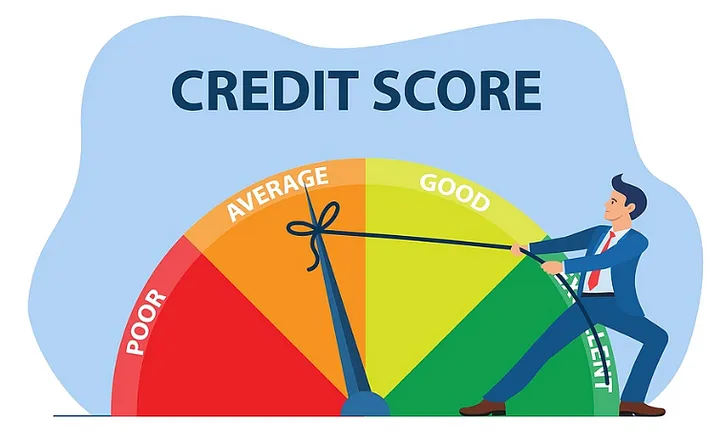
Financial Education: Understanding your Credit Score — the 5 Factors (Part 2/2)
June 21, 2022
Following Part 1, here are the 5 factors that determine our credit score.
Before I get started on this list, I also want to share that this is only ONE PART of credit — meaning: this is only one of the “5 C’s of Credit” you would see loan officers and brokers use to determine whether you would be extended credit when applying. Naturally, that’s coming up in the next article!
Everyday there are people with high credit scores that tend to get very shocked when they are turned down by a mortgage broker, a credit card application or a financial institution. I will continue to put the magnifying glass on credit score here and put the focus on the bigger picture (so to speak) next.
The 5 Factors
- Payment History
First of all, I hope that everyone understands that when you borrow money, it’s your obligation to pay it back to whoever lent it to you unless they specified that it’s a gift that you do not need to pay back. Clearly, even if it’s a small loan between friends and family, chances are they are not going to go to the credit bureau and submit your payment history on you.
So, this largely applies to institutional lending — meaning that licensed lenders who you borrow money from. Even if you’re repaying your debt but are late — either a few times during the time you’re supposed to pay it back, or consistently, this is going to bring your credit score down.
The easiest way to look at this is to turn the table around. How would you rate a friend who borrows money from you and pays it back regularly and in full as agreed VS another friend who you keep on having to chase down to get your money back? Also, are you more likely to lend to someone with a history of bankruptcy or without? Unlike golf, we want high scores here — the higher the better.
2. Amounts Owed
This only matters if you carry an outstanding balance. If you are the type that pays off all your bills on time — especially credit cards, then you’re likely pretty safe here.
This particular factor is also known as ‘utilization rate’. To be honest, you can ask a credit counsellor, a representative from one of the credit bureaus, your banker, a mortgage broker, or even the person who’s sharing all this information with you right now, none of us can provide you with a clear answer on what percentage you should stay under.
Let me take that one step further and this requires some illustration here: some people say to stay below 50% of your credit limit and some say 75% for your credit score to not be impacted negatively. This really only applies to revolving credit accounts — I’ll get to what that means later (in Types of Credit). For now, let’s use a credit card as an example. Also, for demonstration sake, let’s just use 75% as our number here. I would suggest that grab a piece of paper and a pen and write along as you read on.
Say, if your visa account has a credit limit of $10,000 and you’re carrying a balance of $8,000. That is 80% in utilization rate on that account. This will then impact your score negatively and thus bring your score down. 😔 That’s a frown face. I know what some of you want to ask: what if I have a total of $50,000 in credit limit between my 5 credit cards — assuming each card has a credit limit of $10,000, and I only have an outstanding balance of $30,000, which works out to be 60% utilization rate — sounds great, right? Not necessarily! It depends on the breakdown of each card balance. You can very well have 3 cards that are maxed out and 2 cards you pay down regularly (so no outstanding balance), it can and likely will impact your score negatively. So…work with someone (a credit counsellor, a mortgage broker, or a financial wellness Coach — depending on how much help you need) to get this fixed or starting paying some of these down.
3. Length of Credit History
This is probably the most straightforward one of the 5 factors — the longer you’ve had your credit products for (provided that you’ve been a good girl or good boy at paying it back), it can only help your credit score to rise. The logic is that, if you’re delinquent to the point that your lenders refuse you the product, you would not have that account as an active/open account at the time of pulling your credit score and report. Also, if that’s the case, it’ll definitely stay on your credit report not just as an inactive account, but also one that’s involuntarily closed. It’s like a cautionary tale that one lender is sending to your other lenders and, worse yet, all your potential future lenders.
4. New Credit
Some people know this as a ‘pull’ or a ‘hit’ on your credit. The proper term is an ‘inquiry’ — in case you’re wondering. It’s good to know that there are hard inquiries and soft inquiries. One decreases your credit score and one does, well, nothing to it.
If you’ve just ‘inquired about your credit report or credit score’ via one of the websites I suggested, that was a soft inquiry and does NOT impact your credit score negatively. Actually, it doesn’t even matter which site you got it from. The focus is on ‘who’ originated the inquiry. If you’re just checking up on yourself — it’s no different than checking your bank balance or even blood sugar level to make sure you’re on track.
On the other hand, a hard inquiry is like an ex (or soon-to-be ex) looking into your finances, there’s usually an ulterior motive and that’s usually bad.
When do hard inquiries happen, you ask? They happen every time you apply for a credit product —
- a new credit card,
- a line of credit,
- a personal loan,
- a mortgage,
- a car loan,
- a phone plan,
- get your place hooked up with electricity and gas, or
- a retail card to get some furniture or home theatre.
Doing too many of these in a single year can definitely impact your credit score for the worse. How many? Like ‘utilization rate’, I wish I got a solid answer from all industry professionals and even the credit bureaus directly, but no one is making a giant poster with a number on it to show us! However, collectively, our best and deductive conclusion — that’s right, this is more Sherlock Holmes than relying our Spidey sense — is between 4–6 per year. If your score is on the low side to begin with, max it out at 4. If you feel like you have room to stretch, add 2 more times in a year.
Why do hard inquiries decrease your score? The concept is actually quite simple, by definition, hard pulls (just changing it up to get some street cred here…) indicate that you’re actively shopping for a loan of some sort, and you’re making it known. Think of it this way, you ask your Dad for some money, he says yes, then you ask your Mom, she says yes, then you ask your friend, he/she says yes, then you ask your coworker, he/she also says yes. Now you have all this money in your pocket, what’s stopping you from fleeing to sunny Mexico and live like a king or queen, and never return to pay them their money back?
On the other hand, if you’re in need of money and ask your Dad for it, he says no, then you try your Mom, and she says no, you do this for a few more times, by the time you get to person number 7, they are going to wonder why the previous people didn’t lend you any.
Lastly, as a light bulb moment, when it comes to credit, it’s always better to have it and not need it, than to need it and not have it. (This is VERY important.) Repeat this line to yourself LOUDLY (or loudly in your head): WHEN IT COMES TO CREDIT, IT’S ALWAYS BETTER TO HAVE IT AND NOT NEED, THAN TO NEED IT AND NOT HAVE IT.
So, plan your 4–6 hard pulls a year wisely! Just a side note, most credit limit increase requests now require hard pulls as well and now you know what that means!
5. Types of Credit
Finally, we’re talking about the different types of credit. They were briefly mentioned earlier when we were discussing the ‘new credit’ factor.
What exactly are they?
This is probably not the part you need to remember as much as the 5 factors as there are 5 main types that most of us at some point in our lives will inevitably all have — open, revolving, instalments, lines of credit and mortgages.
An open credit type is where the account holder (or the card holder) can draw credit as needed up to a certain amount with the total balance due and payable IN FULL within a specific time frame. Examples would be an American Express charge card, your utilities and cable bills. Basically, an account that you’re not allowed to hold an active balance in it unlike a typical credit card.
Speaking of credit cards, that brings us to the next type that is a “revolving credit”. Think of a revolving door (or maybe even a hamster wheel), a revolving credit is open ended where the cardholder can ‘draw’ credit from the card up to a certain limit, then make regular/required minimum payments. A line of credit often falls under this category as well. A line of credit is usually different from a personal loan in that a line of credit typically requires interest-only payments as long as you continue to pay down your balance. A personal loan often times requires you to make principle-and-interest payments.
That brings us to instalment credit — a personal loan or a car loan usually falls into this category as these loans come with a fixed number of equal payments. If you are still carrying a student loan, chances are, this is where that belongs as well. An instalment loan typically starts with the maximum amount you’re approved to borrow, and, unlike a revolving credit account, that amount can only go down from there.
Lastly, a mortgage. It’s structured similarly to an instalment credit and typically applies only to real estate. Note that a HELOC (home equity line of credit) usually functions more like a regular LOC, thus, more of a revolving credit account.
Conclusion
There you have it! Understanding your credit from an investor’s perspective.
Like everything else, once you understand how it works, it appears simple and you can leverage it to your advantage. When you start learning about the different creative financing strategies and instruments later, you will see how a high credit score is not even a necessity (most of the times).
My Real Conclusion
The credit you carry will be built a lot based on your integrity in the business world. That’s the REAL currency of CREDIT you will also need to pay attention to maintaining.
Tomy dedicated readers, I thank you for your support and feedback. If this is the first time you’re reading one of my publications, I hope you’ve enjoyed it and learned a thing or two.
If you’re wanting to be a part of a community of real estate investors from around the globe, here is the T.A.L.E.N.T.ed Investors Facebook Group. It’s a place where people come together to share experiences, knowledge, successes and challenges, and money making opportunities!
For those of you who prefer watching videos, here is the YouTube channel where some of my work (very raw) has been shared.

Lastly and definitely not least, Bootcamp! If you prefer the live interaction and delivery to help you build some foundation, our next Bootcamp is on July 23 and July 24. Go ahead and register for a session for either day to help you further your financial education.
(Written at home in Edmonton, AB)
Financial Education: Understanding the 5 C’s of Credit
June 28, 2022
Great…first “the 5 factors” that determine my credit score. Now another 5 C’s…how many five-somethings are there?!
Don’t you worry. There aren’t many. Perhaps, I’ll share the “5 Rules of Investing” next. Joking…NOT joking!
First of all, I will say that a seasoned and experienced Mortgage Broker can explain this much better. So, once again, my disclaimer is this: I will review these 5 C’s from an investor/entrepreneur’s perspective.
What are the 5 C’s of Credit?
Many of us have never even heard of this and yet, arguably, this is probably more important than our credit scores.
The 5 C’s are:
- Character
- Capacity
- Capital
- Collateral
- Conditions
These are universally applicable measuring sticks with (especially) institutional lenders worldwide.
As I’ve mentioned previously: when it comes to credit, it’s better to have it and not need it, than to need it and not have it. (And I will keep mentioning this again and again…and again…)
Whenever we are applying for a credit product — personal loan, line of credit, mortgage, business loan or just a new credit card — the lender will want to know you can pay back the money as agreed. Pretty simple in theory, right? Well, on paper, they don’t know you as a person and they cannot tell you apart from me based on an application. They only way to really assess your credit worthiness is through the 5 C’s.
Let’s jump in.
Character
While it’s called “character”, this is referring directly to your credit history — how you’ve managed your debt in the past.
This can be easily achieved usually by pulling your credit score as a quick glance (refer to the previous articles to learn more). We all start developing our track record (aka credit history) the moment we start taking our credit products. Yes, that includes getting a cell phone bill in your name, a cable service and making sure your apartment gets heat and water.
The extenders of these products (aka lenders) may choose to report their observed behaviour on you as a borrower to a (or multiple) credit bureaus.
In essence, character in this case can be tied directly back to your credit report and the 5 factors that determine your credit score. However, let’s not forget that a credit report will contain more information on your track record other than you’re managing your credit card bills, mortgages, car payments and lines of credit. It may also contain information on any foreclosure or bankruptcies that have happened.
A tangent here — as far as I know, if you’re ever thinking about getting a mortgage again, it’s easier if you’ve had a bankruptcy on your file than a foreclosure. Why? Think about it this way: a foreclosure means you did not (or could not) make your mortgage payments (and usually for an extended amount of time) as promised. This is largely seen as a ‘voluntary’ act. As a result, why would another lender give you the same type of loan? Feelings or no feelings, we can all understand the idea of “once bitten twice shy”.
Other the other hand, a bankruptcy could’ve been caused by many other factors that are considered as ‘involuntary’ — a divorce, a failed business, an injury that has negatively impacted your ability to debt service, etc. However, this is not to say it’s better to declare a bankruptcy when you’re in financial hardship than going into foreclosure. Ideally, you want neither on your file (duh!).
Lastly, to develop a strong credit history, always make payments on time and keep your credit utilization at a generally reasonable/acceptable rate (again, see previous articles for clarification).
Capacity
Your capacity refers to your ability to repay loans/debt.
This is determined by evaluating your debt to income ratio. Depending on where you live, you may have heard of terms such as ‘total debt servicing ratio (TDSR)’ or ‘gross debt servicing ratio (GDSR)’.
Generally, a low DSR (debt servicing ratio) signifies less risk for a lender because it’s tell the lender that you:
- have a reasonable amount of debt, and
- are managing your debt well, and
- have the capacity to take on more (on a monthly or annual basis).
Every lender is going to have a DSR. I’ve learned that the DSR can change quite drastically especially when the lender has an appetite to grow their marketshare in certain loan products.
Regardless, here a quick calculations on how DSR is done: add up all your monthly debt payments and dividing that number by your monthly pre-tax (gross) PROVABLE income. Then multiply it by 100(%). And, if you are watching My Daily Dose with Tim, you’ll see how important one of the key performance indicators (KPIs) called the Coverage Ratio (or DSCR — debt service coverage ratio) is when it comes to the lender’s evaluation of a larger building.
Lastly, “when it comes to credit, it’s better to have it and not need it than to need it and not have it”. This doesn’t mean that you get to use your available credit to shop for anything you want. A smart investor leverage credit and debt to build income and wealth.
Capital
Capital tend to include the cash and liquid (or liquidable) assets that you are willing to put towards the loan product you’re applying for. One biggest example is getting a mortgage.
Typically speaking, the larger the downpayment, the better your interest rate and terms will be. That’s because the amount of your downpayment is a direct message to your lender how much ‘skin in the game’ you have. You are serious! Of course, as an investor, one of the main reasons why we love real estate is because we have the ability to leverage up to 80% on investment properties. This means that we can come up with 20% in downpayment against the purchase price of a property. This also means we often will be kickin’ and screamin’ when it needs to be more than 20%.
Lastly, I do not endorse the concept of saving money by any stretch of the means. Tucking money away in savings accounts of any type is possibly the worst way to ‘accumulate’ capital for any investment deals. While you may start to understand/feel this due to the recent inflation numbers, many people in your immediate circles (parents, siblings, best friends, close colleagues, etc.) may be feeling that, too. Everyone wants to work less themselves and their money to work harder for them. This is why I keep repeating what I was taught: when the deal is good, the money will follow. Raising funds to grow and stabilize your portfolio is way smarter and more sustainable (when done properly) than constantly trading hours for dollars to save.
Collateral
Collateral in this case goes beyond the liquid cash (or downpayment) that you may have from your savings and stock portfolio. It includes those plus investments and assets that you are willing to put toward your home. Essentially, a lender will consider the value of your personal (business if applicable) assets of a secondary source — while not ideal — of repayment.
Collateral often times is a significant part of the consideration to a lender. However, the significance of each type of collateral can change depending on the type of loan you are getting. I often think of a lender like an investor. They are giving you the loan largely based on the ‘deal’ you have on the table. They are essentially your partner. As educated investors, we know that “when the deal is good, the money will follow”. This is why, typically speaking, the asset or the deal itself is the first and most significant collateral. Because if the lender does not deem it as a good ‘investment/deal’, you wouldn’t even be considered in the first place.
Lastly, this is why active investors have all heard about ‘qualification based on net worth’ over time. Because the lenders tend to feel a lot safer when they know their money is safe and that there is a lot to ‘go after’ if a high net worth borrower defaults. In the beginning of my career as an investor, the collaterals largely relied on the asset itself (which is great because I chose real estate as my main investment vehicle), my ability to repay on the monthly basis. Later on, it’s become the asset itself and what’s in my overall portfolio. This also sparks the conversation about asset protection. Many make the mistake to put everything in their personal name to boost their net worth right away and choose to continue it that way. Any financially educated person will tell you that is simply…well, stupid. That will be a whole other subject altogether at a later time.
Conditions
These usually refer to the lender’s micro- and macro-research (‘due diligence’) on the condition of the investment, the business, the industry, the economy and (in my opinion), most importantly, the borrower’s intention and plan with the funds borrowed. Most lenders are more inclined to lend money for a specific purpose as opposed to a general loan that can be used for anything by the borrower.
The other external factors like how the economy is, where it’s going, the federal interest rates and budget, etc. are out of any of our control (largely speaking unless you’re the wealthiest person or the most politically influential person on the planet). Every lender has a different perspective and appetite for taking on risks. What we tend to see is then the requirement for a larger ‘skin in the game’ for the borrower.
Lastly, from my personal experience, this is why I remain fond of single family home investing. I understand the path of trading ‘four green houses for one red hotel’. I also understand that everyone needs (and more importantly — WANTS) a roof over their head at the end of the every day regardless of the economic conditions. It’s never about investing for fame or for bigger profit for me. It’s about investing for freedom, for security, for happiness, for choices in life and for the opportunity to make a difference in other people’s lives also. While external conditions may change quickly and drastically (remember: change is the only constant), when we are smart and financially educated enough to think for ourselves, helping others get what they want is ultimately how we create what we want. Or better yet, I’ll end with this Zig Ziglar quote:

Tomy dedicated readers, I thank you for your support and feedback. If this is the first time you’re reading one of my publications, I hope you’ve enjoyed it and learned a thing or two.
If you’re wanting to be a part of a community of real estate investors from around the globe, here is the T.A.L.E.N.T.ed Investors Facebook Group. It’s a place where people come together to share experiences, knowledge, successes and challenges, and money making opportunities!
For those of you who prefer watching videos, here is the YouTube channel where some of my work (very raw) has been shared.

Lastly and definitely not least, Bootcamp! If you prefer the live interaction and delivery to help you build some foundation, our next Bootcamp is on July 23 and July 24. Go ahead and register for a session for either day to help you further your financial education.
(Written at the Anaheim Marriott in Anaheim, CA)

Financial Education through Real Estate Investing: Recession & Cashflow Management (Part 2)
July 26, 2022
Have you ever felt financially desperate or hopeless, or both?
Don’t get me wrong. I did not come from most people’s class definition of a poor family. In fact, at one point in my life (between the age of 5–11), I had great creature comforts and then some. Dad’s government job was stable and Mom’s manufacturing business was growing. If you’re looking for a rags to riches story, I probably don’t fit that box. However, I do describe my upbringing as hopelessly middle class (if not lower middle-class).
There is absolutely no disrespect to my parents. I know they did their best given the upbringing they had. However, I also know that I wanted to break that mold. I had to — if I wanted something different. Something more. After all, my Mom’s the one that always said: the next generation should do better.
Many have asked me how I learned everything I’ve learned over the years, I usually paint them this picture:
- Just moved from Vancouver to Edmonton in 2009 as a bright-eyed 27 year-old wanting to climb that corporate ladder. I was willing to suffer through being lonely again leaving my close friends in search for a better future. After all, what’s hard work and sacrifice? Aren’t those the bare minimum requirement for success?
- After some consistent 80-hour weeks for months at my job, I was further beat down by opening my “investment statements” — mentally and emotionally — on a weekly basis.
- Feeling smart, I asked a co-worker (who is my mother’s age) how she manages her money as she looks to be doing pretty well — a beautiful house, amazing (not to mention constant) vacations and multiple luxury cars — all the while forgetting that she’s twice my age and has had way more time to accumulate her wealth. Regardless, I was connected to her ‘guy’. This was the guy that represented the developer that later on took every last penny of my hard earned money away from me — among many others. (Side note: this is why one of my favourite quotes is “Don’t compare your chapter 1 to someone else’s chapter 30.”)
- Feeling deflated, stressed, cheated and angry, I went to this meeting at a law firm with people in their 50’s, 60’s, 70’s…and maybe even 80’s. The scene I witnessed still shocks me to my very core every time I picture it. Imagine seeing people who are your parents’ and grandparents’ age — in a public space and they are just yelling, howling, crying and screaming. Nobody was able to get a full sentence out other than the lawyer representing us. The collective us that had our money ‘stolen’ in broad daylight. The collective us that thought: real estate is much safer than stocks and mutual funds. Since most of us already took giant losses and nobody knew if they would see their retirement funds bounce back, we all thought we were being smart cutting our losses and redirecting our money into real estate.
- Now imagine this: your parents and grandparents saying things like: “How am I going to live?” “How am I going to pay rent and put food on the table?” “I’m too old to go back to work.” “That was my entire life’s work.” Are you feeling what I’m feeling now?
Instead of feeling hopeful like I was potentially going to get my money back, I walked away from it feeling shook and completely numbed.
The reality slowly woke me as I auto-piloted myself home after that brief and emotionally disturbing meeting. Here I am —
- Been in the workforce for 3 years,
- Making a 6-figure income year after year,
- Living in a nice house,
- Driving a Mercedes,
- Having a rental condo back in Vancouver.
All the labels that should’ve been considered as success markers meant nothing. Because, the truth was this —
- I was having “Ramen Mondays” and “Deep Fried Fridays” to save money on food. When I first moved into this beautiful new home that’s 3 times the size of my Vancouver condo, I did not know all the surprise expenses that would pretty much incur immediately. Here’s a picture of our living room, dining room, media room, office space and storage:

Those are towel-covered moving boxes.
- I was using Future Shop (if you remember them) flyers and any flyers I could get as window coverings. Forget about buying new furniture or anything else other than the bare essentials.
- I was feeding into my Vancouver condo. This, I later learned is also called “paying my tenant to live in my property”. It was further draining my income.
- I was worth more dead than alive. With a lousy life insurance policy that came with my work benefits plan (always had a hard time finding life insurance for me due to my health conditions) and the recent ‘loss of money’, I was in negative net worth. In other words: I. WAS. BROKE.
That made me doubt everything I believed in — is working hard alone enough? Is having a high income job enough? Is having a corporate ladder to climb enough?
That made me question my choice to move away from my friends — my support network. Was the sacrifice worth it?
And, something happened.
Weeks later, on my drive to work one day, I heard about a financial education seminar. I perked up. Turning the volume a bit louder, I heard that it was about real estate investing. I was hooked.
That was January 2010.
As of today, I’ve been broke twice, literally. And those experiences are the fuel for these articles.
Of course, there are more layers as to why I continue to build cashflow and wealth through real estate (and yes, there are days that I get tired of the idea of the process of buying another property). However, it’s now time to share some lessons first. Lessons from both times when I was ‘broke’.
For starters, recognizing that our behaviour during a personal financial recession is usually the same behaviour we exhibit during an external financial recession.
Lessons from the 1st Negative Net Worth
- Learn how to identify deals and calculate risks myself. You don’t know what you don’t know.
- Find ways to make money when I sleep. You don’t know what you don’t know.
- Create multiple income streams.
- My financial well being is 100% my own responsibility and no on else’s.
- Live largely yet frugally. Buy assets first and leverage assets to fund my liabilities.
Lessons from the 2nd Negative Net Worth
- Get to Financial Freedom #2 (refer to previous article) first before taking on more risk.
- As long as I stay above Financial Freedom #2, I’m ok to refi (after the BRRRR process) and let a few of properties in my portfolio go into negative cashflow with the plan to scale up. IMPORTANT concept here: despite what most people might think, not every Starbucks, Safeway or Exxon is profitable. However, as an overall corporation, they are.
- Leverage the funds to acquire new performing assets, or feed into portfolio income (aka park it), or simply keep as contingency funds depending on the larger economic conditions.
The lessons got bigger.
Surprisingly, I also find these lessons very applicable and relevant to what most investors are going through these days — new and seasoned.
I have been speaking with many “investors” over the last couple of months who are looking for guidance and support. If there’s anything I can do to help, feel free to request for a call with me. I know that my team is also happy to support in any way they can as well.
Tomy dedicated readers, I thank you for your support and feedback. If this is the first time you’re reading one of my publications, I hope you’ve enjoyed it and learned a thing or two.
If you’re wanting to be a part of a community of real estate investors from around the globe, here is the T.A.L.E.N.T.ed Investors Facebook Group. It’s a place where people come together to share experiences, knowledge, successes and challenges, and money making opportunities!
For those of you who prefer watching videos, here is the YouTube channel where some of my work (very raw) has been shared.

If you prefer the live interaction and delivery to help you build some foundation, our next live in-person real estate investing Bootcamp is on September 24 and 25 in Toronto. Go ahead and speak to a Strategy Coach on how you can attend.
Lastly, I just want to say thank you for your continuing support.
I aim to be authentic and adding value to your life.
I invest to build a life. I build business to create better life experiences.
It’s ultimately about LIFE and I appreciate you coming on this journey with me!
(Written at home in Edmonton, AB)

Financial Education through Real Estate Investing: Know the Difference — How to Spot an Amateur vs a Professional (Part 2)
August 2, 2022
Times like this right now are even more crucial to make sure that nobody falls into any traps set by desperate and hand-to-mouth “professionals”. These are lessons that were passed down to me by my Mentors along the way and — as usual — some of them I had to learn the hard way because I didn’t listen.
Before we go any further, I want to thank everyone who reached out to share that you could relate to some of my journey (especially the ones shared in the last article). My story may not be the most extraordinary (and it doesn’t have to be), as long as I’m making a difference in the world by sharing it, I’ve fulfilled my purpose here.
Some of you have also reached out to say that I seem to have gotten a little ‘too real’ here and there in the last few articles. Well, I don’t know what to tell ya other than a) I write like I talk, b) I’m looking to share authentically and c) I’m definitely lying if I tell you it’s all going to be rainbows and butterflies if you just get financially educated. That’s like saying “if you just go to school and get academically educated, the rest of your life is set”.
Often times, one of the first things I ask for when I get to share publicly is this: do you want me to tell you what you need to hear or what you want to hear? Almost in unison, it would be “what you need to hear” every time. Look — I’m not here to burst anyone’s bubble and I’m certainly not perfect, and I’m definitely here to share enough of my learnings with you so that you get to bypass some or most of the mistakes that I have made. The mistakes that have cost me millions (literally), sleepless nights, gallons of tears and sweat, and occasional yet severe self doubts about my ability to succeed at all.
Part 1 of this topic was better received that I could have ever imagined. I remember watching one of Robert Kiyosaki’s interviews. He said: “Overnight, I became the most hated man amongst all real estate agents in America because I’m telling people that your house is not your biggest asset, it’s your biggest liability.” These days, I can completely relate to that feeling. The truth when it comes to investing and money can often be unsettling, unwelcoming, unpopular and ill-received by many. Call me dumb, call me passionate, call me anything you want — but that’s the fuel for Part 2 of this same topic.
So, here we go again. And today, we’re only going to focus on ONE thing:
Using “Raising Capital” as a Marketing tool or Part of a Tag Line
This one is arguably the most used ‘phrase’ amongst the least educated. Or, worse yet — those with ulterior motives.
Before some of you bite my head off here, I’ll be the first to admit that “raising capital” is a legitimate activity, skill and business process not only for real estate investors, but for all entrepreneurs.
1. “Raising Capital” as a Marketing Tool
Strictly speaking about real estate investing, needing access to capital is the one topic that newbies dread and are often frightened by the most. The reality is: if the deal is good, the money will follow. Amongst all the Trainers and Mentors are Trust Your Talent, we always say to our students that “one day, you’ll have more money than you have deals.” Nobody initially believes us. Nobody. Then months and a couple of short years go by, one by one, they would come back and say things like: “I have money investors lining up and I have no deals!”
Let’s unpack that quickly here.
It’s not that there are no deals. It’s the fact that we’ve learned better as we do more deals and have gathered more experiences. We’ve simply tightened our business process, tweaked our investment criteria and goals along the way. As a result, elevated the demand of our deal quality over time.
I’ve also been saying to my students lots over the years: “if your first deal is your best one, you’re doing it wrong”. Again, if you know me, you know I love my grey area and seldom use words like right or wrong. I generally prefer “good or bad”, and “better or worse” in any situation.
Circling back to why this is seen as an amateur move is simply because of these reasons:
- Especially for newbies, knowledge and experience count first and foremost. I can be biased because I attribute any of my current financial success to the financial education that I got and applied over the years. It’s like most of us fresh out of school and applying for our first ‘real’ job in the world. It’s the classic paradox — you need to work to get experience and you also need experience to get work. When that’s not the case, the shortcut is typically having some kind of eduction backing us — be it academic or skill-specific.
- In order for some one to have the confidence in us and our deals, there are several factors at play here. Without digging into character and personality types, knowing how to find opportunities, analyze them and determining them as ‘good’ deal is step 1. This can be and often is accomplished by proper training on specific investment strategies.
- As both an active and passive investor, if you can’t (and I quote Jerry McGuire lovingly with all my heart) “SHOW ME THE MONEY”, you ain’t got a chance to get my money now, or ever!
- Investing can easily be a very logical activity — let the numbers do the talking and leave your emotions at the door. This is why learning how to identify exit strategies for any opportunities is what really separates the professionals and the amateurs. I often say: your exit strategies determine how you make money and how much you make.
- Why ‘exit’, you ask? Because getting into deals is actually the easy part especially for those who are untrained, emotional and easily swayed. I have an investor friend who jokes: “When the times are good, my 15 year-old daughter can make money from just buying and selling real estate, too!” Getting the money isn’t the be all end all. It’s just the beginning.
So, what’s the point here?
Simple — I’m looping back to knowing why you want to invest in the first place. What’s your goal? Which income bucket are you wanting to feed? How do you want your Wheel of Wealth to look like? What’s your S.M.P. as a result? Having clarity to these question is probably the BEST thing you can do for yourself. Otherwise, every opportunity can look like a ‘good deal’ and every ‘raising capital’ training or podcast can steal your most previous gift and stall your progress.
2. Using “Raising Capital” as Part of a Tagline
Often times, I see people who put things like these on their social media profiles:
- Raised $120 Million
- Owns $5.1 Billion in Real Estate
- Sourced 9 Figures to Acquire 1,500+ Units
Impressive? Yes!
True? Maybe.
Meaningful? No. (At least, not to me after 12 years in the game.)
I’ll be the first to tell you that I sought out people with these tag lines to learn from years ago when I first started out. After all, I also preach “follow the footsteps of the people who have accomplished what you want to accomplish”.
Here’s a quick graph to share with you before I go on:

I realized that I already had all the tools I needed through my training. It simply became “how can I share the wealth with others”.
Of course, it’s a little deeper than that. Here are a few reasons:
- While those tag lines mentioned above are super impressive, here’s what anyone reading this right now needs to get clear on: WHY are you investing in the first place? (Am I sounding like a broken record yet?)
- One of my Mentors illustrated the concept of ‘not needing a lot to accomplish financial freedom’ by asking this question: have you ever flown in an airplane before? Either way, the next time you fly and just seconds after the plane takes off, put your thumb on the window against the land below you. THAT is about how much real estate you need to be free for the rest of your life. And maybe for the many generations after you.” That was not an easy concept for me to grasp if I’m being completely honest here.
- Here’s what I’ve discovered for myself: if your answer is financial freedom to the question above (first bullet point) and you need $5,000/month to reach Financial Freedom #1 (refer to all linked articles if needed), the math can be simple. Assuming you have zero capital and no mortgage qualification after you’ve invested in your education (one of the biggest questions we get), you therefore need to rely on leveraging OPM (other people’s money) to get going. Let’s say you are running on a 50/50 split structure (keep in mind that this is all a very high level illustration of the concept): $5,000/month = $60,000/year.
- Depending on your strategies (usually a mix of a few if you’re properly trained as an investor), say your average cash-on-cash return is 10%, it means you need to have $600,000 in capital working for you just to cover your 50%. This now means you actually need to have $1,200,000 making 10% per annum at this point. Then the goal now is to find enough people (yes, plural — at least for most of us in the beginning) who’s willing to fund $1,200,000 in cash/capital before leveraging. If you’re leveraging at an average of 75% LTV (loan to value) on your acquisitions, this means that you are managing a portfolio of $4,800,000.
- As you can clearly see, raising $120,000,000 is great, and yet not quite necessary yet. Learning to honour your own financial freedom goals in the beginning is the most challenging and rewarding thing you can do for yourself so you do not fall into crafty marketing tactics.
- Another perspective I will also share here (and it’s a little dark — don’t say I didn’t warn you): there are quite a few people who only share how much money they’ve ‘raised’ over an unspecified timeframe, and not share the results of how much the funds they raised have made or even lost. I personally know a few like that and they are, unfortunately, still actively teaching others their methods. Of course, investing inherently has risks. I can also relate due to personal experience. Remember how I shared that I lost $1M overnight? In actuality, it was losing $1M in capital, over $5M in assets, >$300,000 in debt servicing and legal fees over the course of 3.5 years. Not to mention losing my pride, sanity and sense of self for a while.
- Listen (and I expect you to put on your best Oprah listening pose right now): I’ve known people with thousands of doors and have to hustle to keep the portfolio going. I’ve also known people with a couple dozen well-managed doors and their passive cashflow allows them to live life without a single worry till the day they die. Don’t let your ego get in the way because you want to sound like a big shot. I know I worshiped those who looked like they’ve accomplished on the outside. Then I learned to really look at what they are like on the inside that counts.
- Next, in business, we speak of asset and income protection. It’s difficult to even begin to discuss how incredibly stupid with claims like “I own X of real estate” since control without owning is (in my humble opinion) the absolutely highest art form of business and entrepreneurship. The world most valuable businesses today did not receive their valuation from goods and manufactured products sold. They got it from the appraisals and perceived values of the business’s combined systems, processes and good will. Unless you’re a public company, I would never recommend anyone who have built a success portfolio or business of any sort (especially when it’s largely built on OPM) to openly disclose value as it also tends to get misinterpreted in context.
- Lastly, like an annoying teenager, I might be stating the obvious a bit — what is “9 figures”? 100,000,000 is 9 figures. So is $999,000,000.
Phew! That wasn’t so hard.
Tomy dedicated readers, I thank you for your support and feedback. If this is the first time you’re reading one of my publications, I hope you’ve enjoyed it and learned a thing or two.
If you’re wanting to be a part of a community of real estate investors from around the globe, here is the T.A.L.E.N.T.ed Investors Facebook Group. It’s a place where people come together to share experiences, knowledge, successes and challenges, and money making opportunities!
For those of you who prefer watching videos, here is the YouTube channel where some of my work (very raw) has been shared.

If you prefer the live interaction and delivery to help you build some foundation, our next live in-person real estate investing Bootcamp is on September 24 and 25 in Toronto. Go ahead and speak to a Strategy Coach on how you can attend.
Lastly, I just want to say thank you for your continuing support.
I aim to be authentic and adding value to your life.
I invest to build a life. I build business to create better life experiences.
It’s ultimately about LIFE and I appreciate you coming on this journey with me!
(Written at the Maple Leaf Lounge in Calgary International Airport and completed in Cleveland, OH)
- 1
- 2