
Tag: Money Mindset

Financial Education: Real Estate Investing 101 — Mindset (Final Part)
March 29, 2022
Congratulations — you’ve made it this far. This means that you are coachable and ready to grow.
After the last article, as usual, got some nice messages and got some not-so nice messages about my thoughts and processes. Particularly, about a number I shared — net worth.
Real wealth is measured by TIME. TIME, not the amount of money.
The logic behind the math is simple. Here’s a quick illustration:
If you have an average monthly household expense of $5,000 and are worth $1,000,000, the moment you stop having income coming in, you have 200 months left in your wealth. Of course, we are discounting any additional monthly funds you may have through your personal effort or government support here. Those tend to be eroded by inflation anyway. 200 months = shy of 17 years. No wonder so many people are wondering if they will outlive their ‘retirement’.
Now, if you are worth $5,000,000 and your average monthly household expense is $25,000 (as they often are for people at that level), you have 200 months left in your wealth. Neither calculations have taken inflation into consideration.
Most people, upon first glance, would think that $5,000,000 should last much longer. It could not be further from the truth. At the end of the day, it has nothing to do with how much you make but how much you keep. This is the main reason why, while learning about real estate investing strategies is essential, learning about asset and income protection is the true mark of financial education. I’ve seen way too many people that buy properties for the sake of buying them only to end up broke, even less happy than those without a property portfolio, and have more day to day headaches from attempting to self-manage everything.
This is why I’m forever pro-cashflow. Don’t let anybody else tell you any different.
The logic once again is simple: would you buy a businesses knowing that it’ll be losing money every month, and ‘will most likely’ increase in value over time? I’m sure most (if not all) would say “hell no!”. Yet, somehow, when investing in real estate, people are willing to gamble.
With that said, cashflow is also what pays the bills so that we can have options. Option to physically live better — better houses, better/more nutritious foods, better/safer vehicles, better vacations/more quality time. Option to mentally and emotionally live better — not having to cave into office politics or kow-tow to a tyrant boss for a paycheck; being able to put common money troubles to rest — household bills, supporting our children and/or our aging parents adequately; resources to treat ourselves to proper outlets to release stress — gym memberships, spa, vacation retreats, etc. I know many people have said this before, but the first time I heard it was from a friend’s mom: If it’s something money can solve, you don’t really have a problem. That was a ridiculously giant ah-ha moment for me.
The knowledge and application to create cashflow is the beginning step to create a better and stronger financial future. There’s a saying in Chinese: Wealth does not last beyond three generations. That’s mainly because, when passing down money and wealth without the knowledge and skills to sustain it, most of us would end up spending more than making.
If one of your reasons why you want to embark on increasing your financial intelligence is to leave the legacy, let me do you a solid: put your children through financial education as well. It really shouldn’t be any different than passing down good knowledge, wisdom and habits like personal hygiene or treating others with respect. The sad truth is, that’s not what our education system focuses on. NONE. Okay, maybe I have not traveled around the world and personally witnessed every education system myself yet. However, I’ve certainly seen enough of an example from having met and taught people from every continent in the last 8 years. That has got me a general sense that ALL traditional school systems continue to train us to end up being employees.
The word employee typically comes with this formula:
- Go to school
- Study hard and get good grades
- Get a good job = decent pay, medical benefits, company stock options, pension contribution, retirement savings funds, etc.
Then what? As stated in Part 2, this is how the formula typically completes:
4. Buy liabilities — house(s) & cars
5. Pay bills
6. Work so you can keep buying liabilities and pay your bills
7. Retire and maybe have some resources to enjoy life a bit
8. Bid the world and our loved ones good bye
Is this the formula you’re trapped in?I know I was.
Ifthat formula rattled you in anyway, now is your chance to revisit the vision board you’ve created yourself. Fears and doubts will creep in from time to time. However, as the saying goes: Courage is not the absence of fear, but rather the judgement that something else is more important than it. (Too many renditions to quote one person.) This is also why I focus on the word COURAGE and personally despise the word FEARLESS. As it’s humanly and physiologically impossible. Besides, we need fear. We want the fear — to keep us sharp, to keep us alert and to keep us on the course of evolution. Change truly is the only constant in life.
At this point, I’d invite you to watch a few more episodes of My Daily Dose with Tim. More specifically, Season 1, episodes 21–28.

Should you feel the urge to share your vision board with me, you can email it (take a picture) to tim@trustyourtalentacademy.ue1.rapydapps.cloud. I’m always so happy when people share the visions of their lives with me. Maybe we can even have to conversation about it!
At this point, while it seems like this is the ‘final’ part on finding/defining your true purpose, just know that there will be times when we reference back to this 3-parter as we move along. Our whys, our purposes and our values of existence are like our physical shell — they age, mature and evolve. After all, the only constant we know is change.
I just really wish that we all choose to change for the better! That’s why, one of my biggest WHYs these days is to spread financial education in hopes to help others create better lives. I had the good fortune so far to alter my own and many other people’s lives, and I believe that this work will continue. I’m the boy in this short video ❤️
(Written partly in the air and completed in Cincinnati, OH.)

Financial Education through Real Estate — How to Choose a REI Mentor (Part 1.75/2 — Top 3 Deal Breakers)
May 24, 2022
(WARNING: COLOURFUL LANGUAGE IN CONTENT)
The challenge continues. Admittedly, this particular topic — qualities vs deal breakers that I look for an a real estate investing mentor — is by far one that gets me going the most. I can feel the heart palpitation through my trembling fingers as I type. Like everything else I’ve shared so far, I only do so from personal experiences and perspectives. More importantly, it’s done with the hope that fewer people make the mistakes that I, along with many others, have made over the years.
With that said, the list continues with the 2nd deal breaker for me these days.
2. Misalignment in mindset
This is the one that gets me the most heated and it’s personal.
First and foremost — stripping away the financial education and any reference to real estate for a New York minute — investing in its simplest form these days means making money make money. Learning how to invest is then learning how to make money make money. (Might be good to read the last 2 lines a few more times.)
People think that “financial education through real estate investing” is only for the novice and the inexperienced. Experienced investors and property collectors need not apply. This cannot be further from the truth.
Many times, I’ve had to first help students either get out of their existing non-performing properties, or improve performance before acquiring more. This is why STRATEGIES are so crucial (as stated in the SMP Philosophy). I’ve repeated this over and over again. Sounding like a broken record to my students has apparently created some very positive impact in their investing journey, so here I go again: it’s not simply about buying properties or buying more properties. It’s about buying properties that will PERFORM TO MEET YOUR FINANCIAL STANDARDS and GOALS.
First thing first — cashflow. We invest for cashflow.
Many have attempted (and many will still) to take a different approach in getting your attention by focusing on the ‘long term wealth gains’ from investing in real estate. What does that mean? They will focus on “don’t fall into buying for cashflow, buy for the long-term equity growth”. This message is targeted towards those who may find it challenging to find any cashflowing single family properties in their home market who take on the approach of buy-rent-and-pray.
Let’s go back to basic once again here: we invest in real estate because we want to create better financial resources for ourselves. Both now and later. Cashflow, aka ‘profit’, is the ONLY indication whether or not you have a viable business deal at hand. We are not saying it has to cashflow from day 1 (you can if you use the right strategy such as tenant-first Lease Options). We are saying that, before going into a deal, we need to have the ability to determine that it will cashflow once all the necessary renovations and improvements are done. Nobody would buy a business that will lose money every month, why should investing in real estate be any different?
It’s also that mindset — one that tells you to ONLY focus on the long-term growth — that gets people in trouble. This mindset alone has created a subset of bitter “I once was an” investors and the market went against me. And frankly, if you’re only going to be a property collector regardless performance, it’s ok as long as your life isn’t impacted negatively in any way. Unfortunately, not everyone is in that position.
To conclude this thought, people who tell you to let go of cashflow or putting it other than on the top of the priority list when analyzing a deal do NOT even qualify as a real estate mentor in the first place. You want someone who understands that real estate is a means to an end. You want someone who understands the business fundamentals in investing — beyond acquiring assets. You want someone who understands the Wheel of Wealth to guide you to make the best and right investment decisions with you.
Next, we look at ROI — return on investment is what a bona fide investor-minded person focuses on. In laymen’s terms, a true investor focuses on “how much it’s going to make me, not how much it’s going to cost me”.
Piggybacking on that though, this is also where we see the amplified differences in mindset and behaviour:
- being frugal vs being cheap,
- building assets vs acquiring liabilities, and
- value vs money.
Fundamentally, there is nothing wrong with how anyone wants to position themselves in the marketplace. The biggest drawback that I have witnessed is how the innocents get taken advantage of because they simply aren’t able to tell the difference. Hence, one of the main driving forces for writing this article for me personally.
Looking back, I still get a good chuckle at how naive I was when I enrolled into my very first financial education (through real estate investing, of course) curriculum. At the tender age of 28 (in 2010), my husband and I decided to invest CAD $50,000. There was just this burning desire to make a difference in our own life. In today’s money, our investment looks like this:

It doesn’t matter how you dice and slice it, that’s a decent Mercedes right there! At 28, that was a sh*t load of cash (that didn’t have). However, after slaving at a corporate job for 2.5 years, making a 6-figure income and working an average of 80 hours per week, I knew I had to invest in my financial education if I was ever to see a change in my financial future. More than that, I needed a change in my life. I could get into how poor my mindset was back then — especially when it comes to money, but we’ll save the popcorn for a later date when I can really paint you a picture of the “poor middle class me” tale.
The point is this: I saw the possibility, the hope, the potential and, most importantly, the proof of what my future life could look like. What drew me in the most was not the earning potential (although it was a close second at the time). It was how the trainers, mentors and the students they currently have going through the training THINK and VIEW their lives and the world. Gone are the ‘lack’ mindset and language, the daily dread and despair for an unfulfilling job and life, and the negative and limited outlook about the future. Instead, I saw people with different perspectives and positive energy for the first time since probably kindergarten. I knew I wanted to be around that as much as possible. I needed to.
As a result, when I am looking for another REI mentor for myself, I pay extra attention to their mindset. Alright, alright…before some of you want to slap me and go “what the f**k does that mean?”, here’s a relatively more concrete list of what that means (in the order of a thought process):
- Mindset translates into behaviours and words.
- Behaviours that tell me that they are cheap and not frugal is a red flag.
- Words and language that overly focus on cost/money instead of return and goal is a red flag.
I sometimes get challenged on why the investment in our Mentorship Programs is much higher than everyone else’s out there. Here are my responses from the heart and my personal journey:
- Higher compared to what? Collectively, all the Trainers and Mentors have made a thousand folds of our investment in education that we know otherwise would not have happened. Certainly, not in the timeframe that we have.
- What’s the price you would put on achieving time and money freedom in 3–5 years? I had a condo in the Vancouver market. Purchased in 2004 as a pre construction for approximately $256,000. Sold it in 2010 for $400,000. The seed money created financial freedom for me starting July 25, 2012. Today, that condo it worth approximately $900,000. An extra $500,000 in value. That’s an extra $50,000 a year in gain. Not to mention capital gain tax now if I sold it. Not to mention inflation. Not to mention the fact that my time freedom is worth much more than $50,000. Do your math.
- What is the value of having time and money freedom in your life?
- It’s a hand up, not a hand out. Most people place little to no value in something they get for nothing. Worse yet, most people are willing to bet small and lose small all too often. Your skin in the game is ultimately an indication of how much you believe in yourself. I had to believe in myself. I needed to. There was not another option.
- Lastly, Mentors and Trainers on our training team (not to mention a large number of students) have all declared financial independence and freedom. In other words, we know our worth — the collective knowledge, experiences and network we bring to the table to help any student turn their goals into reality.

This quote always gets me and it’s so true especially when it comes to the real estate investing industry where high value services and assets are changing hands regularly.
By no means do we know everything. In fact, what I love about our entire Trust Your Talent community is this: we are all lifelong learners. Mentors and trainers are simply those who have accomplished what you want to accomplish before you. We understand and RESPECT the concept that ‘time is everything’ (as mentioned in one of the previous article). Supporting someone else on their journey is more than an honour, it’s a responsibility that takes time — our most valuable resource in life.
If it helps, turn the table around and ask yourself this: what would you do when you have the time and money freedom to do anything you want? The cold hard truth is this: we don’t make the best money teaching and mentoring. And we shouldn’t. It’s a balance act. When a mentor has earned the time and money freedom, mentoring is our form of contribution and giving back. And yes, it’s an additional source of income. Whenever I get a chance to teach these days, I often say “teaching and mentoring probably generate the lowest financial ROI for us” to the students. Mentors don’t do it for the money. The cool part is (especially with advanced students) they now get it and agree with me once they’ve learned how simple making money can be. Now, the best part is this: teaching and mentoring definitely generate the highest sense of fulfillment and purpose for us these days.
Here are some uncategorized and yet relevant thoughts to conclude this part of the article:
- Know what your financial future is worth to you before you choose a mentor.
- Don’t be cheap when it comes to the betterment of your financial future.
- Your mentor should have the ability to show and help you build your power teams from scratch. It’s about teaching you how to fish so that you can build income sources beyond borders.
- Your mentor understands that mentoring is a full-time commitment but not a full-time gig.
- No one person knows everything (as great as that sounds). Pay attention to the size of their ‘training team’ or ‘organization’. Many are the lone wolf coaches with limited strategies and market experiences (or experiences in general).
- Ask why instead of how (or how-to) questions when you’re engaged in a conversation with a potential mentor. Listen to their thought process.
- Your mentor should have the ability to diagnose your existing financial wellness and improve upon it.
To be continued…
Tomy dedicated readers, I thank you for your support and feedback. If this is the first time you’re reading one of my publications, I hope you’ve enjoyed it and learned a thing or two.
For those of you who prefer watching videos, here is the YouTube channel where some of my work (very raw) has been shared.

And if you’re looking for the quickest way to understand what “financial education through real estate investing” means, we run 1-Day Bootcamps as an introduction. And yes, full disclosure, you’ll have the opportunity to pursue advanced trainings during the Bootcamp if you wish.
(Written at home in Edmonton, AB.)
Financial Education: Understanding your Credit Score (Part 1/2)
June 14, 2022
Credit — What is it & Who needs it?
Asubject that most people fear for the damages it’s done to many in North America and globally. The most commonly known ‘credit’ product these days are credit cards. It’s a typical love-hate relationship for most people. I, for one, LOVE credit and credit cards. But that wasn’t always the case. What changed? Education on what it really is and what it can do!
So, let’s take a deeper look now, shall we?
The word “credit” comes from a Latin word meaning “to believe or to accept as true”. Credit refers to an arrangement by which one party receives materialistic goods or money from another party without paying for those goods or money at the time — payment is, in effect, deferred — or an “I owe you”.
Credit, like (good) debt, is a great tool for building wealth and getting access to free things (mostly through loyalty programs) when they are used properly. However, when you abuse it, it will wreak havoc and get out of control — kind of like the question: will you use your super power for good or for evil?
Before diving into the subject — simply think about where, when, how and WHO you learned the concept of ‘credit’ from? If your answer contains words like: parents, friends, TV shows, YouTube ads, radios, or maybe even ‘money education’ shows, you likely do not have a full or even proper view of what it really is.
Today, having credit is a MUST if you’re looking to be financially savvy, independent and free eventually. It’s almost as important as having a smart phone these days — which by the way, unless you pay cash for it, you’ll need some sort of credit to get on a plan and your device. So, who needs credit? The answer is probably everyone — at least everyone who’s legal in age.
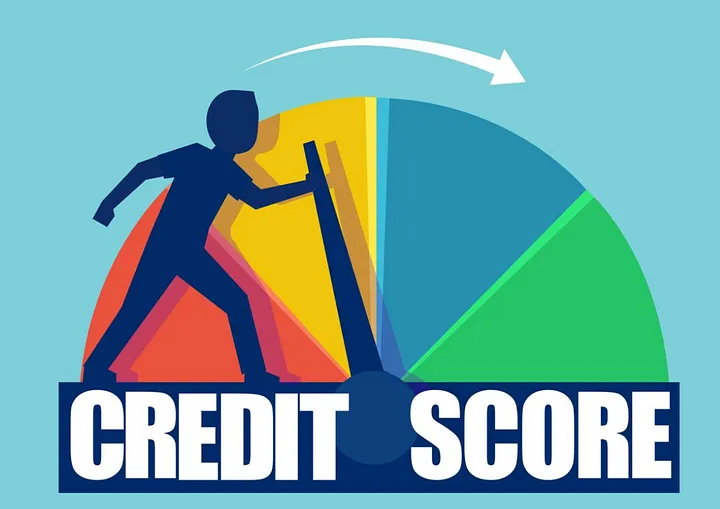
Inshort, credit is essential to our day to day transactions today and an efficient way for lenders of all kinds to make quick decisions on whether someone is credit worthy. That became the birth of a credit score — after all, who doesn’t like being judged on a number system these days?
All jokes aside, this IS how lenders access and assess someone’s credit behavior that has been tracked, recorded over time and available for evaluation purposes. In plain English terms, if you borrowed money from your cousin’s friend’s best friend and didn’t pay him back from 5 years ago, there is a good chance that I will not lend you money once I find out about it.
In case you are curious about where you sit — credit score wise — you can always go to either Trans-Union or Equifax to get a copy of your credit report, which will also contain your credit score. The maximum you can score is 900 in Canada and the US. Before you jump onto either of those two sites and spend the money to get your credit report, here are some alternative ways to get it for free:
- Log in to your online banking — either your home bank or a credit product you have with any bank, and see if there’s anything there. If not, no big deal.
- You can also go to Borrowell.com, sign up for a free account, and you will be able to get a copy of your credit report.
- Other sites include CreditKarma or GreedyRates also offer access to your credit score and report.
My disclaimer here is that we are not endorsing any of these platforms by any means. This is purely suggested for the purpose of helping you save some money for now to obtain your credit report and score. It also doesn’t hurt for you to do a quick search on the internet on how to obtain your credit report (including score) for free as a quick exercise here.
So, pause here and go get your credit report now!
What’s your score?
How does your score affect your life?
Ifyou currently own a house and have a mortgage on it, chances are the interest rate you have (or the other terms like the length or your mortgage and your amortization period) is different from your neighbors even if you bought the exact same property from the same builder at the same time. This could be the result of the different credit scores you have. Like two passengers sitting side by side on a plane often times pay different fares for their tickets (except we aren’t really sure if their credit scores have anything to do with it).
How about during a water cooler conversation and you learn that Joe got a 0% interest on a car loan while Mark is paying 5%? Or, that Nancy just got offered by her bank a credit card with a special interest rate of 8% when the rest of us mortals need to pay 19.99% or higher on outstanding balances?
Who died and made them King?
If you are wondering who gave Equifax or Transunion the power to grade and judge people like this, good on you. After all, we all want to be swiped right in the world of credit, right?! (Anyone got that reference?)
Truth be told, they are only the messengers to tell you what your score is and the scores come about based on 5 different factors:
- The payment history,
- The outstanding balance you have on each credit account you have,
- The length of the credit history,
- The number of credit pulls in a year* and
- The different types of credit you currently have.
Stay tuned for Part 2 where we break these down to make sure you know what they mean.
Tomy dedicated readers, I thank you for your support and feedback. If this is the first time you’re reading one of my publications, I hope you’ve enjoyed it and learned a thing or two.
If you’re wanting to be a part of a community of real estate investors from around the globe, here is the T.A.L.E.N.T.ed Investors Facebook Group. It’s a place where people come together to share experiences, knowledge, successes and challenges, and money making opportunities!
For those of you who prefer watching videos, here is the YouTube channel where some of my work (very raw) has been shared.

Lastly and definitely not least, Bootcamp! If you prefer the live interaction and delivery to help you build some foundation, our next Bootcamp is on July 23 and July 24. Go ahead and register for a session for either day to help you further your financial education.
(Written at home in Edmonton, AB)