

Financial Education through Real Estate — How to Choose a REI Mentor (Part 1.5/2 — Top 3 Deal Breakers)
May 17, 2020
(WARNING: COLOURFUL LANGUAGE IN CONTENT)
This one is the hardest piece I have had to write to date. Like most experienced investors who have gone through the ups and downs building their portfolios, overtime our ‘what not to do’ list is actually much bigger than the ‘what to do’ one. This is done all in the hopes that the deal quality gets better and better. I joke with full truth a lot about this: if your first deal is your best deal, you’re doing it wrong! So…without going into too much of a tangent, here’s part 1.5/2 on the top 3 deal breakers for me when choosing a REI mentor these days.
For the record, I have a very deep appreciation for those brave enough to offer any kind of real estate investing training these days. Real estate, while being the most tried and tested asset class in human history, is also a moody animal. Training people on real estate investing can sometimes feel like training people on lion taming. Moreover, I also share the utmost respect for anyone courageous enough to offer financial education. It’s definitely the path less travelled. And, the mission of “creating financial independence one person at a time” is definitely one that requires more than just Trust Your Talent can accomplish. For that, I am grateful that there are others in the same industry.
On that note, it would be prudent to define what ‘industry’ that I am/we are in for doing what I get to do everyday. Like the titles of all of my published articles on this platform so far have suggested: financial education or financial education through real estate investing. Often times, people ask me about ‘competition’ in our industry and in the marketplace, my reaction has always been: there really aren’t that many — globally. Fortunately, I always say that “results always speak louder than words”. Usually, when people get to meet someone from and/or trained by Trust Your Talent, the question answers itself.
With that frame of mind, here’s my list of the top 3 deal breakers when choosing my next REI mentor:
To begin, borrowing from the previous article:
I stand for leveraging real estate investing strategies to achieve financial freedom because that was my goal and is my passion. I know some others may choose a mentor based on a single strategy, a market or a certain type of property. The importance is that you and your potential mentor align on your goal.
1. Misalignment in vision
For me, the purpose of putting my work and journey out there from day 1 is first and foremost to help others create financial independence or financial freedom through financial education. (Side note: it’s very uncomfortable to share a lot of the things I’ve been sharing. However, my mentor did tell me that I’d have to face my own fears and focus on the bigger picture. So here I am, stepping out of my comfort zone.).
What financial education has done for me is beyond what I could comprehend some days still. Yet, I feel it in my bones everyday that more people need to at least hear about it, if not allow themselves to start on it. Exemplified by one of my favourite quotes here, while traditional school (with a very pricey tag to my somewhat middle-class parents) bought me a poor mindset, a major clinical depression and my 3rd heart attack; financial education bought me time and money freedom, and later on, the ability to execute on my personal vision to help others achieve the same.

Ever since the first Wheel of Wealth article was shared, I’ve gotten very encouraging feedback from many of my readers. Perhaps it’s because it struck a chord — whether you’re a new grad from college/university, a highly trained professional (MD/PhD, engineer, accountant, nurse, marketer, programmer, etc.) or have simply fallen into the rat race.
As mentioned in the SMP Philosophy, it wasn’t always around when I first started learning and applying as an educated investor. It took time, more mentorship and further knowledge to distill the process. I firmly believe that if you don’t know where you are going, you’ll end up where you don’t want to be. Investing is very much like that. Over the years, I’ve seen people acquire properties and grow their portfolios only to end up with a 2nd job. It was shocking at first. However, when I dug deeper into these people’s stories, it was unsurprising to see how they end up where they are despite having numerous rental properties. Like one of those singing competition shows, it’s a constant balance between advancing one week at a time and still with a clear end goal in mind. I have hardly come across people admitting wearing the name badge of a Real Estate Investor that go into it with the goal to add more stress and to-do lists to their plate. Yet, so many do.
I, myself, and the creation of Trust Your Talent stand for the ideology of total wellness. This ideology is composed with wellnesses in 5 major areas in our daily lives: financial, physical, mental, emotional and spiritual. We are currently in Phase 1 of carrying out of the grander vision of “elevating human potential by living a strategically positive life” by offering tools to help with people improve their financial wellness. These are the same tools that have helped me greatly in my quest toward time and money freedom.
Further to that, mounting statistics and researches around the world have shown that “financial wellness” remains a front and centre determinant of one’s quality of life and state of mind. Forget statistics and research results, if we are to take an honest look at ourselves and the people around us, most (if not all) of us can relate to one of these statements or situations:
- The number one factor that breaks up any couple is money. I saw that happen to my parents and many other relationships in my lifetime so far.
- Stresses and worries about money have directly contributed to people’s mental health. I know I was there myself despite making a relatively healthy job income.
- The pressure to maintain and get ahead financially in life has directly caused physical symptoms and illnesses in the modern world.
The list goes on and on. Even a simple Google search on this topic alone was shocking and chilled me to the bone. The positive, though, is that it gave me a much needed dose of confidence and belief of what I stand for these days: increasing the level of financial education to help better people’s financial futures. Truthfully, this has never been about real estate or even real estate investing strategies (shocking, I know). This has always been about leveraging the right investment tool to take care of one very important aspect of our day-to-day lives: money. The most commonly used currency these days that allows us options in life.
I believe that people who are simply looking to buy more real estate aren’t simply the right audience for me or Trust Your Talent. Those who are seeking time and money freedom as a personal vision and a way of living are the ones that will resonate with these messages.
As a result, after bumping around for 4 decades with numerous mentors in my life, I look for those who understand that real estate investing is a means to and end. Those who create financial results through real estate investing to contribute to a bigger vision — in their own lives and into the world. Those who stand for anything less than that…well, they are simply not good enough anymore.
To be completely blunt, there are those who “teach” enough so that I either become their OPM (other people’s money) or have to solely rely on their ‘other paid services’ (ie. legal) in order to completely execute on any deal is a clear red flag. The purpose of offering financial education and elevating a person’s financial intelligence in my LOUD AND OBNOXIOUS opinion should aim at giving them the required tools for independent thinking and decision making when presented with an opportunity (for differentiation between opportunity vs deal, refer back to this article).

THIS quote above (or an ageless wisdom) is always the end goal. That’s why when I seek help these days, it’s to acquire resources, tools, new perspectives and new knowledge to become as good as my Mentor, if not better. I have no problem saying that because I know a few of my students definitely have gone on to doing bigger projects than I have. That is an amazing feeling when the shared vision is not on the size of the deal nor the amount of profit, but the ability to be autonomous and living life on our own terms.
Clearly asking them what their personal vision and mission for offering training and mentoring is a quick and easy way to determined whether you align. There should be ZERO hesitation for true go-giver to explain their purpose and intention being a mentor.
To be continued…
Tomy dedicated readers, I thank you for your support and feedback. If this is the first time you’re reading one of my publications, I hope you’ve enjoyed it and learned a thing or two.
For those of you who prefer watching videos, here is the YouTube channel where some of my work (very raw) has been shared.

And if you’re looking for the quickest way to understand what “financial education through real estate investing” means, we run 1-Day Bootcamps as an introduction. And yes, full disclosure, you’ll have the opportunity to pursue advanced trainings during the Bootcamp if you wish.
(Written at home in Edmonton, AB.)

Financial Education through Real Estate — How to Choose a REI Mentor (Part 1.75/2 — Top 3 Deal Breakers)
May 24, 2022
(WARNING: COLOURFUL LANGUAGE IN CONTENT)
The challenge continues. Admittedly, this particular topic — qualities vs deal breakers that I look for an a real estate investing mentor — is by far one that gets me going the most. I can feel the heart palpitation through my trembling fingers as I type. Like everything else I’ve shared so far, I only do so from personal experiences and perspectives. More importantly, it’s done with the hope that fewer people make the mistakes that I, along with many others, have made over the years.
With that said, the list continues with the 2nd deal breaker for me these days.
2. Misalignment in mindset
This is the one that gets me the most heated and it’s personal.
First and foremost — stripping away the financial education and any reference to real estate for a New York minute — investing in its simplest form these days means making money make money. Learning how to invest is then learning how to make money make money. (Might be good to read the last 2 lines a few more times.)
People think that “financial education through real estate investing” is only for the novice and the inexperienced. Experienced investors and property collectors need not apply. This cannot be further from the truth.
Many times, I’ve had to first help students either get out of their existing non-performing properties, or improve performance before acquiring more. This is why STRATEGIES are so crucial (as stated in the SMP Philosophy). I’ve repeated this over and over again. Sounding like a broken record to my students has apparently created some very positive impact in their investing journey, so here I go again: it’s not simply about buying properties or buying more properties. It’s about buying properties that will PERFORM TO MEET YOUR FINANCIAL STANDARDS and GOALS.
First thing first — cashflow. We invest for cashflow.
Many have attempted (and many will still) to take a different approach in getting your attention by focusing on the ‘long term wealth gains’ from investing in real estate. What does that mean? They will focus on “don’t fall into buying for cashflow, buy for the long-term equity growth”. This message is targeted towards those who may find it challenging to find any cashflowing single family properties in their home market who take on the approach of buy-rent-and-pray.
Let’s go back to basic once again here: we invest in real estate because we want to create better financial resources for ourselves. Both now and later. Cashflow, aka ‘profit’, is the ONLY indication whether or not you have a viable business deal at hand. We are not saying it has to cashflow from day 1 (you can if you use the right strategy such as tenant-first Lease Options). We are saying that, before going into a deal, we need to have the ability to determine that it will cashflow once all the necessary renovations and improvements are done. Nobody would buy a business that will lose money every month, why should investing in real estate be any different?
It’s also that mindset — one that tells you to ONLY focus on the long-term growth — that gets people in trouble. This mindset alone has created a subset of bitter “I once was an” investors and the market went against me. And frankly, if you’re only going to be a property collector regardless performance, it’s ok as long as your life isn’t impacted negatively in any way. Unfortunately, not everyone is in that position.
To conclude this thought, people who tell you to let go of cashflow or putting it other than on the top of the priority list when analyzing a deal do NOT even qualify as a real estate mentor in the first place. You want someone who understands that real estate is a means to an end. You want someone who understands the business fundamentals in investing — beyond acquiring assets. You want someone who understands the Wheel of Wealth to guide you to make the best and right investment decisions with you.
Next, we look at ROI — return on investment is what a bona fide investor-minded person focuses on. In laymen’s terms, a true investor focuses on “how much it’s going to make me, not how much it’s going to cost me”.
Piggybacking on that though, this is also where we see the amplified differences in mindset and behaviour:
- being frugal vs being cheap,
- building assets vs acquiring liabilities, and
- value vs money.
Fundamentally, there is nothing wrong with how anyone wants to position themselves in the marketplace. The biggest drawback that I have witnessed is how the innocents get taken advantage of because they simply aren’t able to tell the difference. Hence, one of the main driving forces for writing this article for me personally.
Looking back, I still get a good chuckle at how naive I was when I enrolled into my very first financial education (through real estate investing, of course) curriculum. At the tender age of 28 (in 2010), my husband and I decided to invest CAD $50,000. There was just this burning desire to make a difference in our own life. In today’s money, our investment looks like this:

It doesn’t matter how you dice and slice it, that’s a decent Mercedes right there! At 28, that was a sh*t load of cash (that didn’t have). However, after slaving at a corporate job for 2.5 years, making a 6-figure income and working an average of 80 hours per week, I knew I had to invest in my financial education if I was ever to see a change in my financial future. More than that, I needed a change in my life. I could get into how poor my mindset was back then — especially when it comes to money, but we’ll save the popcorn for a later date when I can really paint you a picture of the “poor middle class me” tale.
The point is this: I saw the possibility, the hope, the potential and, most importantly, the proof of what my future life could look like. What drew me in the most was not the earning potential (although it was a close second at the time). It was how the trainers, mentors and the students they currently have going through the training THINK and VIEW their lives and the world. Gone are the ‘lack’ mindset and language, the daily dread and despair for an unfulfilling job and life, and the negative and limited outlook about the future. Instead, I saw people with different perspectives and positive energy for the first time since probably kindergarten. I knew I wanted to be around that as much as possible. I needed to.
As a result, when I am looking for another REI mentor for myself, I pay extra attention to their mindset. Alright, alright…before some of you want to slap me and go “what the f**k does that mean?”, here’s a relatively more concrete list of what that means (in the order of a thought process):
- Mindset translates into behaviours and words.
- Behaviours that tell me that they are cheap and not frugal is a red flag.
- Words and language that overly focus on cost/money instead of return and goal is a red flag.
I sometimes get challenged on why the investment in our Mentorship Programs is much higher than everyone else’s out there. Here are my responses from the heart and my personal journey:
- Higher compared to what? Collectively, all the Trainers and Mentors have made a thousand folds of our investment in education that we know otherwise would not have happened. Certainly, not in the timeframe that we have.
- What’s the price you would put on achieving time and money freedom in 3–5 years? I had a condo in the Vancouver market. Purchased in 2004 as a pre construction for approximately $256,000. Sold it in 2010 for $400,000. The seed money created financial freedom for me starting July 25, 2012. Today, that condo it worth approximately $900,000. An extra $500,000 in value. That’s an extra $50,000 a year in gain. Not to mention capital gain tax now if I sold it. Not to mention inflation. Not to mention the fact that my time freedom is worth much more than $50,000. Do your math.
- What is the value of having time and money freedom in your life?
- It’s a hand up, not a hand out. Most people place little to no value in something they get for nothing. Worse yet, most people are willing to bet small and lose small all too often. Your skin in the game is ultimately an indication of how much you believe in yourself. I had to believe in myself. I needed to. There was not another option.
- Lastly, Mentors and Trainers on our training team (not to mention a large number of students) have all declared financial independence and freedom. In other words, we know our worth — the collective knowledge, experiences and network we bring to the table to help any student turn their goals into reality.

This quote always gets me and it’s so true especially when it comes to the real estate investing industry where high value services and assets are changing hands regularly.
By no means do we know everything. In fact, what I love about our entire Trust Your Talent community is this: we are all lifelong learners. Mentors and trainers are simply those who have accomplished what you want to accomplish before you. We understand and RESPECT the concept that ‘time is everything’ (as mentioned in one of the previous article). Supporting someone else on their journey is more than an honour, it’s a responsibility that takes time — our most valuable resource in life.
If it helps, turn the table around and ask yourself this: what would you do when you have the time and money freedom to do anything you want? The cold hard truth is this: we don’t make the best money teaching and mentoring. And we shouldn’t. It’s a balance act. When a mentor has earned the time and money freedom, mentoring is our form of contribution and giving back. And yes, it’s an additional source of income. Whenever I get a chance to teach these days, I often say “teaching and mentoring probably generate the lowest financial ROI for us” to the students. Mentors don’t do it for the money. The cool part is (especially with advanced students) they now get it and agree with me once they’ve learned how simple making money can be. Now, the best part is this: teaching and mentoring definitely generate the highest sense of fulfillment and purpose for us these days.
Here are some uncategorized and yet relevant thoughts to conclude this part of the article:
- Know what your financial future is worth to you before you choose a mentor.
- Don’t be cheap when it comes to the betterment of your financial future.
- Your mentor should have the ability to show and help you build your power teams from scratch. It’s about teaching you how to fish so that you can build income sources beyond borders.
- Your mentor understands that mentoring is a full-time commitment but not a full-time gig.
- No one person knows everything (as great as that sounds). Pay attention to the size of their ‘training team’ or ‘organization’. Many are the lone wolf coaches with limited strategies and market experiences (or experiences in general).
- Ask why instead of how (or how-to) questions when you’re engaged in a conversation with a potential mentor. Listen to their thought process.
- Your mentor should have the ability to diagnose your existing financial wellness and improve upon it.
To be continued…
Tomy dedicated readers, I thank you for your support and feedback. If this is the first time you’re reading one of my publications, I hope you’ve enjoyed it and learned a thing or two.
For those of you who prefer watching videos, here is the YouTube channel where some of my work (very raw) has been shared.
And if you’re looking for the quickest way to understand what “financial education through real estate investing” means, we run 1-Day Bootcamps as an introduction. And yes, full disclosure, you’ll have the opportunity to pursue advanced trainings during the Bootcamp if you wish.
(Written at home in Edmonton, AB.)

Financial Education through Real Estate: How to Choose a REI Mentor (Part 2/2 — Top 3 Deal Breakers)
May 31, 2022
Sofar, this topic has generated the most responses and, frankly, I’m not surprised. The best part, however, is that it’s given me the opportunities to further the dialogues with some of you and I so appreciate that. Many have thanked me for sharing while some accused me of ‘sitting on my high horse’ and preach. One way or another, I appreciate your time and effort. To those who have said that these articles are making a change in their lives (you know who you are), I am extremely happy for you and I thank you for allowing me to be authentic.
Every piece of writing I have created is meant to be positive, and even inspiring. This quote has been my guiding light for the last 8+ years of why I still teach and mentor.

More importantly, for the same reason why I write in the first place — to help people think about certain things ahead of time. After so many years, I do see many people WASTE away their talent, their drive, their ambitions, their money, their time and their goals as a result. Unfortunately, many of these cases have much to do with mindsets that do us a disservice. Fortunately, it’s given me the chance to share here.
Inthis article, I will conclude this now 4-part topic with the last deal breaker for me when choosing a real estate investing mentor.
3. Misalignment in values
Let’s define what value means in this context first. Here’s a high level thought process:
- My personal values are health, sustainability, joy, fulfillment and impact.
- When I’m choosing a mentor, I want to get a sense that we align on at least 2 of them. For example, health is an overarching value that covers beyond physical health. It also covers mental and financial health. If someone is financially successful and yet completely out of shape physically, I know there is a misalignment. While I’m all about leveraging money as one of the greatest tools in the world, I personally do not believe that it should come at the expense of my health in other areas.
- Sustainability is a huge one. I’ve witnessed too many investors, entrepreneurs and ‘mentors’ (yes, using the quotation marks to be sarcastic here) come and gone over the years. Some as short as 6 months, some as long as 8 years. For example, we all know that what we focus on grows. A bodybuilder will tell you that the exercise and diet regimes are not a sustainable lifestyle. An high-level executive can only work so many hours for so long before a burnout happens amongst other long-term health implications. Staying power is key. And that power comes from having the right mindset, the required tools and the attitude.
- When I interview new mentors in any areas of my life, I simply as them these 2 questions: why did you want to be a mentor in this area and why have you continued after so long? What I’m really looking for is the passion and the energy they exude. More so, the joy and the fulfillment that they get from doing what they do should show up in their voice, their eyes, their words and their body language. I want to feel their joy and their sense of fulfillment. Because I believe that nobody can (nor should) pour from an empty cup. If their desire to help others success is overflowing, we can pick up on that usually right away.
- Impact — circling back to aligning on vision, I want my mentor to have a greater vision for their purpose, their life and their business other than just making some money from telling others what to do.
With all that said, here are the last few thoughts that I’d like to share here:
Real mentors don’t need your money to invest in their deals in any way.
They’ve built successes before you and without you. If the true intention is to teach you how to fish so you can eat for a lifetime, they should not treat you as OPM. At least, not at first. I remember one of my earlier mentors wanting to connect me with another student investor to potentially do a deal together in my early days. Very quickly, I found out that she was the “silent partner” in that business venture and also the licensed realtor for all his “deals”.
Real mentors encourage you to be authentic and honour your journey.
While you do have the support of a mentor (and maybe even a community at large), be honest and open about where you are in your journey. The whole “fake it till you make it” idea (while I understand it’s used sometimes to combat imposter syndrome) tends to do more harm than good. I believe in “face it till you make it”. If people judge you based on how green you are in the first place, that means you are already misaligned on some core values. It’s easier to move on from that than to dwell on it.
Watch how you are (or might be) mentored in the way you approach deals/opportunities and especially with people. Some industry professionals can sniff a newbie from mile away. If you’re trying to pull a fast one on them, it’s the fastest way to put giant speed bump on your journey.
Whenever I am out conducting in-field work with my mentees, I always ask them to be honest and truthful in everything they say. Sounds like a basic requirement for being an investor with solid values and integrity, doesn’t it? Yet, you’d be surprised at how many are taught to puff up their chest and embellish their knowledge, skills and experience level.
Don’t get it twisted here! I do encourage my students to use the line “I have invested in my education and have a mentor guiding me through my first few deals” when necessary. After all, leveraging our results and systems is part of the education. Doctors and surgeons all have mentors at different levels, we are no different here.
Real mentors do the work with you behind the scenes.
Thanks to social media, ‘progress’ is loitered all over everyone’s feeds without context. While it’s good for marketing purposes, note that a real mentor does the work and often goes unrecognized. Countless calls, texts, in-person and video meetings we do are just part of the process we do with our students. Some mentors these days post every single chat and screenshots of a coaching call. This brings me to 2 questions that challenge me daily: Are you busy or productive? Are you creating real results or creating a facade?
This is obviously a very grey area these days. We want to celebrate wins — big and small — because it creates positive reinforcement internally. We also want to leverage the wins as much as we can for marketing purposes. However, many have focused on the marketing rather than doing the work themselves. I recall meeting a “newbie” (his word, not mine) about 18 months ago. He admitted that he focused on 1 single strategy and only had done less than a handful of deals at the time (oh, and in 1 city only). To my surprise, he started a podcast and became popular during the pandemic. Less than a year ago, he started “coaching” others on strategies that he told me he knew nothing about nor had the interest for. Unfortunately, he’s not the first person like this I’ve known over the years. It’s just that, social media (especially) has made it even harder to tell the difference upon first look these days. On a positive note, results is always the one thing that we fall back on especially on the quest for financial independence and financial freedom. Results is what give a few of the mentors the staying power to stay in this industry.
Lastly, some random and final thoughts here:
A mentor is part of your power team, both a short- and long-term business partner.
Real mentors help you pull the different ingredients together to cook up the results YOU WANT (vs pushing certain outcomes on you).
Many groups, clubs, coaching programs — both online and live- masquerade “buying” as “investing”. Learn to tell the difference. I’m really hoping that my previous articles have shed some light on how for you. If not, you’re more than welcome to reach out to me directly: tim@trustyourtalentacademy.ue1.rapydapps.cloud anytime for a chat.
Like vs respect — I want to be able to respect my mentor first. This one took me a while to grasp. A mentor is someone I look up to and respect from the get-go. I don’t always have to like them as a whole (I know this sounds terrible right now) because I’m wanting to be mentored for a specific set of skills initially. If we end up liking each other and form a relationship beyond the mentorship, great!
Mentors should have mentors. I need to know that they consistently invest in their own growth — professionally and personally. To be more specific, networking, signing up for club memberships and attending a few webinars for market updates here and there do not count as professional development. I want to learn that they are going into programs and full curriculums to further their growth. After all, that’s why I want a mentor.
Tomy dedicated readers, I thank you for your support and feedback. If this is the first time you’re reading one of my publications, I hope you’ve enjoyed it and learned a thing or two.
If you’re wanting to be a part of a community of real estate investors from around the globe, here is the T.A.L.E.N.T.ed Investors Facebook Group. It’s a place where people come together to share experiences, knowledge, successes and challenges, and money making opportunities!
For those of you who prefer watching videos, here is the YouTube channel where some of my work (very raw) has been shared.

Lastly and definitely not least, Bootcamp! If you prefer the live interaction and delivery to help you build some foundation, our next Bootcamp is just around the corner. Go ahead and register for a session for either June 11 or June 12 to help you further your financial education.
(Written at home in Edmonton, AB)

Financial Education through Real Estate Investing: Know the Difference — How to Spot an Amateur vs a Professional (Part 1)
June 7, 2022
First things first, definitions matter! I’m strictly using “getting paid” for being an investor as the baseline here. So, here’s a list of things that are taken into account while making the differentiation between what qualifies as amateur vs professional investors:
- Getting paid = compensated by the deals they have created directly and indirectly
- Professional investors have short- and long-term plans and strategies for building their portfolios for specific financial goals (as opposed to property collectors — buying for the sake of buying)
- Professional investors have an exit strategy on how they transition from being the managing/active partners (most of the times in the beginning) to being the capital/passive partners over time
- Professional investors also recognize that they are amateurs at the same time — more of a growth mindset driven statement
The inspiration for this article came from a few readers’ suggestion (you know who you are) — thank you and hope you enjoy this!
I guess this is in line with the previous 4 articles. However, the funny thing is this: what I’m about to share are things that had been ‘taught’ to me early on in my financial education. Yet, many were not ‘learned’ (and felt to be true) until years later. Some of them MUCH later.
Before going any further, I want to be extremely clear about this: knowing how to spot them doesn’t mean you treat the any differently in terms of respect. The purpose I want to accomplish with this topic is to help you become more efficient and effective as a real estate investor — both as an amateur and professional. Yes, I said both. I believe that we are all both at the same time these days in the world of real estate investing especially if you follow the SMP Philosophy. Nobody truly knows and has executed on EVERY SINGLE strategy available. In addition, nobody’s invested in every single (viable) market available.
Knowing how to spot them means you can pivot and create more meaningful and productive conversations when you first meet them. And, perhaps, supportive and mutually-beneficial long-term relationships!
So, let’s dive right in!
How many properties do you have?
This one is probably the biggest tell-tell sign.
Most professional (and trained) real estate investors understand that property is simply the investment tool we use to achieve the financial goals we have. And, once again, following the SMP Philosophy, property is at the bottom of the list.
For amateurs, it can seem like this is the fastest way for them to size up the other person. Using the number of properties the other person has to determine how much respect, time and patience they should give — especially at a networking event. Even if the intention is positive — they want to learn from someone who ‘knows’ more than they do, this often backfires because people can sense it when you are disingenuous in your interactions with them. The opposite is also true. People who have collected properties over time may use that to judge how much time they would spend with the amateurs. If this describes you in any way, STOP IT! You’re letting your ego get in the way.
From both personal observations and personal experience, a newly educated investor on a single strategy with a focused market picked out can easily outshine a wealthy property collector.
The point is this: it’s not a bad question, it’s just a bad first question. If you are hunting for a REI Mentor, it’s natural that you are curious and want to know more about their experiences — in strategies, markets, the types and number of properties they have transacted and held — to give them the financial freedom (or independence) that they have today.
Remember, everyone has something to offer regardless of how you classify them. With amateurs, I simply want to see if I can add value to their growth — be it a chat to share experiences, adding to their knowledge vault (or bridging their knowledge gap), or helping them get started by working on a deal together. With other professionals, I also just want to see if I can add value to their journey — from trading ‘war’ stories to collaborating together in any other ways possible. The common thread is — add value. It’s not about you.
I use the BRRRR strategy.
This is a short but brutally important one. BRRRR (buy-renovate-rent-refinance-repeat) is NOT a strategy, it’s a process. I cannot stress this enough.
It’s the fundamental process of performance improvement regardless of the asset class you choose to use. This is a marketing term that became popularized in recent years. Strictly speaking, when you are leveraging a property-first strategy in real estate investing, 99% of times you NEED to BRRRR. Otherwise, what is the point?
BRRRR was known to me as:
- Buy, add value, cashout-refinance (commonly used in the US), or
- Money in, money out, income for life and asset for free (if you get to pull out 100% of your initial ‘money in/investment’)
From day 1 of my financial education, without fail, every trainer and Mentor has emphasized on the concept of value-add in every deal, every property and every step of the way. One of them call ‘real estate investors’ as ‘transaction engineers’. That also took me a few years to fully grasp through living the life of a full-time investor.
With a hard asset like real estate, value-add has a broad spectrum of meanings. Putting it plainly, value-add can literally mean anything between sweat equity to a gazillion dollars. You can paper flip through the Wholesale & Assignment strategy. You can also take a piece of empty or under-utilized land in the middle of nowhere on this planet and put a world class city on it (think of Dubai and Las Vegas).
So, I’ve learned to stay hip and relevant by using the phrase ‘BRRRR’. I’ve also learned to use it like: We leverage the BRRRR process in all of our property-first strategies/deals. This ain’t about sounding smart. It’s simply about sounding like you understand how business works — even if your business is real estate investing.
One last note on the BRRRR process is that it does NOT say anything about cash flow/profit, or as we call it, performance of the asset. This is why, it’s NOT a strategy. A strategy tells you how you make money and how much money you make in the world of real estate investing. I’m only highlighting this because I’ve seen way too many folks BRRRR themselves into even more financial distress. While, on paper, it sounds great and makes 100% sense, it is only a part of the process of any good deal.
I regret selling my properties.
Amateur alert!!!
My best analogy (which I’m oddly proud of) is that properties and buildings are like people. The older we get, the more problems we have. Meaning, the more expensive it is to maintain.
Here’s a quick techno-babble for my trained RE investors: your NOI (net operating income) goes down over time typically with every property in your portfolio. This decreases the capitalization rate (aka. Cap Rate). With the rising interest rates, your cashflow will decrease from higher debt servicing amounts.
A professional investor understands (at all times) that learning how to invest is learning how to make money work harder for us. As pointed out in Financial Education: Know the Difference — Cash on Cash Return vs Return on Investment, real estate is just our vehicle in investing. The goal is to create better financial resources and blueprints for ourselves, and hopefully generations to come. Making sure our money is working hard for us at all time is, in my opinion, the highest level of the art of investing.
Why would you want to make 10% when your money can be making 20%? Why would you want to make 50% when your money can be making infinite return? Selling your properties for the purpose of reinvigorating your capital’s ability to work harder for you is not only smart and the way the pros do it, but an absolutely necessary and natural part of being an investor.
Anyone that tells you to simply hang on to your properties for life is an amateur. This is a lesson that I refused to see early on when one of my Mentors pointed out to me. Silly me!
With that said, this directly ties to the concept of “velocity of money”. For those of you who are curious and interested in learning more, there are lots of articles and videos available for your research.
Tomy dedicated readers, I thank you for your support and feedback. If this is the first time you’re reading one of my publications, I hope you’ve enjoyed it and learned a thing or two.
If you’re wanting to be a part of a community of real estate investors from around the globe, here is the T.A.L.E.N.T.ed Investors Facebook Group. It’s a place where people come together to share experiences, knowledge, successes and challenges, and money making opportunities!
For those of you who prefer watching videos, here is the YouTube channel where some of my work (very raw) has been shared.

Lastly and definitely not least, Bootcamp! If you prefer the live interaction and delivery to help you build some foundation, our next Bootcamp is just around the corner. Go ahead and register for a session for either June 11 or June 12 to help you further your financial education.
(Written at home in Edmonton, AB)
Financial Education: Understanding your Credit Score (Part 1/2)
June 14, 2022
Credit — What is it & Who needs it?
Asubject that most people fear for the damages it’s done to many in North America and globally. The most commonly known ‘credit’ product these days are credit cards. It’s a typical love-hate relationship for most people. I, for one, LOVE credit and credit cards. But that wasn’t always the case. What changed? Education on what it really is and what it can do!
So, let’s take a deeper look now, shall we?
The word “credit” comes from a Latin word meaning “to believe or to accept as true”. Credit refers to an arrangement by which one party receives materialistic goods or money from another party without paying for those goods or money at the time — payment is, in effect, deferred — or an “I owe you”.
Credit, like (good) debt, is a great tool for building wealth and getting access to free things (mostly through loyalty programs) when they are used properly. However, when you abuse it, it will wreak havoc and get out of control — kind of like the question: will you use your super power for good or for evil?
Before diving into the subject — simply think about where, when, how and WHO you learned the concept of ‘credit’ from? If your answer contains words like: parents, friends, TV shows, YouTube ads, radios, or maybe even ‘money education’ shows, you likely do not have a full or even proper view of what it really is.
Today, having credit is a MUST if you’re looking to be financially savvy, independent and free eventually. It’s almost as important as having a smart phone these days — which by the way, unless you pay cash for it, you’ll need some sort of credit to get on a plan and your device. So, who needs credit? The answer is probably everyone — at least everyone who’s legal in age.
Inshort, credit is essential to our day to day transactions today and an efficient way for lenders of all kinds to make quick decisions on whether someone is credit worthy. That became the birth of a credit score — after all, who doesn’t like being judged on a number system these days?
All jokes aside, this IS how lenders access and assess someone’s credit behavior that has been tracked, recorded over time and available for evaluation purposes. In plain English terms, if you borrowed money from your cousin’s friend’s best friend and didn’t pay him back from 5 years ago, there is a good chance that I will not lend you money once I find out about it.
In case you are curious about where you sit — credit score wise — you can always go to either Trans-Union or Equifax to get a copy of your credit report, which will also contain your credit score. The maximum you can score is 900 in Canada and the US. Before you jump onto either of those two sites and spend the money to get your credit report, here are some alternative ways to get it for free:
- Log in to your online banking — either your home bank or a credit product you have with any bank, and see if there’s anything there. If not, no big deal.
- You can also go to Borrowell.com, sign up for a free account, and you will be able to get a copy of your credit report.
- Other sites include CreditKarma or GreedyRates also offer access to your credit score and report.
My disclaimer here is that we are not endorsing any of these platforms by any means. This is purely suggested for the purpose of helping you save some money for now to obtain your credit report and score. It also doesn’t hurt for you to do a quick search on the internet on how to obtain your credit report (including score) for free as a quick exercise here.
So, pause here and go get your credit report now!
What’s your score?
How does your score affect your life?
Ifyou currently own a house and have a mortgage on it, chances are the interest rate you have (or the other terms like the length or your mortgage and your amortization period) is different from your neighbors even if you bought the exact same property from the same builder at the same time. This could be the result of the different credit scores you have. Like two passengers sitting side by side on a plane often times pay different fares for their tickets (except we aren’t really sure if their credit scores have anything to do with it).
How about during a water cooler conversation and you learn that Joe got a 0% interest on a car loan while Mark is paying 5%? Or, that Nancy just got offered by her bank a credit card with a special interest rate of 8% when the rest of us mortals need to pay 19.99% or higher on outstanding balances?
Who died and made them King?
If you are wondering who gave Equifax or Transunion the power to grade and judge people like this, good on you. After all, we all want to be swiped right in the world of credit, right?! (Anyone got that reference?)
Truth be told, they are only the messengers to tell you what your score is and the scores come about based on 5 different factors:
- The payment history,
- The outstanding balance you have on each credit account you have,
- The length of the credit history,
- The number of credit pulls in a year* and
- The different types of credit you currently have.
Stay tuned for Part 2 where we break these down to make sure you know what they mean.
Tomy dedicated readers, I thank you for your support and feedback. If this is the first time you’re reading one of my publications, I hope you’ve enjoyed it and learned a thing or two.
If you’re wanting to be a part of a community of real estate investors from around the globe, here is the T.A.L.E.N.T.ed Investors Facebook Group. It’s a place where people come together to share experiences, knowledge, successes and challenges, and money making opportunities!
For those of you who prefer watching videos, here is the YouTube channel where some of my work (very raw) has been shared.

Lastly and definitely not least, Bootcamp! If you prefer the live interaction and delivery to help you build some foundation, our next Bootcamp is on July 23 and July 24. Go ahead and register for a session for either day to help you further your financial education.
(Written at home in Edmonton, AB)
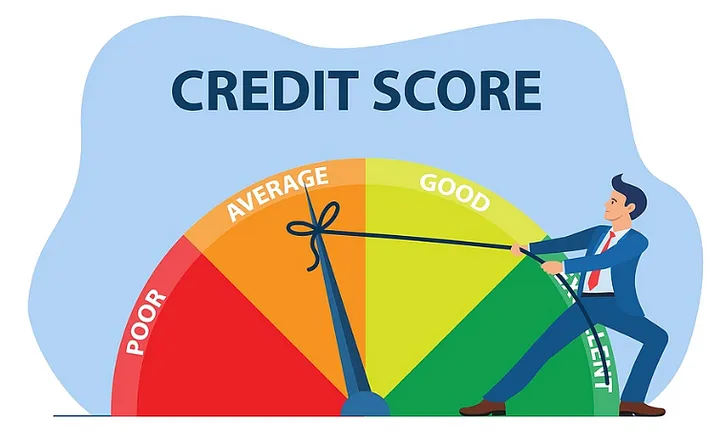
Financial Education: Understanding your Credit Score — the 5 Factors (Part 2/2)
June 21, 2022
Following Part 1, here are the 5 factors that determine our credit score.
Before I get started on this list, I also want to share that this is only ONE PART of credit — meaning: this is only one of the “5 C’s of Credit” you would see loan officers and brokers use to determine whether you would be extended credit when applying. Naturally, that’s coming up in the next article!
Everyday there are people with high credit scores that tend to get very shocked when they are turned down by a mortgage broker, a credit card application or a financial institution. I will continue to put the magnifying glass on credit score here and put the focus on the bigger picture (so to speak) next.
The 5 Factors
- Payment History
First of all, I hope that everyone understands that when you borrow money, it’s your obligation to pay it back to whoever lent it to you unless they specified that it’s a gift that you do not need to pay back. Clearly, even if it’s a small loan between friends and family, chances are they are not going to go to the credit bureau and submit your payment history on you.
So, this largely applies to institutional lending — meaning that licensed lenders who you borrow money from. Even if you’re repaying your debt but are late — either a few times during the time you’re supposed to pay it back, or consistently, this is going to bring your credit score down.
The easiest way to look at this is to turn the table around. How would you rate a friend who borrows money from you and pays it back regularly and in full as agreed VS another friend who you keep on having to chase down to get your money back? Also, are you more likely to lend to someone with a history of bankruptcy or without? Unlike golf, we want high scores here — the higher the better.
2. Amounts Owed
This only matters if you carry an outstanding balance. If you are the type that pays off all your bills on time — especially credit cards, then you’re likely pretty safe here.
This particular factor is also known as ‘utilization rate’. To be honest, you can ask a credit counsellor, a representative from one of the credit bureaus, your banker, a mortgage broker, or even the person who’s sharing all this information with you right now, none of us can provide you with a clear answer on what percentage you should stay under.
Let me take that one step further and this requires some illustration here: some people say to stay below 50% of your credit limit and some say 75% for your credit score to not be impacted negatively. This really only applies to revolving credit accounts — I’ll get to what that means later (in Types of Credit). For now, let’s use a credit card as an example. Also, for demonstration sake, let’s just use 75% as our number here. I would suggest that grab a piece of paper and a pen and write along as you read on.
Say, if your visa account has a credit limit of $10,000 and you’re carrying a balance of $8,000. That is 80% in utilization rate on that account. This will then impact your score negatively and thus bring your score down. 😔 That’s a frown face. I know what some of you want to ask: what if I have a total of $50,000 in credit limit between my 5 credit cards — assuming each card has a credit limit of $10,000, and I only have an outstanding balance of $30,000, which works out to be 60% utilization rate — sounds great, right? Not necessarily! It depends on the breakdown of each card balance. You can very well have 3 cards that are maxed out and 2 cards you pay down regularly (so no outstanding balance), it can and likely will impact your score negatively. So…work with someone (a credit counsellor, a mortgage broker, or a financial wellness Coach — depending on how much help you need) to get this fixed or starting paying some of these down.
3. Length of Credit History
This is probably the most straightforward one of the 5 factors — the longer you’ve had your credit products for (provided that you’ve been a good girl or good boy at paying it back), it can only help your credit score to rise. The logic is that, if you’re delinquent to the point that your lenders refuse you the product, you would not have that account as an active/open account at the time of pulling your credit score and report. Also, if that’s the case, it’ll definitely stay on your credit report not just as an inactive account, but also one that’s involuntarily closed. It’s like a cautionary tale that one lender is sending to your other lenders and, worse yet, all your potential future lenders.
4. New Credit
Some people know this as a ‘pull’ or a ‘hit’ on your credit. The proper term is an ‘inquiry’ — in case you’re wondering. It’s good to know that there are hard inquiries and soft inquiries. One decreases your credit score and one does, well, nothing to it.
If you’ve just ‘inquired about your credit report or credit score’ via one of the websites I suggested, that was a soft inquiry and does NOT impact your credit score negatively. Actually, it doesn’t even matter which site you got it from. The focus is on ‘who’ originated the inquiry. If you’re just checking up on yourself — it’s no different than checking your bank balance or even blood sugar level to make sure you’re on track.
On the other hand, a hard inquiry is like an ex (or soon-to-be ex) looking into your finances, there’s usually an ulterior motive and that’s usually bad.
When do hard inquiries happen, you ask? They happen every time you apply for a credit product —
- a new credit card,
- a line of credit,
- a personal loan,
- a mortgage,
- a car loan,
- a phone plan,
- get your place hooked up with electricity and gas, or
- a retail card to get some furniture or home theatre.
Doing too many of these in a single year can definitely impact your credit score for the worse. How many? Like ‘utilization rate’, I wish I got a solid answer from all industry professionals and even the credit bureaus directly, but no one is making a giant poster with a number on it to show us! However, collectively, our best and deductive conclusion — that’s right, this is more Sherlock Holmes than relying our Spidey sense — is between 4–6 per year. If your score is on the low side to begin with, max it out at 4. If you feel like you have room to stretch, add 2 more times in a year.
Why do hard inquiries decrease your score? The concept is actually quite simple, by definition, hard pulls (just changing it up to get some street cred here…) indicate that you’re actively shopping for a loan of some sort, and you’re making it known. Think of it this way, you ask your Dad for some money, he says yes, then you ask your Mom, she says yes, then you ask your friend, he/she says yes, then you ask your coworker, he/she also says yes. Now you have all this money in your pocket, what’s stopping you from fleeing to sunny Mexico and live like a king or queen, and never return to pay them their money back?
On the other hand, if you’re in need of money and ask your Dad for it, he says no, then you try your Mom, and she says no, you do this for a few more times, by the time you get to person number 7, they are going to wonder why the previous people didn’t lend you any.
Lastly, as a light bulb moment, when it comes to credit, it’s always better to have it and not need it, than to need it and not have it. (This is VERY important.) Repeat this line to yourself LOUDLY (or loudly in your head): WHEN IT COMES TO CREDIT, IT’S ALWAYS BETTER TO HAVE IT AND NOT NEED, THAN TO NEED IT AND NOT HAVE IT.
So, plan your 4–6 hard pulls a year wisely! Just a side note, most credit limit increase requests now require hard pulls as well and now you know what that means!
5. Types of Credit
Finally, we’re talking about the different types of credit. They were briefly mentioned earlier when we were discussing the ‘new credit’ factor.
What exactly are they?
This is probably not the part you need to remember as much as the 5 factors as there are 5 main types that most of us at some point in our lives will inevitably all have — open, revolving, instalments, lines of credit and mortgages.
An open credit type is where the account holder (or the card holder) can draw credit as needed up to a certain amount with the total balance due and payable IN FULL within a specific time frame. Examples would be an American Express charge card, your utilities and cable bills. Basically, an account that you’re not allowed to hold an active balance in it unlike a typical credit card.
Speaking of credit cards, that brings us to the next type that is a “revolving credit”. Think of a revolving door (or maybe even a hamster wheel), a revolving credit is open ended where the cardholder can ‘draw’ credit from the card up to a certain limit, then make regular/required minimum payments. A line of credit often falls under this category as well. A line of credit is usually different from a personal loan in that a line of credit typically requires interest-only payments as long as you continue to pay down your balance. A personal loan often times requires you to make principle-and-interest payments.
That brings us to instalment credit — a personal loan or a car loan usually falls into this category as these loans come with a fixed number of equal payments. If you are still carrying a student loan, chances are, this is where that belongs as well. An instalment loan typically starts with the maximum amount you’re approved to borrow, and, unlike a revolving credit account, that amount can only go down from there.
Lastly, a mortgage. It’s structured similarly to an instalment credit and typically applies only to real estate. Note that a HELOC (home equity line of credit) usually functions more like a regular LOC, thus, more of a revolving credit account.
Conclusion
There you have it! Understanding your credit from an investor’s perspective.
Like everything else, once you understand how it works, it appears simple and you can leverage it to your advantage. When you start learning about the different creative financing strategies and instruments later, you will see how a high credit score is not even a necessity (most of the times).
My Real Conclusion
The credit you carry will be built a lot based on your integrity in the business world. That’s the REAL currency of CREDIT you will also need to pay attention to maintaining.
Tomy dedicated readers, I thank you for your support and feedback. If this is the first time you’re reading one of my publications, I hope you’ve enjoyed it and learned a thing or two.
If you’re wanting to be a part of a community of real estate investors from around the globe, here is the T.A.L.E.N.T.ed Investors Facebook Group. It’s a place where people come together to share experiences, knowledge, successes and challenges, and money making opportunities!
For those of you who prefer watching videos, here is the YouTube channel where some of my work (very raw) has been shared.

Lastly and definitely not least, Bootcamp! If you prefer the live interaction and delivery to help you build some foundation, our next Bootcamp is on July 23 and July 24. Go ahead and register for a session for either day to help you further your financial education.
(Written at home in Edmonton, AB)
Financial Education: Understanding the 5 C’s of Credit
June 28, 2022
Great…first “the 5 factors” that determine my credit score. Now another 5 C’s…how many five-somethings are there?!
Don’t you worry. There aren’t many. Perhaps, I’ll share the “5 Rules of Investing” next. Joking…NOT joking!
First of all, I will say that a seasoned and experienced Mortgage Broker can explain this much better. So, once again, my disclaimer is this: I will review these 5 C’s from an investor/entrepreneur’s perspective.
What are the 5 C’s of Credit?
Many of us have never even heard of this and yet, arguably, this is probably more important than our credit scores.
The 5 C’s are:
- Character
- Capacity
- Capital
- Collateral
- Conditions
These are universally applicable measuring sticks with (especially) institutional lenders worldwide.
As I’ve mentioned previously: when it comes to credit, it’s better to have it and not need it, than to need it and not have it. (And I will keep mentioning this again and again…and again…)
Whenever we are applying for a credit product — personal loan, line of credit, mortgage, business loan or just a new credit card — the lender will want to know you can pay back the money as agreed. Pretty simple in theory, right? Well, on paper, they don’t know you as a person and they cannot tell you apart from me based on an application. They only way to really assess your credit worthiness is through the 5 C’s.
Let’s jump in.
Character
While it’s called “character”, this is referring directly to your credit history — how you’ve managed your debt in the past.
This can be easily achieved usually by pulling your credit score as a quick glance (refer to the previous articles to learn more). We all start developing our track record (aka credit history) the moment we start taking our credit products. Yes, that includes getting a cell phone bill in your name, a cable service and making sure your apartment gets heat and water.
The extenders of these products (aka lenders) may choose to report their observed behaviour on you as a borrower to a (or multiple) credit bureaus.
In essence, character in this case can be tied directly back to your credit report and the 5 factors that determine your credit score. However, let’s not forget that a credit report will contain more information on your track record other than you’re managing your credit card bills, mortgages, car payments and lines of credit. It may also contain information on any foreclosure or bankruptcies that have happened.
A tangent here — as far as I know, if you’re ever thinking about getting a mortgage again, it’s easier if you’ve had a bankruptcy on your file than a foreclosure. Why? Think about it this way: a foreclosure means you did not (or could not) make your mortgage payments (and usually for an extended amount of time) as promised. This is largely seen as a ‘voluntary’ act. As a result, why would another lender give you the same type of loan? Feelings or no feelings, we can all understand the idea of “once bitten twice shy”.
Other the other hand, a bankruptcy could’ve been caused by many other factors that are considered as ‘involuntary’ — a divorce, a failed business, an injury that has negatively impacted your ability to debt service, etc. However, this is not to say it’s better to declare a bankruptcy when you’re in financial hardship than going into foreclosure. Ideally, you want neither on your file (duh!).
Lastly, to develop a strong credit history, always make payments on time and keep your credit utilization at a generally reasonable/acceptable rate (again, see previous articles for clarification).
Capacity
Your capacity refers to your ability to repay loans/debt.
This is determined by evaluating your debt to income ratio. Depending on where you live, you may have heard of terms such as ‘total debt servicing ratio (TDSR)’ or ‘gross debt servicing ratio (GDSR)’.
Generally, a low DSR (debt servicing ratio) signifies less risk for a lender because it’s tell the lender that you:
- have a reasonable amount of debt, and
- are managing your debt well, and
- have the capacity to take on more (on a monthly or annual basis).
Every lender is going to have a DSR. I’ve learned that the DSR can change quite drastically especially when the lender has an appetite to grow their marketshare in certain loan products.
Regardless, here a quick calculations on how DSR is done: add up all your monthly debt payments and dividing that number by your monthly pre-tax (gross) PROVABLE income. Then multiply it by 100(%). And, if you are watching My Daily Dose with Tim, you’ll see how important one of the key performance indicators (KPIs) called the Coverage Ratio (or DSCR — debt service coverage ratio) is when it comes to the lender’s evaluation of a larger building.
Lastly, “when it comes to credit, it’s better to have it and not need it than to need it and not have it”. This doesn’t mean that you get to use your available credit to shop for anything you want. A smart investor leverage credit and debt to build income and wealth.
Capital
Capital tend to include the cash and liquid (or liquidable) assets that you are willing to put towards the loan product you’re applying for. One biggest example is getting a mortgage.
Typically speaking, the larger the downpayment, the better your interest rate and terms will be. That’s because the amount of your downpayment is a direct message to your lender how much ‘skin in the game’ you have. You are serious! Of course, as an investor, one of the main reasons why we love real estate is because we have the ability to leverage up to 80% on investment properties. This means that we can come up with 20% in downpayment against the purchase price of a property. This also means we often will be kickin’ and screamin’ when it needs to be more than 20%.
Lastly, I do not endorse the concept of saving money by any stretch of the means. Tucking money away in savings accounts of any type is possibly the worst way to ‘accumulate’ capital for any investment deals. While you may start to understand/feel this due to the recent inflation numbers, many people in your immediate circles (parents, siblings, best friends, close colleagues, etc.) may be feeling that, too. Everyone wants to work less themselves and their money to work harder for them. This is why I keep repeating what I was taught: when the deal is good, the money will follow. Raising funds to grow and stabilize your portfolio is way smarter and more sustainable (when done properly) than constantly trading hours for dollars to save.
Collateral
Collateral in this case goes beyond the liquid cash (or downpayment) that you may have from your savings and stock portfolio. It includes those plus investments and assets that you are willing to put toward your home. Essentially, a lender will consider the value of your personal (business if applicable) assets of a secondary source — while not ideal — of repayment.
Collateral often times is a significant part of the consideration to a lender. However, the significance of each type of collateral can change depending on the type of loan you are getting. I often think of a lender like an investor. They are giving you the loan largely based on the ‘deal’ you have on the table. They are essentially your partner. As educated investors, we know that “when the deal is good, the money will follow”. This is why, typically speaking, the asset or the deal itself is the first and most significant collateral. Because if the lender does not deem it as a good ‘investment/deal’, you wouldn’t even be considered in the first place.
Lastly, this is why active investors have all heard about ‘qualification based on net worth’ over time. Because the lenders tend to feel a lot safer when they know their money is safe and that there is a lot to ‘go after’ if a high net worth borrower defaults. In the beginning of my career as an investor, the collaterals largely relied on the asset itself (which is great because I chose real estate as my main investment vehicle), my ability to repay on the monthly basis. Later on, it’s become the asset itself and what’s in my overall portfolio. This also sparks the conversation about asset protection. Many make the mistake to put everything in their personal name to boost their net worth right away and choose to continue it that way. Any financially educated person will tell you that is simply…well, stupid. That will be a whole other subject altogether at a later time.
Conditions
These usually refer to the lender’s micro- and macro-research (‘due diligence’) on the condition of the investment, the business, the industry, the economy and (in my opinion), most importantly, the borrower’s intention and plan with the funds borrowed. Most lenders are more inclined to lend money for a specific purpose as opposed to a general loan that can be used for anything by the borrower.
The other external factors like how the economy is, where it’s going, the federal interest rates and budget, etc. are out of any of our control (largely speaking unless you’re the wealthiest person or the most politically influential person on the planet). Every lender has a different perspective and appetite for taking on risks. What we tend to see is then the requirement for a larger ‘skin in the game’ for the borrower.
Lastly, from my personal experience, this is why I remain fond of single family home investing. I understand the path of trading ‘four green houses for one red hotel’. I also understand that everyone needs (and more importantly — WANTS) a roof over their head at the end of the every day regardless of the economic conditions. It’s never about investing for fame or for bigger profit for me. It’s about investing for freedom, for security, for happiness, for choices in life and for the opportunity to make a difference in other people’s lives also. While external conditions may change quickly and drastically (remember: change is the only constant), when we are smart and financially educated enough to think for ourselves, helping others get what they want is ultimately how we create what we want. Or better yet, I’ll end with this Zig Ziglar quote:

Tomy dedicated readers, I thank you for your support and feedback. If this is the first time you’re reading one of my publications, I hope you’ve enjoyed it and learned a thing or two.
If you’re wanting to be a part of a community of real estate investors from around the globe, here is the T.A.L.E.N.T.ed Investors Facebook Group. It’s a place where people come together to share experiences, knowledge, successes and challenges, and money making opportunities!
For those of you who prefer watching videos, here is the YouTube channel where some of my work (very raw) has been shared.

Lastly and definitely not least, Bootcamp! If you prefer the live interaction and delivery to help you build some foundation, our next Bootcamp is on July 23 and July 24. Go ahead and register for a session for either day to help you further your financial education.
(Written at the Anaheim Marriott in Anaheim, CA)

5 Daily Habits that Help me Create Sustainable Success
July 5, 2022
(WARNING: COLOURFUL LANGUAGE)
“Alright, Tim’s gone mad.” is probably the thought that some of you had when seeing this title. “Either that, or he’s delusional.” is probably another thought you had.
Hear me out here…
While sharing about financial education, building businesses and creating financial successes is something that speaks to the entrepreneur in me, sharing with you how some of the habits I’ve dedicated myself to building over the years speaks to my soul.
With all the uncertainties happening these days — the economy, the interest rates, the bond yields, the stock market and the real estate markets — fear and negative self talks rear their ugly heads in all of us. Yes, in me too. However, this is the time when we have to remind ourselves that EVERYTHING IS CYCLICAL — especially the different factors mentioned here.
I am not here to compare myself to anyone else when I say “staying power matters” since I can only say that I’ve been truly entrepreneurial for about 20 years, and have found any substantial financial success in the last 10. For that reason, I will always have respect for any entrepreneurs that have lasted decades regardless of their current reputation. They’ve done something (or many things) to keep them in the game through the changes and cycles over time.
Like everything we do, mindset is huge and arguably the ultimate determining factor of the successful vs the unsuccessful. Note — it’s not the successful vs the failed. But how we feel about what we do is often times neglected in the business world. Everyone wants the ‘how to’. From the yellow dummy books to the gazillion searches on YouTube for how-to videos, we forget that most of us only do what we want to do most of the time.
Learning about and managing my energy level and mental state daily are what I attribute the exceptional growth during uncertain times to— especially in the last 5 years between the regional recession in my home province and a global pandemic.
Asa business owner and a real estate investor, I can quickly and easily default to sharing business tactics and strategies, and even step by step guides on what I’d do in any given situation when there’s a problem to be solved.
Here, I want to start with something between mindset (abstract) and strategy (concrete): habits.
While I’ve consumed books, speeches, and taken countless personal development courses and 1-on-1 coaching sessions, there will be no empirical data nor science shared other than personal experiences and perspectives. Remember: something between mindset and strategy.
1. Unsubscribe
Welive in a world where we’re conditioned to seek information quick and easy. It’s even easier if it’s just fed to us regularly without having to lift a finger for the second time.
Starting today, unsubscribe from 1 thing daily. I honestly do not recall if I learned this somewhere or just got completely fed up with the amount of junk and spam emails one day. I started by unsubscribing to mailing lists first. You know — the kind that takes time and mental space, and sometimes even your hard earned money for no good reason.
Perhaps you ‘subscribed’ initially because you were actually seeking a particular service, product, a piece of information, etc. However, if it’s not contributing to your day-to-day efficiency or functionality, unsubscribe now. It’s ok to search for it again later when you actually need it again (thanks, Google!).
For me, this is as simple of taking a couple of minutes a day and hitting the unsubscribe buttons — travel sites, newsletters, retail stores and even search lists set up with real estate agents in a market that you once were interested in. Some days, it’s a more drawn out process of saying goodbye to ‘friends’ that I’ve actually never exchanged words with online. It’s drawn out because I would often times send a quick message first before removing them altogether. After all, I’m not a robot. At some point in time, I’ve either sought out to connect or they did — for a reason. I’d like to honour that reason. Perhaps I was the one that dropped the ball initially on making any kind of meaningful connection.
If you do this for the next 30 days, I can promise that you will feel so much lighter mentally, emotionally and maybe even financially and spiritually.
2. Diet & Exercise
“OH GOD! Now he’s gone too far!”
“This (topic) AGAIN?!”
Let’s not forget that this is about me sharing what’s helped me everyday to stay consistent and persistent. Of course, with that in mind, if anything sounds applicable to you, make sure you consult with your physician(s) first.
You might be surprised to know that I don’t follow any particular diet plans. Naturally, that is not what I’m sharing here. The only ‘diet’ that I would consider myself to be on is intermittent fasting. As one who’s always had trouble gaining QUALITY weight, I fought this idea for as long as I could remember. However, when COVID lockdowns forced me to completely redo our business plan for Trust Your Talent Academy (because we launched in January 2020), I found myself needing more time to work starting March 2020 so that we wouldn’t close our doors in 2 short months (not even a global pandemic could stop this passion project!). As a result, the idea of skipping breakfast became more of a practical measure rather than a 100% voluntary one (at first). Growing up in Taiwan, breakfast is not only the most important meal of the day, it’s a whole culture in itself. Undoing nearly 40 years of THAT was even harder than the idea of losing more weight from not eating.
Admittedly, intermittent fasting gave me results that I couldn’t have imagined:
- Better and more even energy level throughout the day
- Improved mental clarity to tackle tasks and projects
- Helped me reach my ideal body fat percentage (and maintained my muscle mass)
- More time in the morning to complete my routine (it’s become very convenient and a huge time saver not having to worry about making or seeking out for breakfast)
You may have your own views or traditional beliefs about fasting. Whatever it is, I’m not here to promote it. I’m simply sharing. If you’re interested, look up the different ways you can incorporate intermittent fasting into your daily life. I was pleasantly surprised. These days, I usually fast daily between 13–16 hours (in case you’re wondering).
When it comes to the exercise part…I’m not talking about the ‘let’s go sign up for a gym membership and hit the weights everyday’ kind of exercise. It’s probably really more fitting to just say ‘move your body for at least 30 mins a day’ or ‘stand up half the time during your waking hours’.
This is purely coming from my personal experience of how I manage my energy level daily to deal with the good and the bad. By that, I mean this has nothing to do with getting pretty looking muscles that make you look good in your clothes. Of course, if that’s where you want to take it as a happy by-product, that’s up to you.
Also, unlike ‘do it as one of the first things in your day’, I simply just want to encourage you to move more and stand more.
For any of you who might be interested, here’s what I do for exercise (changing things up and keeping things interesting is important to me:
- Pilates
- Hot flow yoga
- Weight training
- Walking — outdoor or treadmill
If you do this for the next 30 days, I can promise that you will feel so much more energetic physically, mentally, emotionally and maybe even better financially and spiritually.
3. Meditate
Ok, this one is something that I really picked up during lockdowns as a result of COVID in 2020. We’ve all heard how great meditating is these days. It’s the new drug. It’s the new dance. It’s the new catch word worldwide.
For me, meditation at first (almost without fail) turned into either “I’m bored after 30 seconds” or “Oh sh*t! I fell asleep”. Then I found these lovely guided meditation tracks on Spotify. You may have another platform or even specific app that you can and prefer to use. The point is — start. Start with just 1–5 minutes a day with a guided meditation track. Test many of them and start bookmarking the ones that have made a positive impact on you after.
These days, I still use guided tracks. I’ve had people tell me that ‘guided meditation’ is a bit of an oxymoron. But hey, I’m looking for results here. So, whatever you find that works for you, do it and keep doing it until you have to pivot.
Meditating in particular has helped me at grounding myself on a daily basis. We get pulled from different directions all the time. And if you suffer from ‘over achieving’ like me, this one is even more critical to get incorporated into your daily routine.
If you do this for the next 30 days, I can promise that you will feel so much lighter physically, mentally, emotionally and maybe even financially and spiritually.
4. Laugh
This one seems almost silly, isn’t it?
At one point in the last 10 years, I realized that I have become SO SERIOUS about things and life in general. I mean, how could I not be? I’m an investor by trade and am responsible for taking care of people’s hard earned money. That is a serious responsibility! So, honestly, that hasn’t changed much. I’m actually proud of that. Because I know my profession demands my highest attention and responsibility.
What changed is that I would seek out things daily that would make me literally LOL (that means ‘laugh out loud’ for some of you). This can be purposely seeking out comedy clips or memes on social media or making the time to watch a sitcom episode for me. Sometimes, it’s from connecting and catching up with friends and trading stories. However, be careful of the whole ‘misery loves company’ thing here as that will actually drain your energy more than adding to it. After all, I’m seeking laughter to boost my energy level, my focus and my overall spirit.
For me, this can also include daily play time with my dog. Once in a while, I will throw in singing out loud in the shower or a full-on at-home karaoke party. Party for one, please! Nothing makes me laugh out loud at myself like when I know I’ve butchered a song badly. And it also makes me smile when I’ve sung the same song for 20 years well. The point is this — find ways to tickles yourself till you put a smile on your face or give yourself a great belly laugh.
If you do this for the next 30 days, I can promise that you will feel so much better physically, mentally, emotionally and maybe even financially and spiritually.
5. Create
This can be journaling your own deepest and most private thoughts into a diary to creating something you can and want to share with the world.
The idea is that you get joy through the process of creation. It doesn’t even have to be the same thing every time. I remember making a seasonal wreath with a friend of mine one day 4 years ago, and that wreath is proudly hung up on our front door during the spring and summer months every year still.
Also, the process of creation surprisingly can also come from the process of destruction. I’m specifically referring to plucking weeds from our yards here. It’s not my favourite thing to do around the house — full disclosure. Yet, through removing the weeds, I create a much more pleasant yard to look at. Interestingly, I see cleaning the house through the same lense as well.
The point is this: find a way to express yourself everyday. We are human beings that often get confused as human doings because we take on so much. We feel things daily. And we ARE all those feelings. And some of those feelings need an outlet to be expressed.
You may not be as random as I am, and may already have a hobby that allows you to express yourself daily — writing, visual art, gym, yoga, running, music, singing, gardening, building a business, etc. That is why this quote also speaks to me so much:

If you do this for the next 30 days, I can promise that you will feel so much lighter physically, mentally, emotionally and maybe even financially and spiritually.
Tosum up, here’s a short list of resources that have helped me tremendously over the last few years:
- High Performance Habits (book by Brendon Burchard)
- No More Mr. Nice Guy (book by Dr. Robert Glover)
- The Ultimate Jim Rohn Library (recordings by Jim Rohn) — PERSONAL FAVOURITE OF ALL TIME
- The Meaning of Mariah Carey (book by Mariah Carey)
- PSI Seminars (www.psiseminars.com) for personal development
- Eva Medilek (www.evamedilek.com) for 1:1 high performance life coaching
- Athlean-X on YouTube
This list can easily get pretty long and I’m happy to share more if you’d like to reach out to me directly: Tim@TrustYourTalent.ca 🙂
Tomy dedicated readers, I thank you for your support and feedback. If this is the first time you’re reading one of my publications, I hope you’ve enjoyed it and learned a thing or two.
If you’re wanting to be a part of a community of real estate investors from around the globe, here is the T.A.L.E.N.T.ed Investors Facebook Group. It’s a place where people come together to share experiences, knowledge, successes and challenges, and money making opportunities!
For those of you who prefer watching videos, here is the YouTube channel where some of my work (very raw) has been shared.

If you prefer the live interaction and delivery to help you build some foundation, our next Bootcamp is on July 23 and July 24. Go ahead and register for a session for either day to help you further your financial education.
Lastly, I just want to say thank you for your continuing support.
I aim to be authentic and adding value to your life.
I invest to build a life. I build business to create better life experiences.
It’s ultimately about LIFE and I appreciate you coming on this journey with me!
(Written in Edmonton, AB)

3 Lessons that Help me Thrive through Recessions
July 12, 2022
First of all, there are economic vs perceived definitions of what constitutes a recession. After many searches, it’s become weirdly clear to me that everyone agrees on what a recession is:
- “During a recession, the economy struggles, people lose work, companies make fewer sales and the country’s overall economic output declines (Forbes.com).”
- “A recession is a period of declining economic performance across an entire economy that lasts for several months (Investopedia.com).”
- “In economics, a recession is a business cycle contraction when there is a general decline in economic activity (Wikipedia.org).”
Of course, an economic recession can be of any scale — even on a personal level — and it doesn’t necessarily need to be impacting a whole country or even the rest of the world (like the one we seem to be facing at the moment). However, city-wide recessions (such as the City of Detroit in the US) to worldwide recessions (such as the one induced by COVID-19 lockdowns back in the year 2020) still occur once every few decades or even centuries. Remember: everything’s cyclical.
One of the key reasons why I also call it a ‘perceived definition’ is because none of the (what I would call) experts seem to agree with each other on the length of time it takes to clearly define a period of ‘overall economic output decline’ as recession. I don’t know about you, but I personally prefer to look at things this way since I fundamentally believe in not only the possibility of surviving through an economic recession but thriving through one regardless of how long a recession is.
As usual, this article is written largely based on my personal definition and experience, and I’m officially calling what’s happening in the general economic environment a recession (at least, in Canada).
2008
In2008, when global financial crisis was at its peak, I was still only about 18 months into the work force as an economist would call it. Proud of my 6-figure job as a 26 year-old, I thought I was invincible as long as I worked hard and work even harder when I needed to.
Of course, my strategy to trade more hours for dollars didn’t work. More hours, yes. More dollars, no. The shrinking results from my elevated efforts to maintain a pay check and lifestyle forced me to learn some of the “what not to do’s”:
- Cut spending on everything (which I later on learned is actually quite stupid in the grand scheme of things),
- Pay down my mortgage and car loan faster (which I again learned was a financially illiterate move), and
- Put more money into savings and company stock options where they would match 25% on every dollars I put in (which literally makes me angry right now even just writing about it).
What I learned from living through the 2007–2009 global financial crisis set the foundation for how I’ve built everything today.
The real lesson is this:
Spend and invest — but only on necessities and assets especially during an economic downturn. Cost and values have a very direct correlation. Like a bad cell connection on a long-distance call, they are connected but often have lags.
If you don’t know what to invest in, invest in yourself in anyway possible. We are our biggest income generating asset. Many people think investing means that you have to pick a stock, a type of crypto currency these days, some sort of real estate, or (god forbid) savings. That cannot be further from the truth. Nothing will yield good returns if you don’t first decide for yourself if it’s a good investment tool for you. Like all tools, if you don’t know how to use it, it might end up hurting you. I’m pro any type of personal development and financial education (as long as you’re not simply learning how to ‘buy’).
People ask me if real estate is a good investment. I would say: It depends. Are you educated enough to make it a good investment?
People ask me if stocks are a good investment. I would say: It depends. Are you educated enough to make it a good investment?
People ask me if precious metals are a good investment. I would say: It depends. Are you educated enough to make it a good investment?
I think you get the idea. I know for a fact that a newly licensed but trained carpenter can use a hammer more effectively than me.
If you asked me in the beginning of 2010, I would say investing in real estate is horrible!
I became an ‘accidental/traditional’ landlord in 2009 when I moved from my first property. Like many, I rented out the first property because I could afford to carry the ‘expense’ (aka negative cashflow) and the carrying costs of the new one. I also got into a commercial syndication through the referral of a coworker who ‘parked’ her money in real estate in 2009 thinking it would at least do better than my shrinking portfolio in mutual funds, savings and company stock options. Little did I know, I was the last batch of people they took the money from before they gave up on the project. I never saw my hard earned money again.
However, it gave me the kick in the butt that I needed to learn to grow my money and protect my own financial destiny.
Today, I can share with you why I love real estate for days on end as you know. The biggest lesson I took away was this (and still is everyday):

2016
The perfect storm that almost took everything I built.
From 2010–2016…
- Lost all my savings in a commercial real estate syndication
- Began my financial education leveraging real estate investing
- Had my 3rd heart attack and a major depression
- Diagnosed with the 1st of my 5 auto-immune disorders
- Started applying my financial education
- Declared financial freedom (#1) on July 25, 2012 (same day I was laid off from my soul sucking corporate job)
- Declared financial freedom (#2) in December 2015
- In September 2016 — lost $1 million dollars (in cash value) overnight that “almost” lead to a bankruptcy (corporate & personal)
While I thought I was on top of the world at the beginning of 2016, my portfolio was not strong enough to take on the regional recession (in Alberta) that started in 2014. This is why when I teach and mentor these days, it’s not just about cashflow anymore. It’s about cashflow, cashflow management and cashflow mindset. 3 big topics that I plan to write about later.
I’ve learned to indulge and enjoy life the way I want over the years. It can be very unsettling at times when it’s not something you grew up with. For example, I have a 3-hour rule when it comes to flying these days. That means: any flight that is longer than 3 hours, I will pay to fly business or first class. This wasn’t always the case. On smaller planes, I used to walk by the nicer seats and dream that — one day, I would be in it all the time and not have to walk the long way down into “cattle class” (as a British friend of mine puts it). On the bigger planes, I wanted to take the other bridge to board or turn ‘left’ instead of right when entering the aircraft. In the early days, I would upgrade myself with points or ‘get lucky’ and get upgraded because I had some loyalty status with the airlines when some flights were overbooked.
Then, with better financial resources (and mindset), I started with a 6-hour rule. It’s now evolved to the 3-hour rule as I’ve shared. This is not a brag nor a status symbol. Rather, it’s the lesson of taking care of what’s important: health. One of my conditions is called Ankylosing Spondylitis. Feel free to look it up. While I took a huge loss in 2016, I learned to manage and balance my cashflow to maintain a certain lifestyle to honour my top value: Health. More importantly, I learned to be a value-based spender.
People who know me these days know that I have no problem pulling the trigger on a multi-million dollar real estate investment deal when the numbers are good, and yet have a hard time buying a new piece of furniture for the house for a few thousand dollars. Admittedly, a part of me is already ready for the ‘worst’ to happen again and I want to stay alert and be ready.
I once learned that a best and highest-paid boxer would move to a shack 3 months before a major match because he wanted to sharpen his skills and instincts rather than staying in the lap of luxury he’s created for himself from his financial successes. That has spoken to me — deeply.
Everything is cyclical. This recession taught me to be ready for the worst at any time. To capture the moment, to seize the opportunity and to be disciplined and patient daily. My lesson can be summed by with this quote:

2020
AKA the COVID-19 recession.
Recalling what it was like in March 2020 without looking at charts and analysis of what was happening economically, I was both scared and excited. And this little quote came into my head:

Since the beginning of COVID lockdowns…
- Started Trust Your Talent Academy with many of my trusted and educated investors
- Acquired more cashflowing properties in 1 year than the last 5 combined
- Experienced the 2 financially best years in 2020 and 2021 in my life
- Travelled 9 out of the last 18 months (and counting…) when people felt restricted and fearful to do so
Forgive me if you feel that I’m overly excited about the ‘recession’ that we are in or going into. Because I really am. Of course, it sucks to see some people get hurt and it is not about that. It’s about seeing the human spirit during any sort of ‘downturn’ and how we learn and grow from it for the better each time.
Here’s what I realized what I did back in 2008 was utterly and incredibly stupid:
- Cut spending on everything — to get the economy going, spending needs to happen. Money is a currency. Like a current, it needs to flow. When it flows, it connects and revitalizes parts of the economy needed to function and grow. Think of spending like pumping blood into our veins. What happens when that slows down or even stops?
- Pay down my mortgage and car loan faster — “throwing good money after bad” is a good way of looking at this. As inflation rises, your debt obligation shrinks. Read that again. While our money devalues, so does our debt. The point is NOT to pay down debt faster, but to leverage debt even more to acquire income generating assets during times like these.
- Put more money into savings and company stock options where they would match 25% on every dollars I put in — unless you’re the CEO or have insider trading information, I have no other comments other than maybe cash out and tape your money to the back of your toilet at this point. No joke.
Technically, the pattern is simple and can once again be summed up with: everything is cyclical (3rd time’s a charm!).
The financially educated know that there’s another great opportunity coming. I have never personally witnessed 2 economic recessions happen so close to each other. I personally believe that we were headed for a recession right before lockdowns started due to COVID. The global initiative from governments creating aids (aka printing money) coupled with the resulting supply chain issues are making this one seem scarier than it really is.
Not only me, but friends in my circle also experienced some of their best financial results in 2020 from investing in other vehicles — stocks and businesses. The lesson carry through: nothing you choose will create the financial results if you do not first choose to master your own knowledge in it. Moreover, how you DECIDE to come out of this recession will largely determine how you ACTUALLY come out of it.
So, here you have it: my 3 lessons:
- Invest in myself — my financial education, my personal development, my physical health and my mindset
- Honour my values through the good and bad times so I never have to ask “what am I doing it all for?”
- Stay alert and stay humble. Expand my means responsibly.
Gratefully, each ‘recession’ has further helped me define who I am as a person in addition to creating better financial results. I hope it will start to do the same for you.
Tomy dedicated readers, I thank you for your support and feedback. If this is the first time you’re reading one of my publications, I hope you’ve enjoyed it and learned a thing or two.
If you’re wanting to be a part of a community of real estate investors from around the globe, here is the T.A.L.E.N.T.ed Investors Facebook Group. It’s a place where people come together to share experiences, knowledge, successes and challenges, and money making opportunities!
For those of you who prefer watching videos, here is the YouTube channel where some of my work (very raw) has been shared.

If you prefer the live interaction and delivery to help you build some foundation, our next Bootcamp is on July 23 and July 24. Go ahead and register for a session for either day to help you further your financial education.
Lastly, I just want to say thank you for your continuing support.
I aim to be authentic and adding value to your life.
I invest to build a life. I build business to create better life experiences.
It’s ultimately about LIFE and I appreciate you coming on this journey with me!
(Written at the Fairmont Royal York in Downtown Toronto, ON)

Financial Education through Real Estate Investing: Recession & Cashflow Management (Part 1)
July 19, 2022
(WARNING: COLOURFUL LANGUAGE)
Cashflow — another highly used marketing buzz word by real estate buyers who masquerade as investors and coaches to make their ‘deals’ sound better than they are these days. My attempt as usual with this article is this: help as many people understand the difference between cashflow, cashflow management and, MOST IMPORTANTLY, cashflow mindset.
With so many people reaching out these days asking for perspectives, opinions and experiences during a time like this — looming recession and high interest rate (cost of borrowing), I always like to go back to the basics to stay grounded.
According to Investopedia, cashflow is defined as “the movement of money in and out of a company. Cash received signifies inflows, and cash spent signifies outflows. The cash flow statement is a financial statement that reports on a company’s sources and usage of cash over some time.”
First thing first, let’s quickly break this definition down:
- It’s the ‘movement of money’ in and out of a company. If you’ve had the chance to check out some of the My Daily Dose with Tim videos, you’ll know that I treat EACH and EVERY property like an independent business. And like a business, we want to be making a profit at the end of every month (unless it’s meant to be non-profit from the start).
- Cashflow is sometimes synonymous as profit. If you’ve gone to any sort of business school, you’ll learn this very definition in your 101 class: Revenue — Expenses = Profit. As a result, cashflow is also an indicator of how well the business is run — kind of makes sense. At any given point, the goal is to maximize revenue and minimize expenses. That brings me to a very important point here: the emphasis should be on creating POSITIVE CASHFLOW.
- In most real estate investing strategies (refer to the Wheel of Wealth articles), the high level formula actually looks more like this picture (yes, that’s my handwriting on a flip chart — don’t judge 😉):

Well, well, well…it looks like we are missing a crucial component here with the simplified version before: debt service (aka cost of borrowing). Unless you are purchasing your properties with cash (and why would you?!), chances are you need to maintain the debt servicing on a regular basis. And the terms and rates of the debt service will ultimately determine the cashflow/profit.
As I’m writing this, I know many buyers (who have been posing as investors and coaches) have stopped buying while I’m in the process of acquiring/closing on 12 properties (16 doors) from 2 tired landlords — in both Canada and the US. I’m also making the biggest daily gains from trading futures since I started learning last September.
I’m definitely NOT braggin’ since I was not always able to capture every economic downturn to the best of my ability (as mentioned in the previous article). However, I did learn from a mentor at the beginning of my financial education career that Financial education will allow anyone to make money and grow wealth when the market is going up, down and sideways. That was the ‘sales pitch’ that got me. Today, it remains the main reason why I’m pro financial education and NOT just real estate investing.
When you are financially educated, you will learn be excited about economic downturns for these 2 main reasons:
- Your money will go further when value drops. People see higher interest rate/inflation and decreasing value as a double whammy. When, in fact, it’s the most amazing thing when you are able to leverage debt to build wealth. As mentioned in the previous article, regardless of rate, the devaluation of money is also the devaluation of debt. Plus, most investors are still able to borrow money for a mortgage (depending on types of property) anywhere between 4.5% — 8% in North America when inflation just clocked in at 7.7% in Canada and 9.1% in the US (at time of writing this article). That literally means that your debt is FREE MONEY still. While on paper, the rates are ‘going up’, let’s not forget that it’s based on comparison of what people have gotten used to in the last decade or so largely due to global financial crisis. Mind you, I’m not denying the fact that the higher cost of borrowing can eat into your cashflow as a result initially (see calculation formula above again). This is precisely the reason why time and time again I emphasize on buying for positive cashflow. It’s the survival tool in a recession. However, when values are dropping, it also makes certain asset classes more “affordable” to get into.
- You can increase your overall net worth dramatically coming out of it if you learn to acquire assets properly during this period of time. The value will bounce back up —it’s cyclical. It’s the good old saying of “buy low, sell high”. And also, what I’ve learned from trading is this — unrealized losses and gains don’t matter as long as you are making a positive cashflow. Think about this example: whenever Elon Musk says something dumb (according to the majority’s opinion or media’s scrutiny), his company value drops. But was he or his company hurting? No! Because they are protected by positive cashflow/performance. The same goes for all big and major companies that we’ve come to know: Coca-Cola, Nike, Microsoft, Google, Facebook/Meta, etc. The values of these companies go up and down on a daily basis — sometimes in the millions and billions — and they continue to grow and thrive over time. This is also when trained stock investors buy more shares — when the values are lower (in comparison). We are simply going through the initial contraction of a recession. So, understand these 3 stages (important!): as money (as currency) devalues with inflation, the value of things (especially assets) also goes down while the price goes up (initially — I know, makes little to no sense sometimes). Then the price will go down due to supply and demand and the loss of buying power. Over time, as inflation gets under control, the value of money stabilizes, value and price will inevitably go up in the long run.
I sincerely hope that you have fully absorbed what was shared here as this article will serve as the foundation for what’s more to come. If you enjoyed it, please give me a clap and a follow so I know how I can continue to create relevant content on this platform.
Tomy dedicated readers, I thank you for your support and feedback. If this is the first time you’re reading one of my publications, I hope you’ve enjoyed it and learned a thing or two.
If you’re wanting to be a part of a community of real estate investors from around the globe, here is the T.A.L.E.N.T.ed Investors Facebook Group. It’s a place where people come together to share experiences, knowledge, successes and challenges, and money making opportunities!
For those of you who prefer watching videos, here is the YouTube channel where some of my work (very raw) has been shared.

If you prefer the live interaction and delivery to help you build some foundation, our next Bootcamp is on July 23 and July 24 (this weekend!). Go ahead and register for a session for either day to help you further your financial education.
Lastly, I just want to say thank you for your continuing support.
I aim to be authentic and adding value to your life.
I invest to build a life. I build business to create better life experiences.
It’s ultimately about LIFE and I appreciate you coming on this journey with me!
(Written at home in Edmonton, AB)