Canadian Retirement Planning: Your Complete Guide to Financial Security

Planning for retirement in Canada requires strategic thinking, financial goal setting, and a clear understanding of the components that contribute to a secure financial future. This guide will take you through everything you need to know about retirement planning in Canada, from government benefits to personal savings strategies.
Understanding Canadian Retirement Planning
Canadian retirement planning involves creating financial goals, saving, and investing to ensure a comfortable lifestyle after you stop working. The process takes into account several unique factors of the Canadian financial landscape.
Why Retirement Planning is Important in Canada
Retirement planning is vital in Canada for several reasons:
- Increased life expectancy: Canadians are living longer, with the average life expectancy reaching 82.66 years in 2021.
- Rising healthcare costs: Healthcare in retirement can be expensive, and costs continue to rise.
- Government benefit limitations: Future reductions in benefits are possible
- Financial independence: Ensuring you can maintain your standard of living in retirement is crucial.
Because Canadians are living longer, your retirement savings will need to last for an extended period.
Key Components of Canadian Retirement Planning
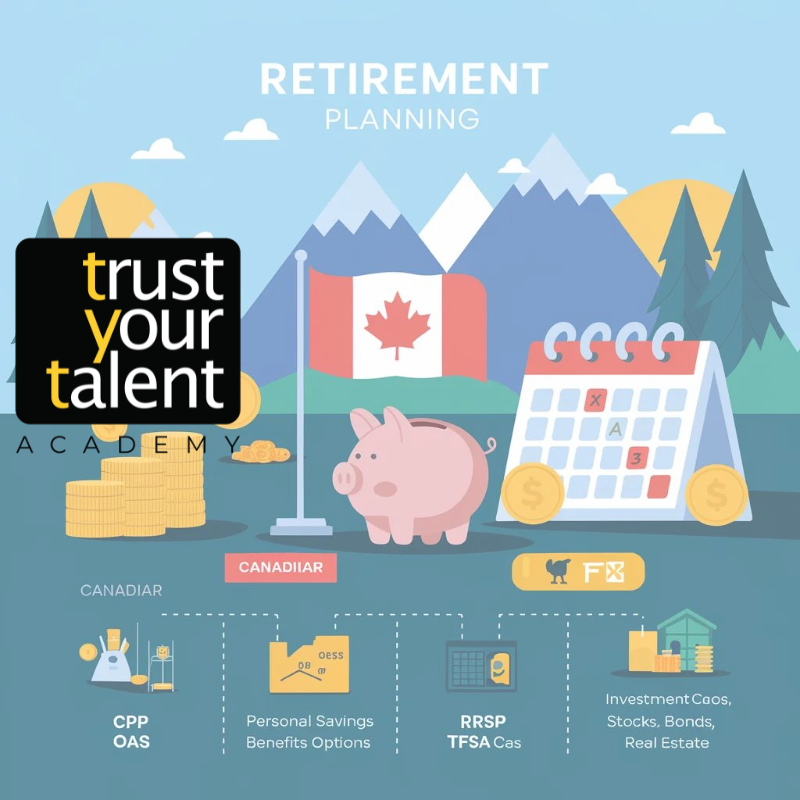
1. Government-Sponsored Plans
Canada provides government programs to help with retirement income:
- Canada Pension Plan (CPP): Contributory plan based on your work history.
- Old Age Security (OAS): Monthly payments for those 65+.
- Guaranteed Income Supplement (GIS): Additional support for low-income seniors.
As of 2023, the maximum monthly CPP payment at age 65 is $1,306.57 .
2. Employer-Sponsored Plans
Many employers in Canada offer retirement savings plans:
- Registered Pension Plans (RPPs): Employer-contributed retirement savings.
- Group Registered Retirement Savings Plans (Group RRSPs): Voluntary contributions through payroll deductions.
3. Individual Savings Plans
Your personal savings are key to securing your retirement:
- Registered Retirement Savings Plans (RRSPs): Tax-deferred savings account.
- Tax-Free Savings Accounts (TFSAs): Tax-free savings and investment income.
- Registered Retirement Income Funds (RRIFs): Conversion of RRSPs into a steady income stream in retirement.
4. Non-Registered Investments
Non-registered investments can supplement your retirement income:
- Stocks and bonds: Higher risk, potentially higher return.
- Mutual funds: Professionally managed portfolios.
- Exchange-Traded Funds (ETFs): Low-cost, diversified investment options.
5. Real Estate Investments
Real estate can provide long-term financial security:
- Primary residence: Often a valuable asset for retirement.
- Rental properties: Generate passive income.
- Real Estate Investment Trusts (REITs): An alternative to direct property ownership.
Understanding Retirement Income in Canada
The median after-tax income for senior couples in Canada was $63,000 in 2019 . However, this number can vary based on individual situations.
Key questions:
- What is a good retirement income in Canada?
- How much do you need to retire as a couple in Canada?
For more on these, see our detailed guide on the average couple retirement income in Canada.
Determining Your Retirement Needs
The amount you need to retire depends on several factors:
- Desired lifestyle
- Expected lifespan
- Inflation and rising costs
- Healthcare expenses
- Current savings and investments
Key topics:
- How much money do I need to retire?
- How much should I save for retirement in Canada?
- RRSP amounts by age.
Check out our guide on how much you need to retire in Canada for detailed insights.
Effective Savings Strategies for Canadian Retirement
Saving for retirement in Canada requires a mix of strategies:
- Max out contributions to RRSPs and TFSAs.
- Utilize employer-sponsored retirement plans.
- Diversify investments to match your risk tolerance.
- Consider real estate as part of your portfolio.
Focus on:
- Retirement essentials
- Investment and savings strategies
- Best retirement plans in Canada
Our guide on the best way to save for retirement in Canada dives deeper into these strategies.
Calculating Your Retirement Needs
How Much Money Will You Need for Retirement
Calculating your retirement needs involves assessing:
- Desired retirement lifestyle
- Anticipated retirement age
- Expected lifespan
- Inflation and cost of living
- Healthcare expenses
Helpful tools:
- Early retirement calculators
- Retirement income assessments
- Goal planning guides
Conclusion: Securing Your Financial Future with Trust Your Talent
Planning for retirement in Canada means understanding your options, from government benefits to savings strategies. By starting early, staying informed, and regularly adjusting your plan, you can work towards a financially secure future.
At Trust Your Talent, we recognize that every retirement journey is different. Our expert financial advisors are here to help you navigate the complexities of Canadian retirement planning, offering personalized strategies to ensure you’re on the path to a comfortable retirement.
Frequently Asked Questions (FAQ)
What is the best age to start retirement planning in Canada?
It’s best to start as early as possible—ideally in your 20s. Starting early allows you to take advantage of compound interest, giving you more time to build a solid retirement fund.
How much should I save for retirement in Canada?
A common guideline is to save 10-15% of your income. However, the amount you should save depends on your desired retirement lifestyle and individual circumstances.
Can I retire early in Canada?
Yes, early retirement is possible, but it requires careful planning. You will need to consider reduced CPP benefits, a longer retirement period, and higher healthcare costs.
What happens to my RRSP when I retire?
You must convert your RRSP to an RRIF or buy an annuity by the end of the year you turn 71. RRIFs provide a steady income stream, and withdrawals are taxable.
How does the Canada Pension Plan (CPP) work?
The CPP is a contributory program based on your work history. Contributions are made throughout your working years, and benefits depend on your contributions and the age you start receiving them (standard age is 65).